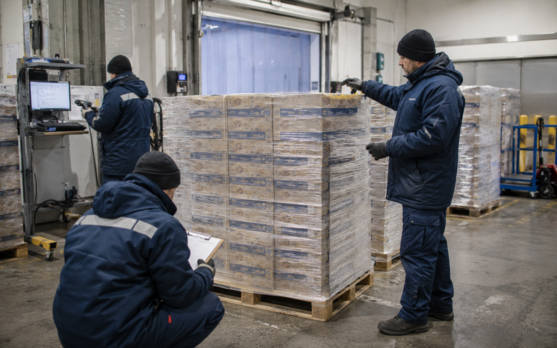
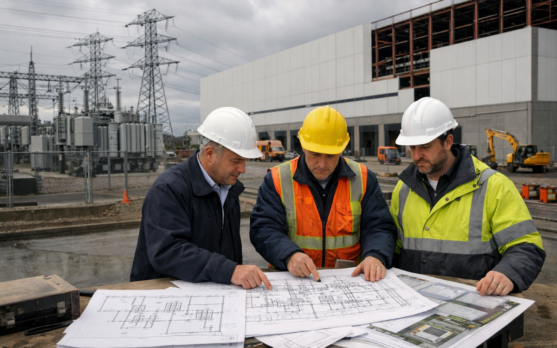
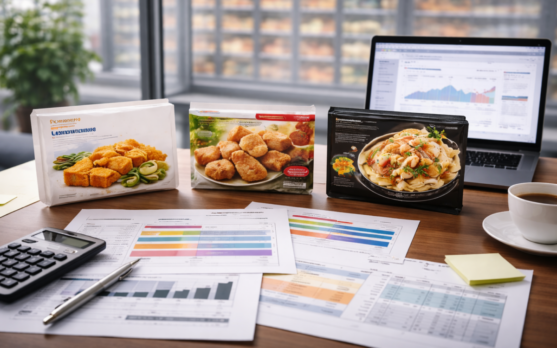
A new freezer line is easy to photograph: steel, conveyors, steam, insulated panels, boxes leaving the plant with the clean confidence of expansion. The wastewater plant behind the fence is harder to sell. It has tanks, odour control, sludge, pumps, permits, sampling points and nervous conversations with the municipality. Yet in potatoes, frozen vegetables, ready meals and bakery, that less glamorous corner of the site may decide whether the next volume increase happens at all.
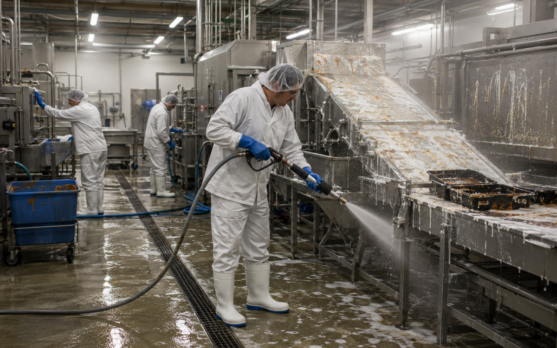
The capacity meeting that usually starts in the wrong place
In a frozen food expansion meeting, the first slide is rarely about wastewater. It is usually about line speed, freezer throughput, storage, labour, energy cost, packaging automation or customer demand. Sales has a forecast. Operations has a bottleneck. Finance wants a payback period. Retail has promotional windows. Foodservice wants security of supply before it changes menus.
Then, somewhere later in the project, the water question arrives. How much extra wash water? How much peeling loss? How much blanching discharge? How many more sanitation cycles? What happens when the plant changes from one SKU to another three times in a shift? Can the existing treatment plant take the hydraulic load? Can it take the organic load? Can the municipal system accept the peaks?
By that point, the freezer already has a supplier name attached to it. The building drawings may be advanced. The commercial story has momentum. But water does not care about momentum. The permit either allows the extra discharge or it does not. The local treatment works either has room or it does not. A plant can buy steel faster than a community can accept a higher pollution load.
That is the uncomfortable part of this story. Frozen food capacity is often discussed as if the factory ends at the cold store door. It does not. For many categories, the true factory includes the wastewater plant, the discharge consent, the sewer connection, the receiving water body and the patience of local authorities.
Potatoes make the case too clearly to ignore
Frozen potato processing is the easiest place to see the issue because the process is blunt. Potatoes arrive with soil. They are washed, de-stoned, peeled, cut, blanched, dried, fried or partially cooked, frozen and cleaned around. Along the way, water collects starch, peel fragments, suspended solids, oil, organic matter and seasonal variation. It is not a neat flow. It moves with harvest quality, raw material condition, product mix and plant discipline.
That is why recent wastewater projects in potato processing read less like environmental upgrades and more like capacity infrastructure. EnviroChemie has described a potato processing project where treatment capacity is being increased from 1,800 m3 per day to as much as 2,300 m3 per day, with a multi-stage system involving flotation, anaerobic treatment, aerobic treatment, membrane bioreactor technology, ultrafiltration, reverse osmosis and higher water recycling. Newterra has announced a large Canadian food processing reuse system designed to handle 1.58 million gallons of wastewater per day as part of a major expansion. Cavendish Farms’ Jamestown expansion includes a $30 million wastewater treatment plant intended to remove pressure from the city’s municipal wastewater system.
None of those examples are small technical footnotes. They are signs of where the growth constraint is moving.
The market side is obvious enough. Frozen fries remain one of the most internationalized parts of processed potato. Rabobank reported that global export value for frozen potato products rose from USD 7.7 billion in 2019 to USD 13.2 billion in 2024. Lamb Weston’s Kruiningen expansion in the Netherlands added 195 million kilos of annual frozen potato capacity. India is also seeing major potato processing investment, including McCain’s announced investment in Madhya Pradesh for French fries and potato flakes.
But every new tonne has a wet shadow. More potatoes do not simply mean more finished boxes. They mean more soil removal, more starch, more solids, more flow variation, more cleaning, more sludge and more permit exposure. The freezer gets the ribbon-cutting. The wastewater plant gets the load.
Vegetables, meals and bakery have their own wet arithmetic
Potatoes are not the whole story. Frozen vegetables can be deceptively water-intensive because the plant runs around washing, sorting, trimming, blanching and seasonal peaks. The plant may look calm from the outside, but during campaign periods the load can jump. Peas, carrots, spinach, beans, sweetcorn and mixed vegetables do not generate the same wastewater profile, and a site that looks comfortable on an annual average can be far less comfortable during the weeks when growers, processors and retailers all need the factory to run hard.
Ready meals bring a different problem. They create variability. Sauces, pasta, rice, meat, dairy, vegetables, oils, allergens and frequent product changeovers make the wastewater less predictable than in a single-product operation. The line may be commercially attractive because it can serve retail private label, foodservice and convenience demand from one site. The wastewater department sees the other side of that flexibility: more cleaning, more mixed residues, more fats, more proteins, more detergents, more peaks that do not behave like yesterday’s peaks.
Frozen bakery sits somewhere between the obvious and the overlooked. It is not usually imagined as a wastewater story. The commercial language is about laminated dough, indulgence, breakfast occasions, foodservice speed, thaw-and-serve formats and premiumization. But flour, dough, fillings, oils, egg, dairy, sugar, yeast, toppings and sanitation all end up somewhere. A bakery plant expanding into frozen formats may discover that the freezer is not the only piece of infrastructure that needs headroom.
In each case, wastewater becomes a measure of operational reality. It tells the truth about what the factory actually does, not what the commercial deck says it will sell.
The permit is becoming part of the business case
Europe is moving into a sharper regulatory cycle. The revised Industrial Emissions Directive entered into force in 2024, with Member States required to transpose the changes by 1 July 2026. Food, drink and milk plants already sit within a BAT framework that links industrial permits to emissions to water, water consumption, energy efficiency, waste and resource performance. The revised Urban Wastewater Treatment Directive also entered into force in January 2025, adding more pressure around treatment performance, pollution control, resource recovery and the economics of who pays.
That does not mean every frozen food site will suddenly be stopped by Brussels. Industrial regulation rarely works like that. The more likely effect is slower, more practical and more annoying: tougher permit reviews, closer scrutiny of expansion plans, more monitoring, more pressure on water reuse, stricter conversations with municipal systems and less tolerance for vague claims that wastewater can be “handled later”.
North America shows the same issue through a different mechanism. There, the discussion often happens around municipal pretreatment, local discharge limits, NPDES requirements for direct discharge, BOD and TSS surcharges, and whether a town can accept what a factory wants to send. A food plant connected to a municipal system may think it has solved the problem. It has only moved the negotiation. If the municipal plant is near its own limits, the industrial user becomes part of the municipality’s compliance risk.
That is where the commercial tension becomes visible. The retailer wants volume. The processor wants to defend the account. The town wants jobs, but not a damaged water system. The investor wants returns, but wastewater CAPEX does not show up on the pack. It is easier to explain a new freezer than a new equalization tank. Both may be required.
Water reuse changes the story, but does not make it free
The best operators will not treat wastewater only as a compliance expense. In high-load food plants, especially potato processing, there is recoverable value in the waste stream. Anaerobic treatment can turn organic load into biogas. Water reuse can reduce intake and discharge pressure. Starch and solids recovery can improve the economics. Better separation upstream can reduce the burden downstream. Process discipline, dry cleanup, smarter CIP and segregation of high-strength streams can matter as much as equipment.
There is a reason recent projects talk about water recycling, biogas and advanced treatment rather than simple end-of-pipe disposal. The business case is becoming more complex. Wastewater is no longer just a cost centre hidden behind operations. It is part of energy strategy, water security, permitting, community relations and site selection.
Still, the industry should be careful with the circular economy language. A wastewater plant is not a magic profit machine. It needs land, engineering, maintenance, skilled supervision, chemicals, membranes, sludge handling, spare parts and regulatory discipline. When it fails, it fails loudly. When it works, most people forget it exists.
That invisibility is one of the reasons the issue has stayed under-discussed in frozen food. Cold storage shortages are easy to understand. Energy prices are easy to discuss. Freezer efficiency has a clean engineering appeal. Wastewater is messier, more local, less photogenic and often less comfortable for companies to talk about. It is also one of the few constraints that can turn a growth plan into a permitting file.
The new site advantage may be water headroom
Site selection in frozen food has usually revolved around raw material access, labour, energy, logistics, customer proximity, cold storage availability and incentives. Those factors still matter. But water headroom deserves a place much earlier in the ranking.
A site with treatment capacity, reuse potential and a realistic discharge route may be more valuable than a cheaper plot with weak municipal infrastructure. A brownfield plant with no room to expand its wastewater system may carry more strategic risk than the balance sheet suggests. A processor that wants to add ready meals to a vegetable site, or premium frozen bakery to a conventional bakery operation, may find that product diversification changes its effluent profile before it changes its market position.
There is also a governance issue. Many boards approve industrial projects through visible assets: lines, buildings, warehouses, automation, robotics, packaging systems, solar panels. Wastewater sits in the category of “necessary infrastructure”, which is another way of saying it can be underweighted until late. That is poor industrial judgement. In some projects, the permit should be treated as a critical path item, not an administrative appendix.
The sharper companies will start asking different questions before they announce capacity. How much wastewater headroom does the site have at peak production, not on average? What happens if raw material quality changes? How much of the load can be removed before it reaches biological treatment? Can high-strength streams be separated? Is the municipal system willing and able to accept future growth? What does the permit allow after the next regulatory review? How many additional tonnes can the site actually process before water becomes the limiting factor?
Those questions are not glamorous. They are the kind that prevent expensive surprises.
Before the box reaches the freezer aisle
Consumers will never see this part of the frozen food business. A shopper standing in front of fries, vegetables, pizza, croissants or ready meals does not think about COD loads, suspended solids, municipal capacity or permit renewal. A foodservice buyer negotiating a frozen potato contract does not want to hear about equalization tanks. Retail category teams will continue to ask for availability, margin, promotional support and private-label reliability.
But supply reliability is built in the unmarketable parts of the factory. The water plant, the sludge route, the discharge permit, the sampling point and the relationship with the local authority are not side issues when a site grows. They are part of the product’s industrial backbone.
Frozen food has spent years discussing freezer capacity, cold-chain resilience and energy exposure. Those debates remain valid. Yet the next serious capacity argument may start somewhere less visible, behind the main production hall, where warm process water arrives carrying starch, fat, protein, soil, detergent and the physical evidence of growth. Before the pallet enters the cold store, the plant has to prove it can treat what growth leaves behind.