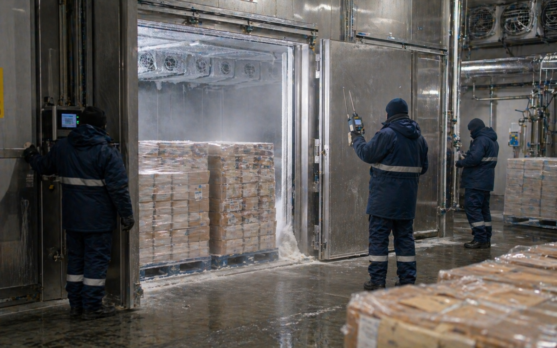
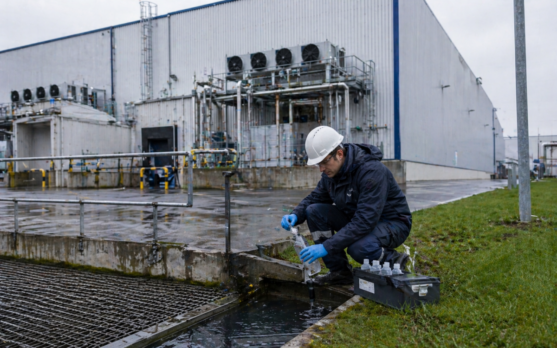
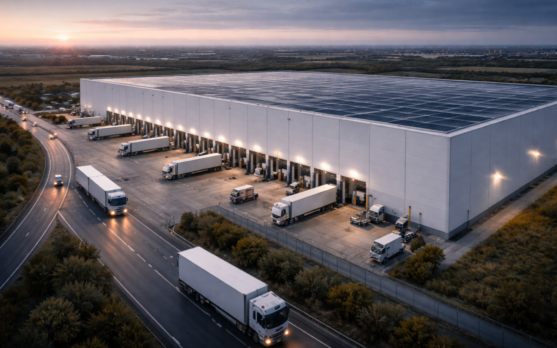
Walk into an older freezer warehouse at five in the morning and the argument is already visible. The yard is wet, the dock doors are working hard, forklifts are threading between staged pallets, and somewhere behind the insulated panels a refrigeration system is burning cash to protect product that cannot afford a bad hour. The building may still be useful. It may even be full. But the colder question for 2026 to 2028 is whether it is still worth serious money.
The old freezer box is under review
Cold storage used to get away with being scarce. If a warehouse could hold temperature, sit close enough to customers and absorb seasonal volume, the market gave it a role. That era has not disappeared, but it has become less forgiving. Frozen food is no longer a sleepy category moved in simple pallet flows. Retailers run sharper promotions. Private label suppliers carry more product variation. Foodservice orders are more fragmented. Processors want cleaner interfaces between plant, warehouse and transport.
Inside an ageing cold store, those shifts do not arrive as strategy language. They arrive as extra walking time. As dock congestion. As staff opening the same heavy freezer doors too often because the staging logic is poor. As data requests that require someone to chase temperature records, order movements and manual notes across systems that were never built for that kind of scrutiny.
A building can still be cold and still be falling behind. That is the uncomfortable part of the retrofit debate. The asset may not be broken. It may just be wrong for the service level now being sold.
Vacancy is exposing the weaker buildings
The US cold storage market has already started to show this split. Vacancy moved close to 7 percent at the end of 2025, a level not seen for two decades. New supply arrived just as food spending pressure and inventory discipline made occupiers more cautious. That sounds like a sector cooling down. It is more specific than that.
The market is not rejecting cold storage. It is becoming choosier about the kind of cold storage it wants. Newmark's recent market work points to an ageing US inventory, with an average age of around 42 years. MetLife Investment Management has also noted that roughly three quarters of US cold storage facilities are more than 25 years old. These numbers matter because age in this sector usually comes with physical limits: lower clear heights, weaker envelopes, older refrigeration systems, dock layouts from another operating era and less room for automation.
There are older buildings that should be saved. Some sit in locations that would be painful or impossible to replace. Near ports. Near processors. Near dense retail markets. Near labour and transport corridors that still work. In those cases the building may be tired, but the site is valuable.
Other assets are different. They look cheap until the owner prices the next five years honestly. Refrigeration upgrades. Energy leakage. Insurance questions. Labour inefficiency. Electrical limits. Fire protection. Customer demands that keep moving ahead while the building stands still. A low rent does not help much if the operation leaks margin every week.
Energy is now part of the building's identity
In a dry warehouse, energy can be a cost line. In a freezer warehouse, energy is the building's pulse. If the refrigeration plant is inefficient, if the dock doors bleed warm air, if the panels are tired, if controls are crude, the building tells on itself through the power bill.
That has become more serious because power access is no longer a background assumption. Across European logistics markets, occupiers are already moving toward better buildings rather than simply adding footprint. CBRE has pointed to weak net absorption and to occupiers trading up into more efficient, future-ready facilities. It has also flagged electricity grid constraints as a practical issue for more power-hungry warehouses.
Cold storage feels that before many other logistics formats. A freezer site that cannot secure enough power for upgraded refrigeration, future automation, EV yard equipment or expanded temperature zones is not just inconvenient. It is capped. The problem may not show up in the first walk-through. It shows up when a customer wants growth and the site cannot carry it.
A good retrofit can attack energy waste in ordinary, unglamorous places: doors, seals, insulation, airflow, controls, defrost logic, lighting, maintenance discipline. These are not cosmetic upgrades. In frozen food, where product value sits inside a narrow temperature promise, wasted energy and operational risk tend to live in the same corners.
Refrigeration can no longer be postponed forever
The plant room has moved closer to the boardroom. Refrigerant policy in Europe and the US is forcing owners to think beyond this year's service contract. The EU's revised F-gas framework is pushing HFCs toward a long phase-out by 2050. In the US, the AIM Act reduces HFC production and consumption allowances to 15 percent of historical baseline levels by 2036.
No serious operator will read those dates and rip out every system overnight. The industry does not work that way. But old refrigerant decisions now sit inside lease terms, refinancing plans, customer audits and insurance conversations. A warehouse with a vulnerable system may still function, but the risk is harder to ignore.
The best projects will not treat refrigeration as a replacement purchase. They will ask what the facility is supposed to become. A regional frozen food warehouse serving local retail and foodservice may need a different answer from a highly automated national distribution hub. Ammonia, CO2, cascade systems, hybrid approaches and low-GWP alternatives all bring trade-offs around safety, skills, cost, regulation and service support.
This is where poor capital decisions happen. Owners patch the plant because replacement is expensive. Then they patch the envelope because the plant keeps working too hard. Then they add controls because the energy bill is still ugly. At some point the building has received money, but not a new future.
Automation is a building test, not a magic fix
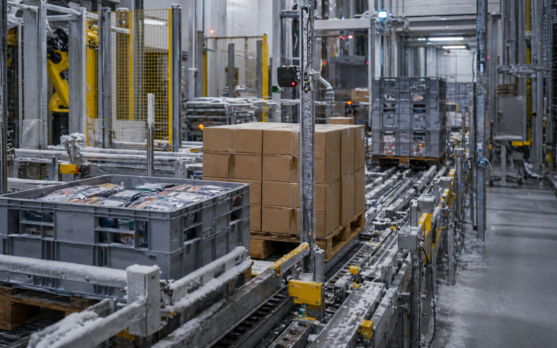
Automation has an obvious appeal in frozen logistics. Labour is hard to recruit. Freezer work is physically unpleasant. Picking errors are expensive. High-bay storage, shuttle systems, automated pallet handling and tighter WMS integration can change the cost structure of a site.
But automation is brutally honest about buildings. It does not like awkward columns, low roofs, poor slabs, cramped yards, weak power supply or docks that were designed when pallet flows were simpler. Some older cold stores can take selective automation and become much better. Others will turn technology into a compromise.
The more useful question is not whether every facility should become a showpiece automated freezer. Most will not. The practical question is whether the building can remove its worst manual pain points. Better dock scheduling. Cleaner pallet visibility. Less time spent searching, rehandling and waiting. More reliable temperature data. Fewer manual workarounds in the coldest zones.
A frozen warehouse that cannot take any of that improvement is making a risky bet on labour. It assumes people will remain available, affordable and willing to carry inefficiency in minus temperatures. That assumption looks weaker each year.
Frozen food will reveal the weak assets first
The freezer aisle is a rough judge of logistics. A missing frozen pizza line, a failed potato promotion or an empty ice cream bay is visible immediately. The shopper sees the hole through the glass. The retailer sees lost sales. The supplier hears about service.
Behind that simple gap can sit a warehouse issue: slow picking, poor staging, weak inbound discipline, lack of peak capacity, bad stock visibility or a dock routine that cannot move fast enough during promotional pressure. Frozen food is not only about storage. It is about controlled movement. Too many old cold stores were built around holding product, not around the speed and precision now expected around it.
Manufacturers feel the same pressure from the other side. A potato processor, frozen bakery plant or ready-meal manufacturer does not want finished goods trapped in a downstream node that cannot keep pace. When the warehouse struggles, the factory starts protecting itself. More buffer. More calls. More defensive planning. Less confidence in commercial promises.
Foodservice adds another complication. Mixed frozen orders, route pressure, substitutions and fast turnaround punish blunt warehouse layouts. A building designed for bulk pallet holding may still be valuable, but it needs to know its lane. Pretending it can serve every modern frozen requirement is where the margin starts to go missing.
The money should follow the site, not the sentiment
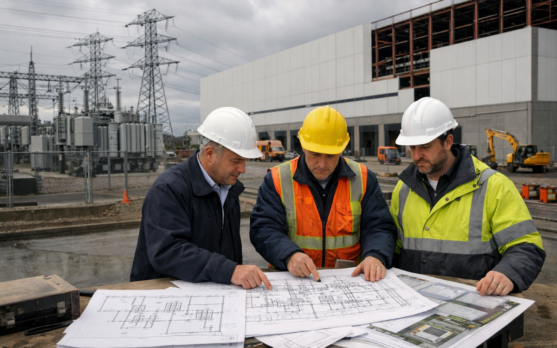
The cleanest retrofit cases start with a strong site. If the location is difficult to replace, if power can be secured, if the structure can take meaningful upgrades, if the customer base is real, then an older cold store may deserve capital. Not decoration. Capital.
That means work that changes the operating answer: better envelope performance, tighter dock discipline, refrigeration strategy with a longer runway, monitoring that customers can trust, layout changes that reduce wasted movement, racking that improves density without damaging flow, systems that give the sales team fewer excuses and the operations team fewer daily fires.
Rebuild becomes the better answer when the physical limits are too deep. Low clear height. Poor slab. Constrained yard. Weak electrical supply. No room to expand. Dock geometry that cannot be fixed properly. A plant room that needs money now and again later. These are not small defects. They are the business model.
Some assets should not receive heroic treatment. Maintain them. Use them for simpler flows. Sell them. Reposition them. Let them serve customers whose requirements match their limits. The cold chain has room for practical buildings. It has less room for owners who confuse activity with relevance.
By 2028, the divide will be easier to see. Better assets will not need long explanations. Weaker ones will carry a story into every negotiation: why the energy charge is high, why automation is hard, why the dock is slow, why the customer cannot get the data cleanly, why the next upgrade is always around the corner. In cold storage, those explanations have a cost.