For years, the refrigerant debate in cold storage had a familiar shape. Lower the GWP. Improve efficiency. Control leaks. Stay ahead of F-gas rules. That logic still matters, but it is no longer enough. A second question is moving into the room, and it is more awkward because it does not sit neatly inside carbon accounting: what happens after fluorinated molecules leave the system and end up, directly or indirectly, in water? That is where TFA changes the conversation. Not because refrigerants are the only source. They are not. But because the frozen industry is built on long-life refrigeration assets, and some of the chemistry once sold as a climate improvement may now be examined through a different lens: persistence, water, PFAS exposure, public trust and regulatory durability. The next refrigerant decision may not be judged only by GWP. It may be judged by whether it can still be defended when water becomes the headline.
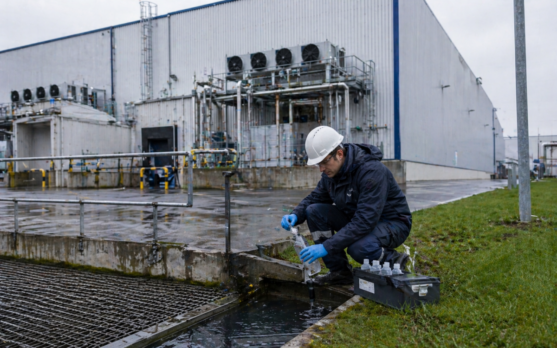
Low-GWP was the first filter. It may not be the last.
The cooling sector has spent years moving away from high-GWP refrigerants. That was necessary. It was also, in many cases, technically difficult, expensive and politically unavoidable. So it is understandable that many operators began to treat “low-GWP” as the destination.
But low-GWP is not the same as low-risk.
That sentence is going to matter more over the next few years. Some fluorinated refrigerants and blends may look better than older HFCs in climate terms, while still raising harder questions under PFAS and TFA scrutiny. This is the uncomfortable gap now opening inside the refrigerant debate. The industry solved one part of the problem, or at least started to solve it, and is discovering that another part of the problem may have been sitting downstream all along.
For frozen food, this is not academic. Cold stores, freezing tunnels, blast freezers, retail refrigeration, transport refrigeration and multi-temperature distribution networks are long-life infrastructure. A refrigerant choice made today can sit inside an asset for years. If the regulatory and reputational lens changes during that period, the system does not become easy to rewrite just because the board wishes it had asked better questions earlier.
TFA moves the discussion from climate math to water accountability.
GWP is an accounting language the industry understands. It has numbers, thresholds, phase-down schedules and procurement logic. Water risk is different. It is more public, more local, more emotional and often harder to reverse.
TFA, or trifluoroacetic acid and its salts, is persistent and highly mobile in the water environment. It can form from several sources, including certain fluorinated refrigerants, some pesticides, biocides and other chemical pathways. That distinction matters. A serious article should not pretend that cooling is the only source of TFA, because that would be wrong and easy to dismiss.
The sharper point is that refrigerants are part of a broader source picture at exactly the moment Europe is becoming more serious about PFAS in water. Once a molecule is discussed in terms of persistence, mobility and drinking-water protection, it stops being a back-room engineering issue. It starts to enter the language of regulators, water utilities, investors, food companies and the public.
That is the real shift. Refrigerant choice is no longer only about what happens inside the plant room. It is also about what the choice implies outside it.
The frozen sector should not wait for a final ban to understand the signal.
Regulation moves slowly. Market confidence can move faster.
Europe’s PFAS restriction process is not finished. Derogations, transition periods and technical exceptions are still part of the debate. F-gases are not being treated as a simple one-line issue, and no serious operator should read the current stage as an overnight prohibition on every fluorinated solution.
But waiting for the final legal text before asking the strategic question would be a mistake. When a sector starts discussing whether it needs derogations, transition windows or special conditions, the conversation has already changed. The question is no longer whether the sector is visible to regulators. It is how long certain uses can remain defensible, under what conditions, and with what controls.
That is the message frozen companies should hear. Not panic. Not activism. Signal.
Natural refrigerants gain a new argument, but not a free pass.
Amonia, CO2, hydrocarbons and other non-fluorinated approaches already had strong arguments in many applications: very low or zero GWP, long experience in industrial systems, and a clearer position under HFC phase-down logic. TFA adds another argument: lower exposure to the PFAS-water debate where these solutions are technically feasible.
That does not mean every project should automatically choose a natural refrigerant. Industrial ammonia requires serious safety competence. CO2 systems bring high pressures and performance considerations in some conditions. Hydrocarbons carry flammability constraints and charge-limit realities. Air-cycle and other options have their own economics and niche profiles.
Good engineering still matters. So does safety. So does efficiency. So does lifecycle cost.
The difference is that the strategic value of non-fluorinated systems may rise if customers, investors and regulators begin to treat PFAS and TFA exposure as part of asset quality. In that world, a natural-refrigerant project is not only a climate decision. It may also become a risk-reduction decision.
Retrofit decisions are where this gets messy.
New builds can at least start with a blank sheet. Retrofitting an existing cold site is more complicated. The plant room is already there. The piping may not be ideal. The operating team may be trained around a specific system. The capex may be limited. The customer may not tolerate downtime. The owner may be trying to extend life rather than rebuild the asset.
That is exactly why the TFA question matters.
A short-life asset may justify a transitional solution. A small system in a constrained application may face limited practical choices. A critical facility may need a phased approach rather than a clean replacement. Real life is full of compromises.
But for strategic assets with a long future, the question gets harder: does it still make sense to invest fresh capital into a fluorinated pathway that may become more exposed to PFAS and water scrutiny? The answer will not be the same everywhere. But the question itself is becoming unavoidable.
This is where maintenance and strategy separate. Maintenance asks how to keep the system running. Strategy asks what risk the system is buying for the next decade.
Water-risk language will enter tenders before it enters every law book.
Large food companies and retailers are already used to qualifying suppliers on carbon, energy, packaging, animal welfare, labor, traceability and food safety. PFAS and water will fit very easily into that world once the issue becomes more visible.
At first, it may sound technical. Which refrigerants are used? What is the charge size? What is the leakage rate? What is the recovery plan? Are any refrigerants PFAS or TFA-forming? Is there a transition plan? Is there an alternative technology assessment? Does the operator have a documented refrigerant-risk register?
Those questions may start in ESG or procurement teams, but they will not stay there. They will reach real estate, engineering, cold-chain operations and finance. A cold store with good energy performance but weak refrigerant-risk documentation may begin to look incomplete in front of more sophisticated customers.
That is how reputational risk usually arrives: first as a questionnaire, then as a preference, then as a standard.
The uncomfortable phrase is “stranded chemistry.”
The frozen sector already understands stranded assets. A building in the wrong location. A warehouse without enough power. A facility that cannot automate. A refrigeration plant that is too expensive to maintain.
Now add another possibility: stranded chemistry.
This does not mean a refrigerant becomes illegal tomorrow. It means a system that looked modern in one regulatory cycle may start looking vulnerable in the next. It means the asset still works, but the explanation gets harder. It means the owner can say “low-GWP” and the customer may reply, “what about PFAS and TFA?”
That is the point at which technical specification becomes commercial exposure.
What changes next
In the short term, the biggest change will probably be in due diligence. New cold-storage projects, supermarket systems, processing plants and transport-cooling investments will be asked to document refrigerant choices more carefully. GWP, energy efficiency and safety will remain central, but PFAS status, TFA formation potential, leakage control, recovery and end-of-life plans will become harder to ignore.
Over the medium term, refrigerant choice is likely to become a supplier-qualification issue. Retailers, food manufacturers, 3PLs and investors will not all move at the same pace, but the top end of the market will ask better questions first. Projects that can explain why they chose ammonia, CO2, hydrocarbons or another non-fluorinated architecture will have a cleaner story where those systems are feasible. Projects that choose fluorinated blends will need a stronger technical and regulatory justification than they did a few years ago.
Longer term, after 2030, the market may divide refrigeration assets into three broad groups. First, assets built around non-fluorinated systems that are easier to defend against PFAS-water scrutiny. Second, assets using fluorinated refrigerants with disciplined leakage control, recovery, reporting and credible transition plans. Third, assets that were designed around yesterday’s low-GWP logic but never properly assessed persistence, water and regulatory durability. That third group may become the uncomfortable one.
The decision is no longer only technical.
The plant-room team will still matter. The engineer will still matter. Safety rules will still matter. But refrigerant choice is moving above the technical basement.
It belongs in capex committees. It belongs in lender discussions. It belongs in customer tenders. It belongs in asset valuations. It belongs in long-term cold-chain strategy.
The reason is simple. A refrigerant is no longer just a working fluid. It is a statement about how the asset handles climate risk, water risk, regulatory risk and reputational risk over time.
That is why the TFA problem is so important for frozen. It does not say that every fluorinated system is a scandal. It says the old one-dimensional refrigerant conversation is finished.