A frozen load can leave the plant in good condition, on the right trailer, with the right product, and still arrive as a margin problem. The product may be cold. The cases may be intact. The truck may even be close to its appointment. Then the ASN fails, the pallet label will not scan, the case count is short, the temperature record is disputed, or the receiver rejects the load because the paperwork does not match the physical delivery. In frozen food, profit is no longer lost only in energy, labor, ingredients, freight and promotion. It is also leaking through the quiet machinery of retail compliance.
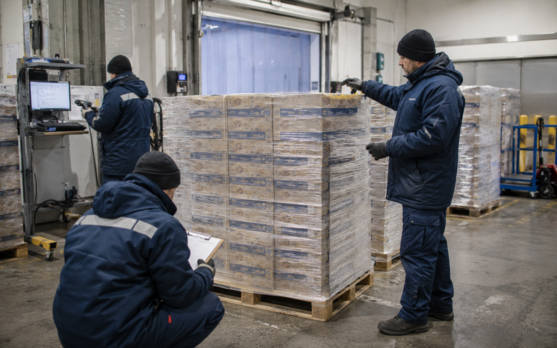
The invoice is becoming the second cold chain
In a frozen plant, people tend to know where the expensive parts of the business are. Compressors. Blast freezers. Spiral systems. Labor on the line. Packaging film. Pallets. Diesel. Storage. The obvious costs are visible because they make noise, consume power, occupy space or sit on a supplier quotation.
Chargebacks are different. They arrive after the operational event has already happened. Often they arrive as line items on a remittance, short payment, debit memo or deduction code. By then, the truck has gone, the driver has moved on, the product has either entered the system or been refused, and the people who know what actually happened at the dock are not always the same people now expected to defend the invoice.
That delay is what makes retail penalties so dangerous for frozen food. They do not always look like supply-chain failures. They look like finance noise. A small late fee here, an ASN issue there, a case-label deduction, a short-shipment claim, a pallet problem, a disposal charge. Each one can be explained. Together, they become a new cost of serving retail.
Large retailers and distributors have good reasons to tighten inbound discipline. A distribution center cannot run on vague paperwork, bad labels, unstable pallets and uncertain arrival times. Grocery has become too fast, too automated and too data-dependent for that. The receiving dock is no longer a flexible back door. It is a measured system.
Frozen suppliers feel that change more sharply because the product gives them less room to recover from friction.
A late truck is no longer just a late truck
In ambient grocery, a delayed or messy delivery can still create cost, dispute and lost shelf availability. In frozen, time has a colder edge. A missed appointment can put a loaded trailer into a queue. A queue can become a temperature question. A temperature question can become a refusal, a claim, a disposal discussion or a deduction that nobody budgeted for when the promotion was sold.
That is the commercial tension sitting underneath retail compliance. The retailer wants near-perfect availability. The supplier can control the factory, the freezer room, the case pack, the pallet build and, sometimes, the carrier. It does not fully control the weather, the line at the gate, the receiver's interpretation of a load, the available dock door, the retailer's appointment system or the exact moment when a data field fails validation.
Yet the cost often rolls back toward the supplier.
Walmart's OTIF program has become the shorthand example in the U.S. supplier community because it turned on-time and in-full execution into a hard commercial metric. The well-known 98% standard and 3% cost-of-goods penalty are not just numbers. They are a message. Retailers do not want explanations after the event. They want product, data and physical execution to arrive together.
Kroger's newer location and temperature data requirements point in the same direction. For relevant inbound loads, the industry is moving from appointment compliance toward movement-level visibility. The retailer does not only want to know that the trailer arrived. It wants the path, the timing and, for temperature-controlled freight, proof of condition. A frozen shipment is becoming a live data object before it reaches the dock.
The pallet label is now a financial control
There is something almost absurd about a freezer-margin story that comes down to labels. But anyone who has stood near a cold receiving area knows how quickly small defects become expensive. A pallet label placed under the wrap instead of outside it. A barcode that smears in freezing conditions. A mixed pallet that looks efficient at the shipper's dock and irritating at the retailer's dock. A case date that is legible in the warehouse office but not under condensation, frost and poor light.
These are no longer warehouse housekeeping issues. They are payment issues.
Retail systems need the ASN to match what is actually unloaded. They need the SSCC label to connect to the shipment notice. They need case codes to match item setup. They need the pallet configuration to make sense for receiving, storage, automation and store allocation. If the digital shipment says one thing and the physical pallet says another, the supplier has not simply made the receiver's day harder. It has introduced a commercial discrepancy.
Frozen makes that discrepancy harder to fix. Nobody wants a pallet of ice cream, frozen bakery or frozen meals sitting around while people decide whether the label problem is clerical or operational. Manual rework in a chilled or frozen environment is slower, less comfortable and more constrained. The easy answer, from the receiver's side, is often to record the defect and move the cost through the compliance process.
One of the most telling details in retailer guidance is the requirement that some labels be suitable for freezing conditions. That sounds minor until it fails. In a modern grocery supply chain, an unreadable label can carry the same commercial weight as a damaged case, because both interrupt the system's ability to receive product cleanly.
Short shipments hit harder when the shelf was promised
Frozen food also carries a promotion problem. A short shipment is not just a missing quantity on a purchase order. It can mean the retailer built a feature, printed a circular, set a digital promo, planned a secondary freezer display or expected replenishment for a seasonal window that will not come back next week.
A frozen pizza deal, a private-label vegetable reset, a holiday dessert feature or a foodservice-style frozen appetizer push does not behave like a slow ambient item with months of shelf patience. When the stock is not there, velocity is lost. If the retailer must protect shelf service, it will use the tools it has: penalties, deductions, scorecards, future order pressure and, in some cases, tougher conversations with the buyer.
The supplier often sees the deduction. It may not see the wider retail irritation behind it. The buyer hears about empty space, missed store allocation, late trucks, substitutions and DC rework. Finance sees a deduction. Sales sees a relationship issue. Supply chain sees an appointment or fill-rate problem. Quality may see a temperature dispute. These departments can spend weeks arguing about root cause while the deduction clock keeps moving.
That internal fragmentation is one of the hidden reasons chargebacks survive. The evidence is scattered across EDI, transport, warehouse photos, BOLs, temperature logs, carrier emails, appointment portals and customer portals. By the time the claim is reviewed, the useful facts are already stale.
The distributor squeeze is different, and sometimes worse
Retailer deductions receive more attention because large retailers set the tone. But distributors can be just as important, especially for frozen brands selling through natural, specialty, foodservice-adjacent or regional grocery channels.
UNFI is a useful example because supplier deductions and chargebacks have been a recurring point of discussion in the market. Its supplier terms make clear that invoices can be paid net of deductions, chargebacks and fees. For emerging and mid-sized frozen suppliers, that matters. A distributor relationship can look healthy on shipment volume while cash quietly deteriorates through short-payments, fees, allowances, service charges, unsold inventory exposure or disputed deductions.
The strategic mistake is to treat those deductions as an accounting cleanup after sales has already done its job. In reality, deductions are often where the commercial agreement, the physical shipment and the retailer's operating rules collide. If a frozen supplier cannot connect those three layers, it is negotiating margin with one hand tied.
Private label suppliers face a version of the same problem with less room for storytelling. Their product is often judged on service, cost, specification discipline and reliability. A branded supplier can sometimes defend a relationship with consumer pull or category value. A private-label frozen supplier that repeatedly triggers deductions risks being seen as operationally expensive, even if the plant is producing good product.
Compliance is moving upstream into the factory
The old habit was to think of retail compliance as something that begins at shipping. That is too late now. The chargeback often starts earlier: item setup, UPC maintenance, pack configuration, master data, production date coding, case artwork, pallet pattern, warehouse scanning, carrier handoff, ASN timing and the way temperature evidence is captured before the truck leaves.
A frozen manufacturer that wants to protect margin has to treat compliance as part of production readiness. Is the item file clean? Does the case code match the retailer's expectation? Is the Ti/Hi correct? Can the pallet be received without manual interpretation? Is the BOL complete for frozen or refrigerated requirements? Is the carrier able to provide temperature evidence in the form the customer expects? Can the company prove when the ASN was sent, what it contained and whether it arrived before the product?
None of this is glamorous. It will not be discussed with the same enthusiasm as protein innovation, clean-label reformulation, new freezing technology or packaging redesign. Yet it may protect more margin than a point of procurement savings.
The most practical frozen suppliers will start treating deductions as operational feedback, not as finance irritants. A repeated ASN error is a process defect. A recurring temperature dispute is a documentation or carrier-control defect. A frequent labeling charge is a packaging and warehouse-control defect. A short-shipment deduction is a planning, inventory or allocation defect. Once the deduction is mapped to root cause, it stops being a mystery. Until then, it is just margin leaving by different doors.
The next battleground is proof
The direction is clear. Retailers are asking for cleaner data before arrival, more precise appointment behavior, stronger traceability, better label discipline and, increasingly, temperature visibility for relevant loads. FSMA 204 enforcement has been pushed out, but many retail systems are not waiting for the slowest regulatory clock. They are building their own supplier expectations around traceability, ASN discipline and shipment-level data.
That creates a new divide in frozen food. One supplier will say, "We shipped it." Another will say, "Here is the PO, ASN timestamp, SSCC record, pallet photo, seal number, pre-cool record, set temperature, location trail, temperature log, appointment confirmation and signed BOL." In a deduction dispute, those are not the same company.
The second company has evidence. The first company has a memory.
As retail compliance tightens, the commercial advantage will sit with suppliers that can prove performance fast enough to recover money, correct process and protect the buyer relationship. The penalty itself is only the visible cost. The deeper cost is becoming a supplier whose loads require too much explanation.