Food waste is moving from the bin to the balance sheet. For years, the industry could talk about waste with soft language: efforts, initiatives, awareness, commitments. That vocabulary is starting to look tired. New targets, measurement rules, retailer pressure and colder-eyed finance teams are pushing a harder question onto the table: where exactly was value lost, who owned it at that moment, and what proof exists beyond an estimate?
The old waste story is wearing out
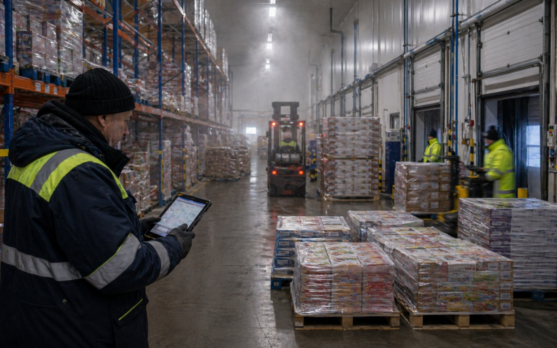
In a food factory, waste rarely looks like one thing. It can be a bin of trimming loss near a cutting line, a batch held by QA, broken product under a belt, packaging damage after a changeover, sauce left in a system, overfill that quietly erodes margin, or finished goods that never leave the cold store because the date code has become awkward.
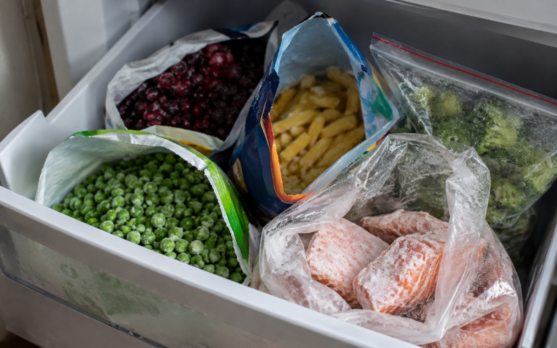
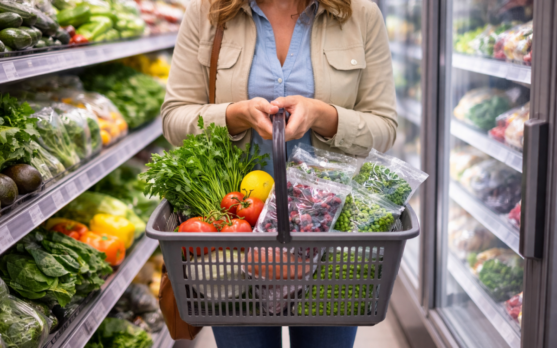
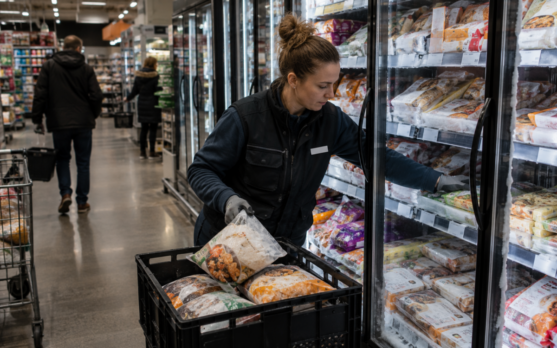
In retail, it looks different. A freezer door with slow-moving promotional stock. A case damaged during handling. Products buried behind newer deliveries. A store manager marking down inventory that should never have been pushed into that location. In the home, it becomes the forgotten bag at the back of the freezer, the frosted tray nobody trusts anymore, the family pack bought with good intentions and opened too late.
Food companies have always known these losses exist. The difference now is that the language around them is becoming less forgiving. Waste is starting to leave the sustainability deck and enter the operating ledger.
The EU’s 2025 amendment to the Waste Framework Directive is an important marker. Member States must reduce food waste by 10% in processing and manufacturing and by 30% per capita at retail and consumption by 2030, covering restaurants, food services and households. Those are national targets, not a single automatic obligation dropped onto every company in the same way. Still, the direction is clear. Targets become policies. Policies become reporting. Reporting becomes procurement pressure, retailer scorecards, audits and internal arguments about whose loss is being counted.
The freezer has a strong argument, but not a free pass
Frozen food has a credible waste story. Longer shelf life, portion control, less spoilage, year-round access, better use of produce, more time for the household to decide. Research promoted by the American Frozen Food Institute has pointed to lower waste rates for frozen foods compared with fresh counterparts at retail and household level, particularly in fruits and vegetables. Consumers also understand the household logic. A freezer lets them use what they need and leave the rest for later.
That advantage is real. It is also incomplete.
A product can reduce waste in the household and still carry hidden loss upstream. A frozen vegetable line may throw out product during sorting, trimming, blanching, optical rejection and packing. A potato processor may lose value in grading, cutting, defect removal, broken product, oil management, coating, seasoning and overweight packs. A ready-meal plant may lose value in component prep, sauce handling, line start-up, rework, allergen changeovers, quality holds and finished goods that miss a launch window.
The industry should not weaken its own argument by making it too clean. Frozen food is not waste-free. It is waste-shifting, waste-delaying and, at its best, waste-reducing. The difference matters. If frozen wants to own the waste conversation, it has to show the ledger across the chain, not only the consumer benefit at the end.
Waste by temperature zone
The more useful frozen-food question is no longer simply how much food was wasted. It is where the waste happened by temperature zone.
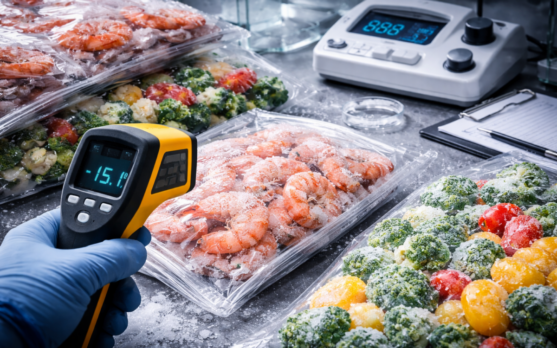
Ambient, chilled and frozen systems lose value differently. Frozen has more protection against spoilage, but it has different failure points: temperature abuse, damaged packaging, inventory ageing, wrong forecast, slow rotation, poor FEFO discipline, rejected pallets, freezer breakdowns, ice build-up, customer claims, defrosted returns, and stock that remains technically safe but commercially dead.
A cold store manager knows the scene. A pallet sits in a corner because the customer changed specification. Another waits for a quality decision. A third is blocked because the date code no longer fits the retailer’s intake rules. The product is frozen, stable, safe, maybe perfectly usable. But the commercial clock is still running. At a certain point, frozen storage stops preserving value and starts hiding a loss.
That is why “waste accounting by temperature zone” could become a serious management tool. Factory loss is different from cold-storage loss. Cold-storage loss is different from retail freezer shrink. Retail freezer shrink is different from household freezer waste. Treating them as one sustainability number hides the operational truth.
A manufacturer that can show waste by zone, by cause, by SKU and by destination will have a stronger story than one that only reports a corporate reduction percentage. It will also have better arguments with customers. Was the loss caused by production inefficiency, over-forecasting, late order changes, retailer planograms, promotion mechanics, packaging damage, shelf-life rules or consumer behaviour? The answer decides where money should be spent.
Finance will ask sharper questions than sustainability did
Sustainability teams often start with kilograms. Finance teams ask what those kilograms cost.
That shift changes the meeting. A tonne of waste is not just a tonne. It may contain raw material cost, labour, energy, freezing cost, packaging, quality checks, storage, transport, disposal fees and lost sales. A rejected frozen meal tray carries more embedded value than a raw trimming. A pallet destroyed after months in a freezer carries a different cost profile from product removed during line start-up. Food waste reporting that ignores value will look increasingly thin.
The Food Loss and Waste Protocol already gives companies a language for boundaries, material types, destinations and reporting periods. The practical challenge is inside the business. ERP, MES, WMS, QA systems, waste contractor invoices, retailer claims, donation records and shrink reports rarely tell the same story without work. Some losses are measured in kilos. Some in cases. Some in euros. Some are written off as yield. Some disappear inside markdowns or returns.
That messy data problem is where the new discipline begins. A company cannot manage waste properly if finance, operations, supply chain, quality and sustainability each hold a different version of the truth.
In frozen food, the accounting layer should become more granular: kilograms lost per tonne produced, value lost per SKU, waste per production run, waste by destination, waste by temperature zone, waste from date-code pressure, waste from packaging failure, waste from customer order changes. Not all of that will be perfect at first. It does not have to be perfect to be revealing.
Retail will push the pressure upstream
The retail freezer has always been a strange space. It is more stable than fresh produce, less forgiving than ambient grocery, and often less visible in waste debates than chilled food. That may change.
Retailers have a strong reason to present frozen as part of their waste-reduction strategy. Frozen products can reduce spoilage, help portioning and support household planning. But retailers will also want suppliers to absorb more of the complexity: better pack sizes, stronger packaging, more realistic promotion planning, improved date-code management, product formats that move faster, and data that proves the category is not just cold, but efficient.
Private label will sharpen the issue. A branded manufacturer can sometimes redirect stock. A private-label producer with retailer-specific packaging has fewer escape routes. If a forecast misses, if a promotion underperforms, if a product is delisted, the waste risk becomes more difficult to move. That risk will show up in negotiations, whether openly or buried inside price, service levels and claims.
Foodservice has its own version. Frozen helps kitchens control portions and reduce prep waste, but operators also face menu changes, labour shortages, storage limits and unpredictable demand. A case of frozen product is not waste because it is frozen. It becomes waste when the operation loses the ability or the reason to use it.
The companies that know the causes will move first
There is a temptation to treat the new waste era as a compliance exercise. Measure, report, reduce, publish. That will satisfy part of the requirement, but it will not create much advantage.
The better companies will build a cause ledger. Not just how much waste, but why. Forecast error. Mechanical damage. Overproduction. Allergen changeover. Inaccurate pack weight. Temperature deviation. Quality hold. Retail rejection. Date-code rule. Promotion residue. Consumer pack size mismatch. Each cause points to a different owner and a different fix.
Some fixes will be in the factory: better yield control, gentler handling, smarter rework rules, faster QA release, improved packaging line settings, more accurate overfill control. Some will be in the cold chain: FEFO discipline, live inventory visibility, better routing, earlier intervention on ageing stock. Some will be commercial: fewer bad promotions, smaller minimum runs, better demand sensing, more flexible pack architecture. Some will be uncomfortable because they will show that the waste was designed into the business model.
Frozen food has a chance to lead here because its product logic already supports waste reduction. But the claim has to mature. The freezer does not eliminate waste. It buys time. The value of that time depends on whether the business knows what is happening before the product becomes unsellable, unwanted or invisible.
The next waste discussion will not be won by the company with the nicest sustainability wording. It will be won by the one that can open the ledger and show where value stayed food, where it became loss, and what changed because someone finally measured it properly.