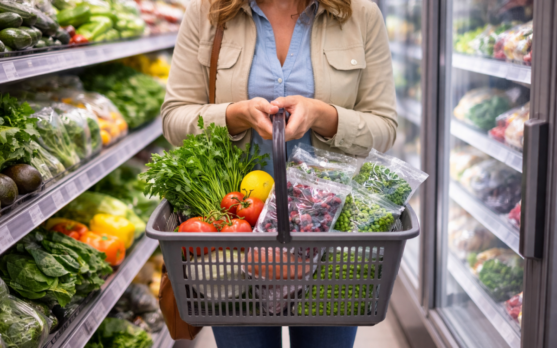
Consumers want food that looks less processed, but behaves more intelligently. They want ingredients they can understand, meals they can prepare without thinking too much, protein without effort, vegetables without waste, comfort without guilt, price control without looking cheap, and portions that fit a household that may not sit down together every night. Frozen food is standing in the middle of that contradiction, freezer door open, being asked to look simpler while doing more work than ever.
The freezer aisle has become a quiet negotiation
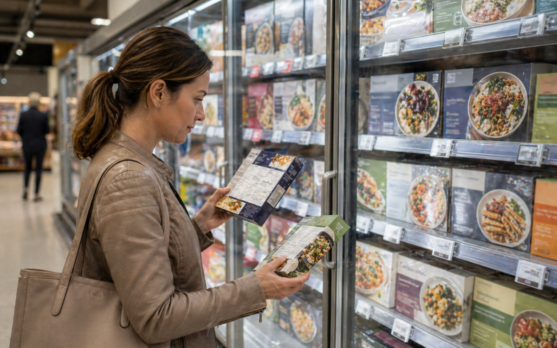
Watch a shopper in the frozen aisle for a few minutes and the contradiction is easy to see. A hand reaches for a bag of vegetables, then stops at a ready meal. The pack gets turned over. Ingredients first, then protein, sodium, calories, maybe fiber. The shopper does not want to feel like they are buying industrial food. They also do not want to cook from scratch on a Tuesday night after work, school runs, traffic, messages, prices and the small fatigue of modern life.
That is the negotiation now. Frozen food is no longer only fighting the old battle against fresh. It is fighting a stranger battle, against the consumer’s own split personality. People say they want food closer to home cooking, but they still expect the performance of a highly managed product: fast cooking, stable texture, predictable taste, clean storage, minimal waste, good value, a controlled portion and enough nutrition to feel defensible.
There is no point pretending this is simple. The word “processed” has become a kind of emotional shortcut. For some shoppers, it means too many additives. For others, it means factory food, soft texture, high sodium, low fiber or something designed to be eaten too quickly. The technical definition matters in research circles. At the freezer door, perception does most of the work.
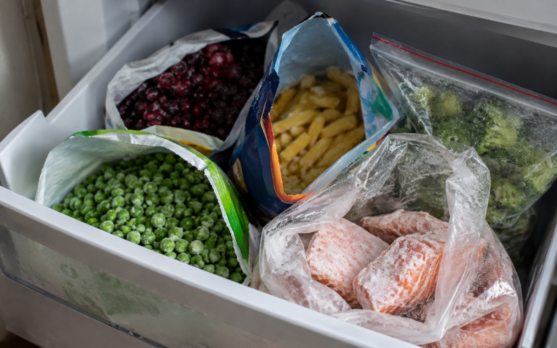
Frozen food has one advantage in this argument. Freezing itself is easy to understand. It feels older, less suspicious, almost domestic. People freeze leftovers at home. They freeze fruit, bread, meat, herbs, soup. That gives the category a bridge other packaged foods do not always have. The problem begins when the product looks as if it has travelled too far from that simple act of preservation.
Less processed is not the same as less engineered
The industry should be careful with the phrase “less processed.” Taken literally, it can push food companies into a corner. A frozen pizza, a protein bowl, a dumpling, a coated vegetable snack, a plant-based meal or an air-fryer item will always involve formulation, handling, freezing, packaging and reheating design. There is no honest way around that.
The better question is whether the engineering is visible in the wrong way.
A well-made frozen meal can contain a lot of hidden intelligence: sauce that does not split, rice that does not turn rubbery, vegetables that still have colour and bite, chicken that reheats without drying out, a tray that manages steam, a portion that feels satisfying, and a cooking instruction that works in a real kitchen rather than a lab. None of that feels like “processing” to the consumer when the product eats well. It only becomes processing when something feels fake, heavy, salty, overworked or oddly uniform.
That is the paradox frozen food has to master. The product may need more technical discipline, not less. Better ingredient selection. Cleaner labels. Smarter freezing. More careful portion architecture. More vegetables that look like vegetables. Sauces with culinary restraint. Protein that feels recognisable. Fiber added in a way that does not turn the texture strange. Packaging that protects quality without shouting about technology.
The strongest frozen products of the coming years may be the ones where the engineering disappears. The shopper should see food. The operator should see a very difficult product brief.
The meal-planning shift changes the category
Frozen food used to have a fallback reputation. Something for a night with no plan. Something kept at the back of the freezer. That image has not vanished, but it is no longer the whole category. Recent frozen retail research from AFFI and FMI points to a more deliberate use of frozen foods: more shoppers are buying with a meal or day in mind, and frozen is being combined with fresh ingredients rather than simply replacing them.
That detail matters more than another broad sales number. A shopper who mixes frozen vegetables with fresh protein, uses frozen fruit in breakfast, keeps frozen dumplings for a fast dinner, adds a frozen side to a home-cooked plate or buys a ready meal for a controlled lunch is not behaving like a desperate convenience buyer. They are editing the meal.
For manufacturers, that should change the brief. The old frozen logic was often about complete substitution: here is the whole dinner, here is the full pizza, here is the finished product. There is still room for that. But the more interesting growth may come from food that helps people cook just enough. Frozen components can carry the boring work: washing, chopping, portioning, blanching, par-cooking, seasoning, preserving, reducing spoilage. The consumer keeps the last gesture and feels more in control.
Retailers should notice the same thing. The freezer aisle does not have to sit apart from fresh. A shopper building dinner may need frozen vegetables, chilled sauce, fresh salad, frozen seafood, refrigerated dips, bakery bread and a dessert all in one trip. The store layout often still treats these as separate worlds. The shopper does not.
Protein, fiber and the GLP-1 shadow
Protein has become one of the few nutrition messages that travels easily across generations and lifestyles. It works for gym culture, older consumers, busy parents, weight management, snacks, breakfast and dinner. Frozen food is well placed here because it can deliver protein in finished meals, bowls, poultry, seafood, breakfast items, snacks and even desserts. The freezer can make protein feel available rather than planned.
GLP-1 drugs have sharpened that conversation. They are not the whole story, and food companies should resist turning every product into a medical-adjacent claim. Still, the cultural effect is already visible. Smaller appetites, higher expectations for protein and fiber, more attention to portion size, and a desire for meals that feel complete without being large. Nestle’s Vital Pursuit and Conagra’s work around Healthy Choice are useful signals because they show how frozen meals can become a format for nutrient-dense convenience, not just calorie-controlled dieting.
There is risk here. A “friendly” label can quickly look opportunistic if the product is still heavy in sodium, saturated fat or kitchen chemistry the consumer does not trust. The smarter route is quieter: build meals that naturally fit the new appetite. More protein, more fiber, sensible portions, less clutter on the ingredient list, better vegetables, better satiety. No need to make the pack sound like a pharmaceutical leaflet.
This is where frozen food can either look dated or surprisingly modern. The dated version is a low-calorie meal that leaves the consumer hungry and unconvinced. The modern version is smaller but not mean, convenient but not empty, functional but still recognisable as food.
Waste may be frozen food’s most underrated health argument
Food waste rarely sounds as exciting as protein or clean label, but in the kitchen it is brutally practical. A bag of spinach that collapses in the fridge, berries that turn soft, herbs that never get used, fresh vegetables bought with good intentions and thrown away on Sunday night. Consumers know this routine. They pay for it twice, once at the checkout and again in guilt.
Frozen food has a quieter claim here, and it is a strong one. Portioning is not only a diet idea. It is a waste idea. A consumer can use half a bag of peas, one portion of fish, a handful of fruit, two parathas, a single bowl, a few dumplings. The rest waits. Fresh has beauty and immediacy. Frozen has patience.
That patience is becoming more valuable as food prices stay sensitive and households become less predictable. People work odd schedules. Children eat at different times. One person wants protein, another wants comfort, another wants something plant-based. In that environment, the freezer is not merely storage. It is a household planning tool.
Manufacturers sometimes underplay this because it sounds less premium than culinary innovation. That is a mistake. Waste reduction connects price, sustainability, meal planning and emotional relief. A product that helps a household avoid throwing food away has a form of value that does not always show up in a taste panel.
The new brief is almost unfair
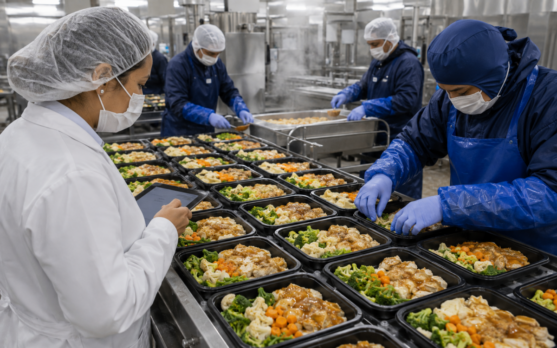
Frozen food is being asked to do something difficult. Look less industrial, cook faster, cost less than eating out, carry more nutrition, waste less, satisfy more occasions and still taste like something a person would choose rather than tolerate. In the factory, that becomes pressure on formulation, sourcing, freezing performance, packaging, line flexibility and quality control. In the buyer meeting, it becomes a fight for space in a category that can no longer be managed as backup inventory.
The easy mistake is to answer the processing anxiety with cosmetic simplicity. A rustic pack design. A few front-of-pack claims. A shorter ingredient list that does not solve the eating experience. Shoppers are getting better at sensing the gap between language and product. If the meal looks simple but eats poorly, the promise fails. If it eats well but looks too engineered, the promise also fails.
The better path is less theatrical. Make the product work harder, then make that work feel natural. Let vegetables look like they came from a field, not a mould. Let protein be visible. Let sauces behave without tasting overbuilt. Let the cooking instruction respect the fact that many people now use air fryers, microwaves, pans and ovens in improvised ways. Let the portion feel designed for a life people actually live.
The frozen aisle has always sold time. Now it has to sell judgment. The difference is important. Time-saving alone can sound like compromise. Judgment sounds like someone made the difficult decisions well before the product reached the freezer.
That may be the real future of better frozen food: not less science, but better manners. Technology in the background. Food in the foreground.