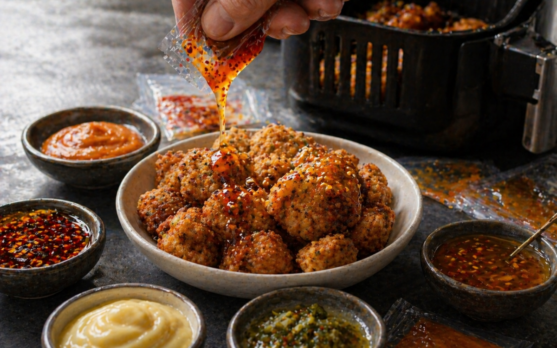
A bao bun does not fail in the freezer aisle because shoppers dislike global food. It fails because the dough goes heavy, the filling tastes flat, the sauce feels like an afterthought, or the buyer has placed it beside pizza rolls with no clue what meal occasion it belongs to. The more serious story in global frozen food is no longer whether consumers want Korean, Japanese, Indian, Latin or pan-Asian products. They do. The harder question, inside retail and manufacturing, is which products can survive the move from specialist trust to mass-market volume without losing the thing that made people buy them in the first place.
The specialist store is becoming the qualification round
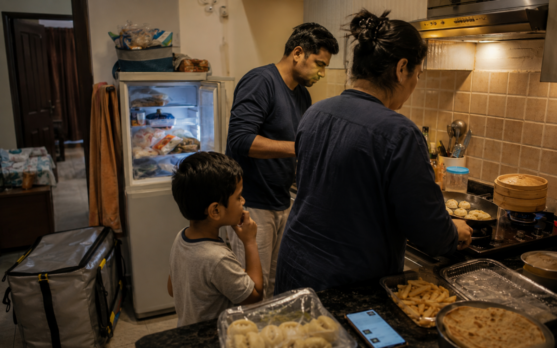
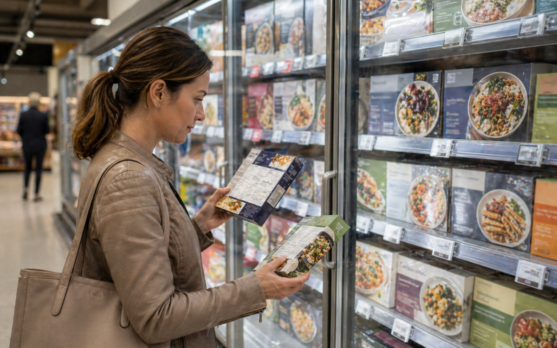
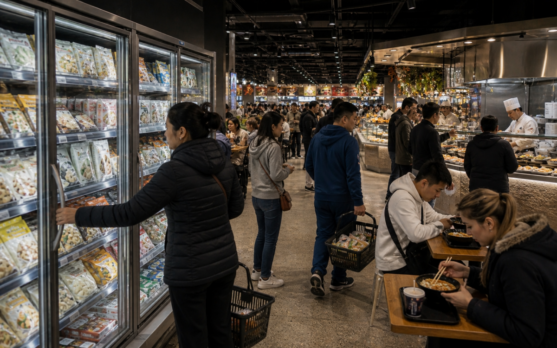
Walk through a good multicultural grocery store and the frozen aisle feels less like a category and more like a map of eating habits. There are soup dumplings, scallion pancakes, paratha, bao, mochi, fish balls, tteokbokki kits, empanadas, frozen desserts, curry pouches, filled buns and odd little snack formats that a mainstream buyer might still struggle to place on a planogram. Some are everyday family staples. Some are impulse buys. Some are pantry insurance for people who know exactly what dinner should taste like on a tired Tuesday night.
That is what makes these stores commercially useful. They do not simply expose shoppers to "new flavors". They test whether a product has a real eating occasion, whether the name is understood, whether the pack size is right, whether the cooking method is believable and whether the texture holds up after freezing, transport and reheating. A mainstream supermarket can measure velocity. A multicultural retailer often measures credibility first.
The distinction matters. Frozen food has become a larger, more complex aisle in the U.S., with Conagra's latest Future of Frozen Food work placing the market at about USD 93.5 billion. At the same time, growth is uneven. Some legacy frozen meals still carry the smell of compromise. Snacks, restaurant-style formats and global street-food items have more energy, partly because they do not ask shoppers to replace a full meal. They offer a smaller bet: try this bun, these dumplings, this mochi, this crisp-edged gyoza.
Texture is the first lie detector
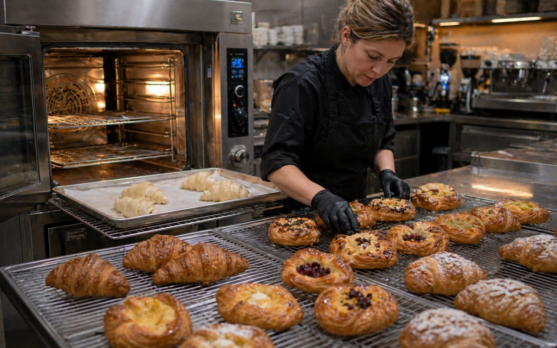
Global frozen products are judged brutally because many of them depend on texture. A dumpling skin has to stay thin but not tear. Gyoza needs that contrast between a soft top and crisp base. Bao should steam back to softness without turning dense. Paratha has to flake. Mochi needs chew, not rubber. Empanada crust has to protect the filling without becoming leathery. These details sound small in a head office meeting. They are not small when the product comes out of a microwave, pan, steamer or air fryer in someone's kitchen.
That is where specialist shoppers become an early warning system. They know the benchmark. They notice when the wrapper is too thick, when the filling is too sweet, when the chili has been softened until it says nothing, when the sauce has been reduced to a cost-saving sachet. Mainstream retail sometimes treats these products as flavor extensions. The better manufacturers treat them as engineering problems.
Ajinomoto's U.S. rollout of hane-style gyoza shows why this matters. The selling point is not just "Japanese dumpling". It is the lacy, crisp skirt that forms in the pan, the small restaurant cue that makes a frozen product feel less like compromise. The product moved from strong Costco attention into wider U.S. grocery availability, including Walmart and Albertsons, with further rollout to Kroger, Wegmans and other chains. That is a useful pattern. A format proves that shoppers will cook it properly and repeat it, then the wider aisle gets involved.
Food halls are teaching the freezer aisle
The most interesting multicultural retailers are no longer operating as simple grocery stores. They are building places where shoppers can eat, browse, compare and then take home a frozen version of something related. H Mart's planned large-format California flagship, T&T's U.S. expansion and 99 Ranch's food hall work in Flushing all point in the same direction: the store is becoming a food education system.
For frozen food, that is valuable. A shopper who has eaten a scallion pancake hot from a counter has a different relationship with the frozen pack. A shopper who has smelled roasted meats, watched noodles being pulled or picked up a bakery item beside the grocery aisles is not buying from a cold blue cabinet in isolation. The product sits inside a memory, a meal, a texture, a cultural signal.
T&T's Chino Hills project is a good example because it combines grocery, prepared food, bakery, sauces, frozen goods and private label in one environment. The reported product mix includes soup dumplings and green onion pancakes among more than 200 private-label items. That is not just assortment building. It is a retailer creating its own bridge between authenticity, convenience and margin.
99 Ranch's Flushing food hall is another signal. A supermarket with a 12,000-square-foot food hall and more than 20 food concepts is not simply adding traffic. It is training shoppers in dishes, regions and formats. Some of those formats will never become mainstream frozen products. Others will. The food hall gives retailers and suppliers a place to watch what people actually queue for before a buyer turns the idea into a frozen SKU.
The next hit may be a format, not a flavor
There is a trap in the way the industry talks about global food. It often reduces the subject to flavor: Korean heat, Japanese umami, Indian spice, Latin smoke, Thai sweet-sour balance. Flavor matters, of course. But the products moving best from specialist shelves toward mainstream freezers are often formats.
Dumplings are a format. Bao is a format. Mochi ice cream is a format. Empanadas are a format. Paratha is a format. A format gives the retailer room to build a set. It allows variation by filling, sauce, protein, pack size and price tier. It also gives the shopper a repeatable habit. Once a household understands dumplings as a freezer staple, it can trade between pork, chicken, vegetable, soup dumplings, gyoza, mandu and private label without relearning the whole occasion.
Recent SPINS and Circana reporting cited by industry sources shows strong movement in frozen street-food-adjacent products, including bao buns, dumplings and egg rolls. The important reading is not simply that these items are growing. It is that they sit neatly between snack, appetizer, lunch, dinner shortcut and entertaining food. They are flexible without becoming vague.
Mochi ice cream tells a similar story from the dessert side. Morinaga's move to acquire My/Mochi gives a Japanese confectionery group a scaled U.S. frozen dessert platform. My/Mochi's reported USD 80 million in recent 52-week sales shows that a very specific texture, once unfamiliar to many shoppers, can become an everyday frozen novelty. The product did not win because it was vaguely global. It won because the format was memorable.
Private label will accelerate the category and flatten some of it
Retailers will not leave this territory to national brands. Store brands reached record U.S. sales in 2025, and frozen private label also grew. That matters because global frozen products are tempting private-label targets: visible, expandable, margin-friendly and often underdeveloped in mainstream assortments.
There is a commercial upside. Private label can make soup dumplings, scallion pancakes, empanadas or mochi-style desserts feel normal to shoppers who might not pay a premium on first trial. It can give the category more facings, better price ladders and stronger meal-building options. It can also help retailers own a point of difference in a frozen aisle that too often looks interchangeable.
But copying the shape is easier than copying the standard. A poor dumpling does damage. A paratha without layers is just a flatbread with a better name. A sauce packet trimmed to save cents can make the entire product feel unfinished. The risk is not cultural debate in abstract terms. The risk is repeat purchase. Shoppers forgive a lot in frozen food when the product is cheap. They forgive less when the product promised discovery and delivered a dull reheated snack.
What mainstream retail should learn before it scales
The smarter route is not to rush every multicultural hit into national distribution. It is to understand where the product earned trust. Was it bought as a family staple? A weekend snack? A party item? A lunch shortcut? A social media trial? Was it discovered in a food hall, online, at Costco, in an Asian grocery freezer, in a Latino market, or through a restaurant brand?
Those channels produce different evidence. Club stores can prove volume and value. Online ethnic grocery can show search behavior, basket pairing and repeat. Specialist stores can expose whether the core audience accepts the product. Food halls can reveal which dishes create appetite before they become packaged goods. A mainstream supermarket sees only part of the story when the SKU finally arrives.
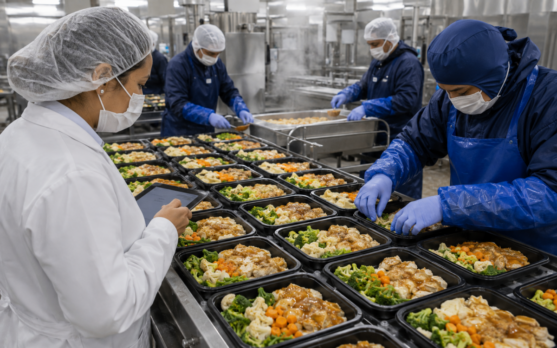
The manufacturing question is just as practical. Can the product run at scale without wrecking texture? Can the sauce be packed safely and still taste alive? Can instructions work across microwave, pan, steamer and air fryer without confusing the shopper? Can the cold chain tolerate long distribution? Can the pack photograph well without misleading the buyer? These are not cosmetic issues. They decide whether a global frozen product becomes a category builder or another short-lived rotation.
The next mainstream frozen hit may already be sitting in a specialist freezer, surrounded by shoppers who do not think of it as adventurous at all. That is the clue. Products become mainstream more easily when somebody already treats them as ordinary.