Frozen distribution used to be a big-box story. Big warehouses, big pallets, big routes, big replenishment cycles. That model is not going away. It still does the heavy lifting and probably always will. But it is no longer enough on its own. As grocery moves faster, online baskets become more normal, and shoppers expect frozen food to arrive with the same confidence as chilled or ambient products, the cold chain is being pulled closer to the city. Not everywhere. Not for every SKU. Not with the old fantasy of dark stores on every corner. The real shift is more disciplined than that: large regional cold stores will remain the backbone, while urban cold hubs and micro-fulfillment nodes become the layer that protects speed, availability and thermal trust near the consumer. Frozen logistics is moving from a warehouse problem to a network problem. That is the story.
The big freezer is still essential. It is just no longer the whole answer.
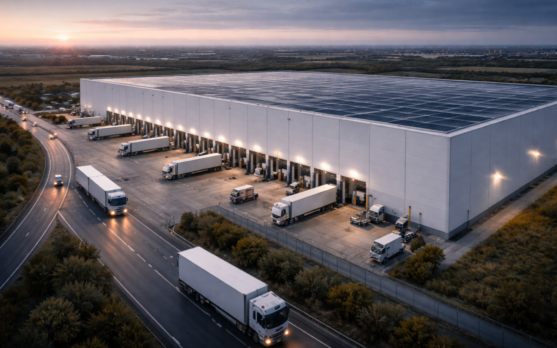
There is a lazy version of this debate that says micro-fulfillment will replace large cold storage. It will not. Large refrigerated warehouses are still the most efficient way to hold volume, replenish networks, consolidate inbound flows and manage serious frozen capacity at scale. Anyone pretending that frozen distribution can be rebuilt entirely around small urban nodes is skipping the hard economics.
But the opposite view is just as weak. The idea that big-box cold storage alone can handle the next phase of grocery is starting to look dated. Frozen products are being pulled into a retail world shaped by faster delivery promises, smaller urban baskets, app-based ordering, click-and-collect, retailer-owned platforms and higher expectations around product condition at the doorstep.
That changes the role of proximity. Not because every frozen pizza or bag of vegetables needs to sit five minutes from the customer. That would be absurd. But because certain frozen categories now suffer when the last part of the chain is treated as an afterthought. Ice cream, seafood, premium ready meals, frozen bakery, baby and health-oriented frozen lines, high-value private label, quick dinner solutions - these are not just pallets in a freezer. They are promises. And promises get tested in the last mile.
The old model was built for pallets. The new pressure comes from baskets.
Traditional frozen distribution was designed around replenishment logic. Move large volumes into regional warehouses. Move pallets or cases into stores. Keep the freezer cabinet supplied. Let the shopper do the final picking. It is a good model. It is efficient, familiar and still necessary.
Online grocery bends that logic. Suddenly the unit of competition is not only the pallet or the case. It is the basket. A mixed basket. A basket with ambient, chilled and frozen products sitting inside the same customer promise. A basket that may need to be picked, staged, routed and delivered inside a narrow time window without allowing the frozen part to become the weak link.
That is a different operational question. It is no longer only, how do we move frozen food cheaply through the chain? It becomes, how close does frozen inventory need to be to the customer before speed stops damaging economics or temperature confidence?
That question is why urban cold hubs matter.
Micro-fulfillment is not the revolution. The network is.
Micro-fulfillment sounds more exciting than network design, which is probably why it gets more attention. Robots in small spaces. Dark stores. Fast picking. Urban nodes. It is easy to sell as a clean technology story. But the important part is not the equipment. It is the placement of inventory.
Frozen distribution is beginning to split into layers. The large cold store remains the engine. It holds depth, absorbs inbound complexity, supports cost efficiency and feeds the rest of the system. The urban cold hub sits closer to demand and carries selected frozen ranges where speed, availability and product condition matter most. Stores, dark stores and micro-fulfillment units then become the final execution layer, depending on density, local economics and the retailer’s operating model.
That is the practical future. Not a heroic battle between big warehouses and small nodes. A division of labor.
Big facilities win on scale. Urban nodes win on time. Stores win on reach. The best operators will learn how to make these layers work together without duplicating too much inventory, overbuilding expensive city space or pretending that every frozen SKU deserves the same proximity to the consumer.
The dark-store lesson was expensive, but useful.
The quick-commerce boom taught the grocery sector something it needed to learn the hard way: speed alone is not a business model. For a while, the market behaved as if enough small urban locations, enough riders and enough investor money could bend grocery economics into shape. That was never a safe assumption.
Frozen makes the lesson even sharper. The category adds thermal complexity to a model already fighting urban rent, labor cost, basket size, delivery density and customer impatience. A dark store with weak demand density is not an innovation. It is a cold room with a cost problem.
That does not mean dark stores are dead. It means they have to earn their place. They work when the catchment is dense enough, the basket is valuable enough, the assortment is disciplined enough and the operating rhythm is tight enough to keep waste, substitutions and dwell time under control. In weaker locations, the better answer may be store-based fulfillment, a shared 3PL urban cold node, or a hybrid model that uses large cold storage for depth and only keeps fast-moving frozen SKUs close to the city.
This is where the next phase becomes more mature. Less hype. More architecture.
The last mile is where frozen trust gets won or lost.
Frozen food has an odd weakness. It can travel thousands of kilometers through a disciplined chain and still disappoint the customer in the final stretch. The product may be safe. It may even still be within acceptable technical conditions. But if the ice cream arrives soft, the seafood pack looks tired, the box is wet, or the premium meal feels badly handled, the customer does not blame network design. The customer blames the retailer, the brand or the category.
That makes frozen different from ambient grocery. A late bag of pasta is annoying. A badly handled frozen product is a trust problem.
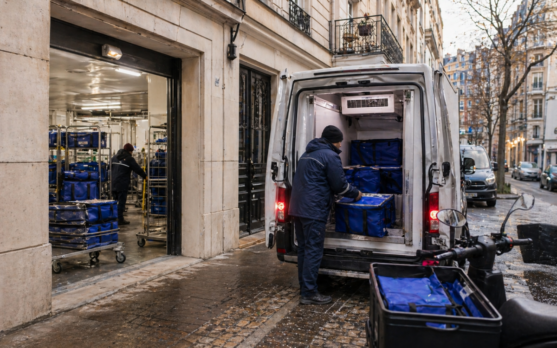
Urban cold hubs matter because they reduce the distance between controlled storage and the consumer. They do not eliminate last-mile risk, but they shorten the exposure window. They make it easier to stage properly, route intelligently and recover from small disruptions before they become customer-facing failures.
In frozen, minutes are not just minutes. They are thermal risk.
Retailers will not put the whole freezer aisle into urban nodes.
This is the part many strategies will get wrong. The future is not about copying the entire frozen range into a costly urban network. That would be a fast way to destroy the economics.
Retailers will have to become much more selective. Some frozen products belong in the urban layer because they move quickly, carry margin, drive repeat online baskets or create a strong customer expectation around availability. Other products are better left in regional distribution or classic store replenishment. The winners will not be the retailers with the most urban frozen inventory. They will be the retailers that know which frozen inventory deserves to be urban.
That will create a new form of category management. Not just shelf category management. Network category management.
A frozen SKU will need to justify where it sits in the system. Is it a regional-stock item? A store item? A fast-delivery item? A premium online item? A seasonal surge item? A product that must be close to the customer because substitution hurts too much? These questions will matter more as delivery promises tighten.
Producers should pay attention, because the pack is entering a new journey.
For frozen manufacturers, this shift is not only a retailer problem. It changes the physical life of the product.
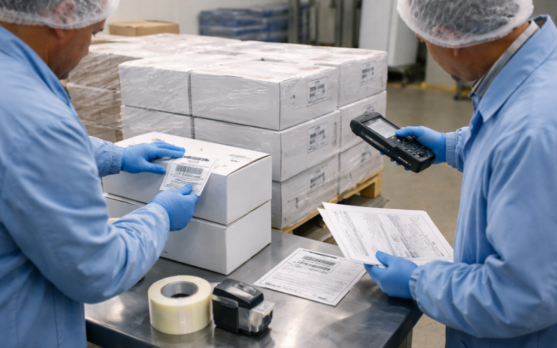
A product designed mainly for pallet movement, warehouse storage and freezer-cabinet display may not be perfectly designed for micro-fulfillment, item picking, short staging, courier delivery and mixed-temperature baskets. Packaging strength matters differently. Barcode readability matters differently. Case configuration matters differently. Pack size, product images, app data, substitution logic and handling instructions all become more important when the product is moving through a more fragmented omnichannel chain.
This is especially true for premium frozen. If a product asks the shopper to pay more, it cannot arrive looking like it survived an argument. The delivery experience becomes part of the brand experience, even if the brand does not control the last mile directly.
That is an uncomfortable truth for producers. The frozen product of the future may need to be designed not only for the freezer cabinet, but for the route from an urban cold node to a real front door.
The 3PL opportunity is real, but it is not simple.
For logistics operators, urban cold hubs open a tempting middle ground between storage and fulfillment. A good operator can offer retailers and food brands something more valuable than cold space: proximity with control.
That means multi-temperature staging. Fast picking. Accurate inventory. Clean digital integration. Short dwell times. Smart route handoff. Better exception management. The ability to handle frozen without treating it as a delicate nuisance inside a broader grocery operation.
But there is a trap here too. Urban cold hubs are expensive to run badly. They need density. They need disciplined assortments. They need strong systems and stable flows. A small cold node without enough volume becomes a cost sink very quickly.
The winning 3PLs will therefore not be the ones that simply open city cold rooms and call them innovation. They will be the ones that understand where an urban node genuinely improves the network and where it merely adds another expensive touchpoint.
What changes next
In the near term, the market will probably stay selective. Retailers will use stores where stores make sense. They will test micro-fulfillment where density is strong. They will rely on big cold storage for depth and cost. They will avoid the old quick-commerce mistake of treating speed as magic.
Over the next two to three years, expect sharper frozen assortments for rapid delivery. Fewer slow-moving SKUs in fast networks. More premium and high-repeat frozen lines positioned closer to demand. More data-driven decisions about which products deserve urban availability and which should remain in traditional replenishment flows.
Longer term, frozen distribution will look less like a straight line and more like a controlled web. Regional cold stores, semi-urban hubs, stores, dark stores, shared 3PL nodes and micro-fulfillment units will all play different roles. The hard part will not be adding nodes. The hard part will be deciding what each node is for.
That is the real strategic shift. Frozen distribution is moving from capacity planning to network intelligence.