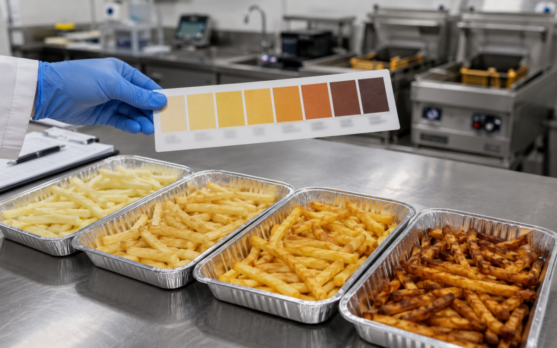
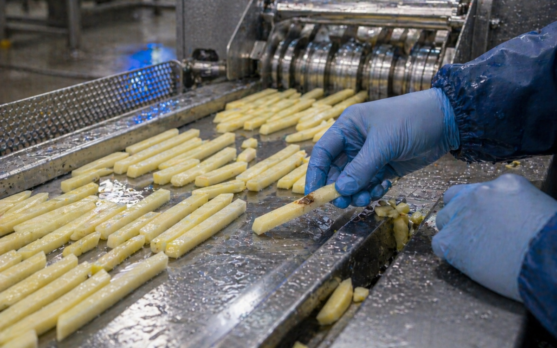
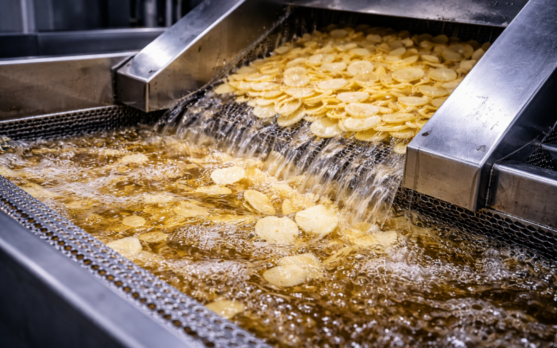
A new fry line makes a good photograph. Stainless steel, steam, oil systems, belts, cold stores, boxes of finished product leaving the factory with the calm confidence of industrial scale. Seed potatoes do not photograph as well. They sit earlier in the chain, in fields, stores, certification files and phytosanitary records, far from the QSR counter and the frozen aisle. Yet a frozen fry plant can only process the crop that the seed system made possible months earlier. If the right certified seed is scarce, diseased, blocked by trade rules or unavailable in the right variety, the most expensive line in the plant starts with a problem it cannot fix.
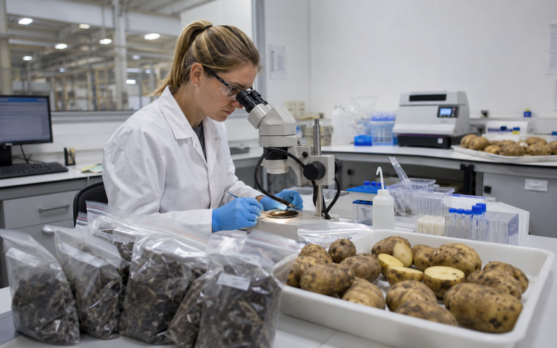
The factory risk begins before the field looks like a crop
Potato processing likes visible assets. New fryers. Bigger blanchers. Optical sorting. More freezing capacity. Larger cold stores. Better wastewater systems. Those are the things announced in press releases and shown to customers during site visits.
The seed system is quieter. It does not have the theatre of a production hall. It works in multiplication cycles, inspection regimes, clean land, variety rights, disease tolerance and paperwork. It is slower than capital expenditure and much less forgiving.
That makes it easy to underestimate.
A processor can plan a factory expansion in steel and concrete, but the potato crop behind it starts with certified tubers. The right tubers. Of the right variety. With the right health status. In enough volume. Planted by growers who can manage them properly. A fry contract signed in an office is only useful if the crop in the ground can become a fry-grade potato when the factory needs it.
There is an uncomfortable truth here for frozen potato: capacity is not secured at the factory gate. It starts in seed certification, clean soil and access to varieties that actually work in the fryer.
Processing potatoes are not interchangeable
A potato is not just a potato once it reaches a frozen fry plant. The industry knows this, but it is still worth saying plainly. A tuber for fresh table use is not automatically a tuber for fries, wedges, hash browns, chips or formed potato specialties.
French fries want length, dry matter, low sugars, good fry colour, strong storage behaviour, low defect levels and enough uniformity to keep yield from falling apart on the line. Wedges ask different questions. Crisps ask different ones again. Hash browns and formed products can absorb some variability, but not all of it. The factory does not just buy raw material. It buys process behaviour.
That behaviour begins with variety.
When a processor loses flexibility on seed, it can lose flexibility on product. A different variety may still make a potato. It may not make the fry, colour, length or texture the customer contracted. That matters in QSR and foodservice, where consistency is not a nice extra. It is the product.
Seed risk therefore has a delayed effect. It looks agronomic in spring and commercial in autumn. By the time the line is running, the decision was already made.
The pest that can shrink a seed base
Potato cyst nematode is not a boardroom phrase. It should be closer to one.
In Great Britain, the seed story makes the point clearly. Almost 80% of seed potatoes used in Great Britain originate from Scotland, and Scotland’s high health status has long made it a critical source. PCN threatens that base because Scottish legislation prevents seed potatoes being grown on land where PCN has been detected. A microscopic pest can remove fields from seed production. Not from a spreadsheet. From the land itself.
That is a different kind of capacity loss. No broken machine. No empty labour shift. No missed spare part. Just land that can no longer do the job the seed system needs it to do.
The Scottish PCN debate has been warning for years that continued spread could dramatically reduce the area available for seed potato production. For growers and processors further down the chain, the concern is not only yield loss. It is the slow erosion of a trusted seed platform.
Seed potato systems are built on clean status. Once that confidence is damaged, it is hard to rebuild quickly. A fry plant cannot solve PCN with overtime.
Some restrictions last longer than investment cycles
Potato wart offers an even harsher lesson. In Canada, the federal response plan for potato wart sets out long restrictions once the disease is detected. Host plant production can be prohibited for 20 calendar years from the year of detection, with further assessment before release from measures. In some circumstances, seed potato production can be effectively out of reach for decades.
That timescale should bother anyone looking at frozen potato expansion.
A new processing line can be financed, built and started in a few years. A disease restriction can outlive that investment cycle. It can affect trade confidence, field access, seed movement and the way customers view an origin. The damage is not always immediate at the processor’s door, but it moves through the system eventually.
Potato wart in Prince Edward Island showed how quickly plant health can become trade politics. Seed systems are not only technical. They sit inside national controls, import rules, inspection protocols and market trust. When that trust weakens, trade can slow or stop.
The lesson is simple enough, but often ignored: a processing region is only as strong as the plant health confidence behind its crop.
Trade rules can create a bottleneck without a disease outbreak
Biosecurity is not the only constraint. Regulation can make seed unavailable even when the seed exists.
After Brexit, seed potato trade between Great Britain and the EU was disrupted by plant health rules. Ireland felt the pressure because growers had historically imported significant seed volumes from Scotland, including processing varieties. By 2025, Irish growers were reporting difficulty sourcing enough seed for chipping and crisping varieties after losing that route.
That is a useful warning for frozen processors. Seed bottlenecks are not always caused by agronomic failure. They can be caused by borders, equivalence decisions, certification recognition and phytosanitary status. A variety may exist. The grower may want it. The processor may need it. If it cannot move legally, it might as well be on another planet.
UNECE’s updated Seed Potato Standard matters in that context. It gives countries a common framework around certification, varietal identity, traceability, pest and disease control, sizing and labelling. Harmonisation will not remove every national rule, but it gives the seed trade a clearer language. In a heavily regulated input, common language has real value.
Still, a standard is not a seed lot. The work remains local: inspections, land status, multiplication, lab testing, records and the confidence of buyers.
Expansion markets need seed systems, not only fry lines
Frozen potato processing is expanding beyond its old centre of gravity. Rabobank has pointed to strong growth in global frozen potato products trade, with export values rising from USD 7.7 billion in 2019 to USD 13.2 billion in 2024. China and India have moved from net importers to net exporters in processed potato products. In Europe, major operators have continued to add capacity, including Lamb Weston’s Kruiningen expansion in the Netherlands.
Those investments are real. So is the upstream question.
New processing capacity needs suitable varieties and dependable seed multiplication. In emerging or expanding markets, the issue can be especially sharp. Morocco, for example, opened its market to U.S. seed potatoes in 2024 after a long regulatory process, registering varieties such as Atlantic, Ranger Russet and Clearwater Russet. The Moroccan food processing industry was specifically interested in varieties for chips and French fries.
That detail matters. A country does not build a frozen potato platform with fryers alone. It needs growers who can produce processing potatoes, seed suppliers who can deliver the right genetics, plant health systems that can protect the crop, and contracts that connect the factory’s specifications back to the field.
For established processors, seed security may become a more explicit part of raw material strategy. Not only price per tonne. Not only acreage. Seed origin, clean land availability, variety pipeline, resistance traits, phytosanitary access and contingency options.
The first bottleneck in a frozen fry plant may be a certified tuber, not a fryer.
Resistant varieties will help, but they must still fry
Breeders are under pressure to deliver varieties that can handle disease, pests, storage, heat, drought and input restrictions. PCN resistance, wart resistance, virus management and climate tolerance all matter more than they did a generation ago.
But frozen potato processing has a stubborn filter: the product has to work.
A resistant variety that does not fry well is not a solution for a fry plant. A variety with excellent length and colour but weak disease performance may become harder to justify in regions under PCN pressure. The useful answer is not resistance alone. It is processing performance plus resilience.
That is a slow breeding problem and a commercial one. Growers need agronomic reliability. Processors need factory performance. Seed companies need market adoption. Customers need finished product consistency. Every compromise has a cost somewhere.
The seed system is therefore moving closer to the centre of processing strategy. It should. Frozen fries are sold as a finished convenience product, but their reliability is built through a chain of biological decisions long before the cutter sees the first tuber.