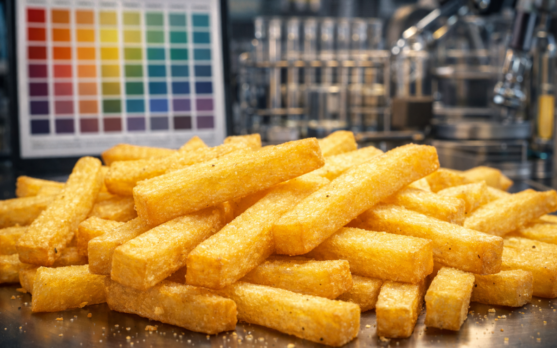
A potato sorter does not earn its place on the line by spotting the obvious bad pieces. Any decent system can throw out a black defect, a stone or a strip that looks wrong. The harder job is knowing which imperfect piece still belongs in the product, which one will damage the grade, and which strip should be trimmed rather than lost. That is where AI sorting becomes serious for frozen potato processors: not as a shiny layer of technology, but as a fight over yield, false rejects and the quiet cost of throwing away good potato.

The sorter has become a margin gate
In a frozen fry plant, the sorter sits in one of the most uncomfortable positions in the factory. Upstream, the line has already spent money on the potato: washing, peeling, cutting, blanching, drying, frying or freezing, depending on where the machine sits. Downstream, the customer is waiting for a grade, a length profile, a colour band and a bag that does not contain surprises.
The sorter is expected to protect both sides. Too soft, and defects reach the customer. Too strict, and good product disappears into reject. That second failure is easier to miss because it looks like discipline. A plant can congratulate itself on clean outgoing product while quietly losing saleable yield every hour.
That is why AI sorting needs a more industrial reading. The value is not simply better detection. The value is better judgement at speed. A good sorter separates risk from value. A bad one, even a sophisticated bad one, can confuse caution with waste.
Machine vision is replacing the old inspection story
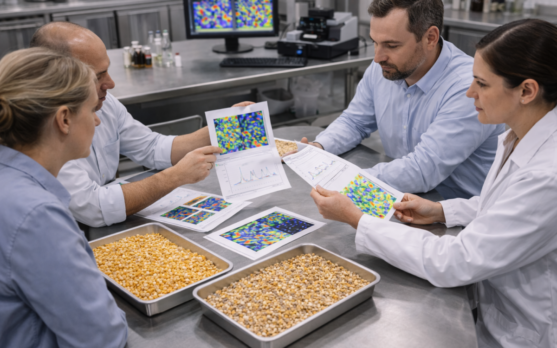
The word AI is often too broad to be useful. On a potato line, the real tools are more specific: cameras, lasers, near-infrared, hyperspectral imaging, software that learns defect patterns, and grading logic that can measure individual strips even when the belt is crowded and messy.
That matters because potato defects are not all the same. A piece of foreign material is a safety and equipment risk. A surface bruise is a quality issue. A sugar end may not show clearly until frying changes the colour. A short strip may still be acceptable inside the right length distribution. A long strip with a local defect may be worth saving if only the damaged part is removed.
Old inspection language makes all of this sound too tidy. A real production belt is not tidy. Product overlaps. Pieces turn. Moisture changes what cameras see. Lighting matters. Belts run fast. Operators have seconds, sometimes less, to understand whether a defect pattern is a raw material issue, a storage issue, a cutting issue or a setting problem.
AI earns attention when it helps the plant make those distinctions with less guesswork. Not perfectly. Better.
False rejects are where the economics gets serious
False rejects are the uncomfortable part of sorting economics. They do not usually appear in a customer complaint. They appear in yield reports, waste streams and uncomfortable conversations about why a line with good raw material did not produce the expected saleable output.
A strict reject setting can make a sorter look safe. It can also push too much good potato into the wrong stream. In a high-volume fry plant, that is not a rounding error. It is product that was grown, stored, transported, washed, peeled, cut and possibly fried before the factory decided to lose it.
This is where grade-based sorting matters. The question is not always whether one strip is perfect. The question is how that strip affects the final grade. If the specification allows a controlled distribution of lengths, the sorter should not behave like every short piece is a disaster. If a defect is local and removable, the factory should ask whether automatic defect removal can recover the rest.
The best sorting systems make that conversation more precise. They help operators see the difference between protecting quality and over-policing the product. That is not a small difference. It is the line between a quality machine and a yield machine.
Sugar ends show why human inspection has limits
Sugar ends are a good test of the new sorting argument because they do not behave like a simple visible blemish. The problem starts with sugar concentration in the tuber and becomes more obvious when heat turns part of the fry darker. By the time the colour problem is clear, the factory may have already spent too much value on that strip.
Hyperspectral and laser-based systems are important here because they can look beyond what a tired inspector sees under factory lights. For frozen fries, that matters. Dark ends are not just ugly. They can pull a product out of the expected colour range, create customer complaints and force processors into tighter process control.
There is also a raw material lesson in sugar-end detection. If one lot starts showing a pattern, the sorter is telling the plant something about storage, variety, season or field performance. A good system is not only a bouncer at the door. It is one of the few machines that sees the crop at industrial speed.
That information should not die inside the sorter. It belongs in discussions with raw material teams, storage managers, cutting-line operators and customers who keep asking why one week’s product behaved differently from the last.
Wet sorting and frozen sorting do different jobs
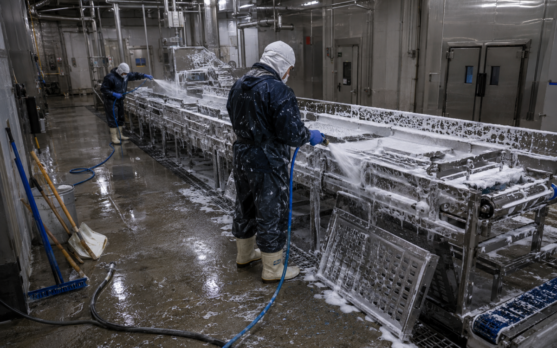
One of the better signs of a mature plant is that it does not rely on one final sorter to fix everything. By the time a defect reaches the end of the line, it has already consumed time, water, energy and handling. In some cases, it should have been removed earlier. In others, early removal would have been too crude and too wasteful.
Wet-area sorting and frozen-area sorting are not duplicates. Wet sorting protects the process. It can remove defects before they travel through expensive downstream stages. Frozen sorting protects the finished product and the customer specification. It checks what is actually about to enter the bag.
Bem Brasil’s recent high-capacity line is a useful example because it uses sorting in stages rather than treating inspection as a final clean-up. The wet area catches defects early. The frozen area checks length, defects and foreign material before packaging. That architecture is more realistic for a plant running large volumes under tight quality expectations.
For processors, the question is where the decision should be made. Catch a problem too late and it has already cost money. Catch it too early with the wrong logic and the plant may lose product that could have been recovered. Sorting strategy is no longer just equipment placement. It is value placement.
The next step after detection is salvage
There is a point where rejection becomes too blunt. A potato strip with one local defect may not deserve to be thrown away whole. Automatic defect removal systems exist because processors have known this for a long time: sometimes the profitable decision is not accept or reject, but cut, recover and return.
That is where sorting needs to link with defect salvage. A sorter identifies the problem. A trimming system removes the flaw. The remaining strip can rejoin the product stream if it still meets the specification. It is not glamorous. It is the sort of practical engineering that keeps more potato value inside the factory.
This will become more important as raw material gets harder to manage. Weather, storage behaviour and crop variation will not become easier. A plant that can only reject defects will be less flexible than a plant that can decide which defects can be removed and which pieces still have value.
The future sorter will also be a data source. It will help processors understand which farms, varieties, storage lots or handling practices create problems. It will feed better decisions upstream. That may be the most important change of all. The sorter will stop being only the machine that says yes or no. It will become one of the factory’s clearest witnesses.