There is a moment in a large potato plant, just after steam peeling, when the economics of the whole line become visible in a very unglamorous form: peel, moisture, starch, lost flesh, cleaning time, wastewater load and product that could have become saleable fries if the process had been tighter. Dry peel separation sits exactly there, in the wet, hot, high-volume part of the factory that visitors rarely see and accountants should probably visit more often.

Peeling is no longer a minor preparation step
In a smaller plant, peel separation can still be treated as a technical detail. In a factory built around frozen fries, wedges, hash browns or flakes, it is a margin event. A few tenths of a percentage point in flesh loss can disappear quietly into the waste stream, shift after shift. Water used to move peel away does not leave the building as a clean line item. It becomes wastewater, organic load, treatment cost, cleaning labor and sometimes a permit conversation.
That is why dry peel separation is starting to look less like an equipment feature and more like a plant strategy. It appears at the meeting point of four pressures that potato processors know too well: yield, water, sanitation and capacity. None of these pressures is new. What is changing is the tolerance for treating them separately.
Frozen potato processors are operating in a market that still has demand behind it, especially through foodservice, QSR expansion and private-label retail. But growth does not remove pressure. In Europe, EUPPA’s latest industry figures put processed potato output at around 7.5 million tonnes a year across 51 production facilities. At that scale, small losses are not small. They are raw material contracts, energy use, wastewater treatment and finished cases that never reach a cold store.
The pressure is also commercial. Retail buyers may talk about range, pack size, crispness and promotional mechanics, but the factory conversation behind those buyer meetings is harder. Can the plant hold specification when raw crop quality varies? Can it protect yield when potatoes come in with different sizes, dry matter, storage history and skin behavior? Can it do that while water, labor and energy remain expensive? Peeling is one of the first places where those questions become practical.
The real signal behind high-capacity dry separation
TOMRA’s DPS-16 has drawn attention because the specification fits the scale of modern potato lines: up to 70 tonnes per hour, designed to follow steam peeling, with dry peel removal through a perforated drum and a brushless design. It is easy to treat that as a product announcement. The more useful reading is that a machine like this reflects where large plants are going.
For years, steam peeling has been the dominant industrial answer for high-throughput potato processing. It is fast, effective and well understood. But steam peeling does not end when the skin is loosened. The plant still has to separate peel from product, remove waste, protect usable flesh and clean the area. That after-peeling zone can become a wet, abrasive, high-maintenance part of the line if it is handled badly.
Dry separation changes the nature of that zone. Instead of adding water to help remove and carry peel, the system keeps the peel stream dry at the separation stage. The difference matters. A dry peel stream is easier to collect, easier to measure and often easier to route into animal feed, biogas or other by-product channels. A wet, diluted stream is heavier, messier and more expensive to manage.
This is not a single-supplier story. Tummers also positions dry brushing after steam peeling as a way to remove peel without water, while keeping the peel suitable for further use such as animal feed. TOMRA has described dry peel separation as part of a controlled peeling module, not just a stand-alone removal step. The common thread is clear enough: the post-steam section is being redesigned around control, not just removal.
Water is the visible issue, but wastewater is the sharper one
There is a danger in overstating the water claim. Dry peel separation does not make a potato factory water-free. Nobody serious in the industry would say that. Potatoes arrive with soil. They are washed, cut, blanched, cooled, cleaned around and moved through wet parts of the process. Water remains part of the factory.
The meaningful point is narrower and stronger: dry peel separation can remove water from one of the dirtiest separation tasks after steam peeling. That distinction matters because potato processing wastewater is not just water leaving a drain. It carries starch, soil, peel fragments, organic load and process residues. Once water has been mixed into that stream, the plant pays for the consequences downstream.
Industry estimates often place potato processing water use in a wide range, roughly 8 to 28 litres per kilogram of processed potatoes depending on product and process design. That range is wide because plants differ. A modern fries plant with good recovery systems is not the same as an older facility with heavier water transport and weaker segregation. Still, the direction is obvious. A plant that can avoid adding water at a dirty point in the process gives itself more room to control the rest.
Wastewater is where sustainability language becomes operational reality. In the boardroom, water reduction may sit under ESG. In the plant, it sits next to pumps, screens, starch recovery, sludge, biological treatment and cleaning schedules. A dry peel stream does not solve every problem, but it keeps one waste fraction from becoming more difficult than it needs to be.
Yield is the argument that travels fastest
Water savings sound good in public. Yield savings move faster inside a potato company.
Take a large line running 50 tonnes an hour. One percentage point of extra flesh loss at peeling is 500 kilograms an hour. Across a long production day, that becomes tonnes of raw material that were bought, stored, washed, steamed and then lost before value was created. No sales team can price its way out of that indefinitely.
The difficult part is that peeling loss rarely looks dramatic in the moment. It is not a failed batch or a rejected truck. It is a steady bleed. A little too much flesh in the peel stream. A few more seconds of steam than needed because incoming quality is variable. A separation step that removes skin but also takes product with it. A line that runs acceptably, until someone calculates the annualized loss.
This is where dry separation links with the wider move toward optical inspection, peel quality control and tighter steam management. The best plants are not simply trying to peel harder. They are trying to peel exactly enough. Too little peeling sends defects forward. Too much peeling turns edible potato into waste. The sweet spot is narrow, and it shifts with crop, season and storage condition.
The frozen aisle never shows this story. A shopper sees a private-label fry bag, maybe a premium skin-on wedge, maybe a foodservice-style chip for the home freezer. Behind the pack, processors are fighting variability in raw crop quality while customers expect consistent length, color, texture and cooking performance. Dry peel separation is part of that fight because it protects the point where raw material first starts to become saleable product.
The cleaning shift is part of the business case
Factories rarely buy equipment only for its brochure capacity. They buy what can be cleaned, inspected, maintained and restarted without drama. A separator that looks impressive during production but becomes a punishment during sanitation will eventually lose friends on the floor.
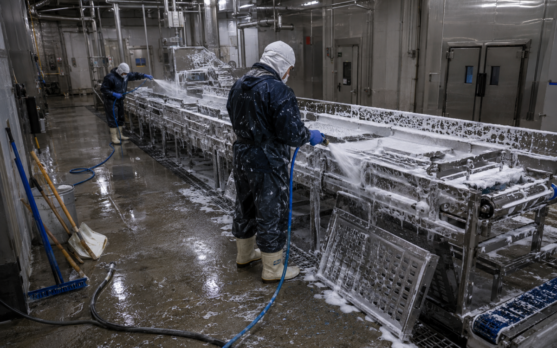
That is why brushless design, access doors and simpler cleaning are not small details. In potato plants, peel areas can become awkward cleaning zones. Wet peel sticks, starch films build, brushes wear, and maintenance teams learn where the machine is honest and where it hides work. A design that reduces wear parts and improves access can affect labor, downtime and hygiene discipline.
The point is not that every plant will justify a high-capacity dry separator immediately. Some will not. Smaller facilities, seasonal operations or plants with different product mixes may have other priorities. But in large, continuous or near-continuous potato operations, the after-peeling zone has become too important to leave as a messy compromise.
There is also a cultural shift here. Ten years ago, a sustainability claim could be tolerated if it sounded plausible. That is less true now. Plant teams want numbers. How much peel loss? How much cleaning time? How much water removed from that process step? What happens when crop quality changes? What does maintenance look like after six months, not during commissioning week?
Dry peel streams fit the new waste economy
Potato peel used to be discussed mainly as waste. Increasingly, it is discussed as a stream. That small change in language says a lot.
A dry, cleaner peel fraction gives processors more options. Animal feed remains one destination. Anaerobic digestion is another in some regions. Starch and fiber valorization continue to attract interest, although not every high-value use is economically realistic at plant level. The practical advantage comes first: a cleaner stream is easier to handle than a diluted, mixed one.
Regulation adds another layer. The EU’s updated food waste framework has put a 10 percent reduction target on processing and manufacturing waste by 2030 at member-state level. Factories will not all experience that pressure in the same way, and the legal burden will depend on national implementation. Still, it pushes processors toward better measurement. Once waste is measured more seriously, the peel room becomes harder to ignore.
In buyer meetings, sustainability claims are often reduced to packaging, carbon and sourcing. Inside the plant, the conversation is more granular. What percentage of the potato becomes finished product? What leaves as peel? What is wet waste? What is recoverable? What is being paid for twice, first as raw material and then as disposal or treatment?
That is where dry peel separation earns a more serious place in the discussion. It is not glamorous. It will not sell a frozen fry brand by itself. But it can help decide whether a processor has the cost base to defend contracts when prices tighten.
What comes next for large potato plants
The short-term pattern is likely to be selective retrofit. Plants already running steam peeling will look at dry separation where capacity, wastewater load or cleaning limitations are becoming visible constraints. The argument will be strongest in high-volume fries, flakes and other potato lines where throughput magnifies every small saving.
Over the medium term, dry separation will probably be bought less as an isolated machine and more as part of a controlled peeling block: steam management, peel scanning, dry separation, sorting feedback and waste routing. The plant manager will want one view of yield, peel quality and downtime, not three separate stories from three separate parts of the line.
Longer term, the more interesting change may be commercial rather than technical. If frozen potato markets remain competitive, processors will have less patience for hidden losses dressed up as normal operating conditions. Peeling will be judged by finished yield, water impact, wastewater burden, cleaning reliability and by-product value. Capacity will still matter, but capacity without discipline is not much of an advantage.
Dry peel separation has become visible because it touches all those points at once. It takes a rough, wet, overlooked part of the line and turns it into something closer to a controlled value gate. In a market where raw material, labor, energy and buyer pressure all bite at the same time, that is not a minor engineering update. It is where the potato line starts to show whether it is really modern.