A mid-tier frozen brand rarely loses the shelf in one dramatic meeting. It loses it in small, almost polite steps: one less facing after a reset, a deeper discount to keep the same volume, a retailer premium line arriving with better photography, a value own label sitting underneath it, and a buyer who no longer sounds impressed by heritage. The question has changed. It is no longer “how well known is this brand?” It is “what job does it still do that our own label cannot?”
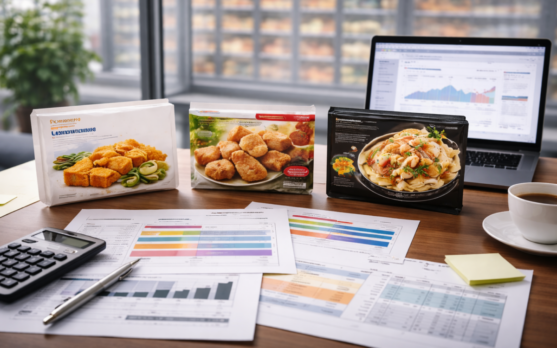
The freezer has less patience for ordinary brands
The middle of the frozen aisle used to be a comfortable place. A national or regional brand could sit between value and premium, carry a familiar logo, run promotions when needed and rely on the shopper’s memory to do part of the work.
That space is narrowing.
The freezer is no longer kind to products that are merely acceptable. Not bad. Not weak. Just ordinary. A pizza that is decent but not distinctive. A ready meal with no sharp meal occasion. A vegetable mix that looks like private label with a better-known pack. A potato product that does not beat value on price or premium on texture. These are the products now being asked to defend themselves.
Retailers have become less sentimental about the middle because the shelf has better alternatives. They can push a value tier when shoppers are careful. They can build a premium own-label tier when shoppers want a controlled treat. They can copy weak branded territory faster than many suppliers want to admit.
What remains for the mid-tier brand is uncomfortable: it must prove usefulness, not just recognition.
Private label no longer looks like the cheap option
The old private-label bargain was easy to read. It was cheaper, simpler, sometimes plainer, and shoppers accepted the compromise. That picture no longer fits many frozen categories.
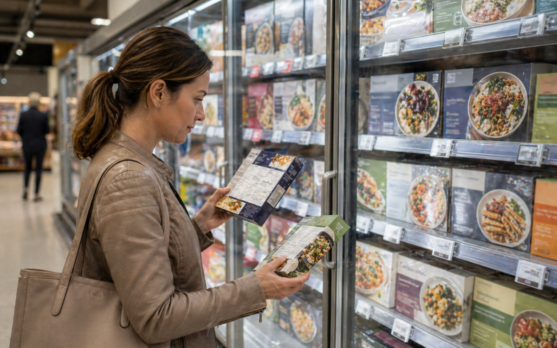
Retailers now run own label as a full brand architecture. Entry price. Core. Better. Premium. Healthy. Seasonal. Family. Free-from. Restaurant-style. In some frozen aisles, the retailer’s premium line looks more confident than the middle brand beside it.
That is a serious problem for suppliers who still think private label is just a copy. In frozen pizza, own label can cover the mainstream. In vegetables, it can own the basic bags. In potato, it can dominate value formats and climb into coated or specialty cuts. In ready meals, it can build good-better-best ranges with the retailer’s data behind every decision.
The retailer also controls the room. Shelf position, loyalty offers, meal deals, secondary space, price mechanics, online search, substitution logic. A brand has to fight for attention inside a space the retailer already owns.
Some brands can still win that fight. Many cannot win it by being familiar.
Premium has become more practical
Premium frozen is no longer just a nicer pack and a higher price. The better products now give shoppers a reason to trade up that can be understood quickly.
More protein. A better crust. A stronger sauce. A restaurant-style meal without delivery cost. A dessert that feels like a weekend purchase. A potato side that works in the air fryer and still eats well. A bakery product that gives the kitchen a smell closer to fresh.
This is where the middle gets caught. Value products answer the budget question. Premium products answer the experience question. Too many middle products answer neither with enough force.
A shopper under pressure may buy the own-label lasagne because it is good enough and cheaper. The same shopper may buy the premium pizza on Friday because it replaces a takeaway. The mid-tier pizza between them has to do more than exist.
It is not only about income. It is about permission. Shoppers may save on basics and spend selectively where the trade-up feels visible. Frozen is well placed for that because it offers control: portion, timing, storage, convenience. But control is not enough if the product has no edge.
Promotion is starting to look like rent
Promotions used to feel like a weapon. For some mid-tier brands, they now look more like rent paid to remain visible.
A discount can defend volume for a week. It can help a factory run. It can give sales teams a number to show. But if the brand only moves when the price is cut, the buyer learns the real story. So does the shopper.
Frozen categories are full of these habits: pizza deals, ice cream mechanics, vegetable multibuys, fries on promotion, ready meals pushed into temporary value. There is nothing wrong with promotion. The trouble starts when promotion becomes the only reason the product still has movement.
That is a weak place to negotiate from. The retailer has its own label below, its own premium tier above, and a long list of suppliers willing to manufacture either.
The best brands use promotion to amplify a role. The weaker ones use it to hide that the role has faded.
The squeeze will hit categories differently
Frozen pizza is exposed because the gap between private label and mid-tier has narrowed. A mainstream pizza needs either price, loyalty, crust quality, topping quality or a strong occasion. Without one of those, it becomes easy to replace.
Ready meals are less uniform. A trusted brand can still matter where recipe credibility, nutrition, cuisine or consistency is strong. But the centre is crowded. Retailers can offer core meals at value prices and premium meals with better cues. A mid-tier ready meal that looks like an older version of the market will struggle.
Frozen vegetables are harsher. Basic peas, corn, spinach and simple mixes are natural own-label territory unless the brand brings origin, format, seasoning, steam convenience or a quality argument that shoppers can actually see.
Potato is more interesting. Value bags are tough territory, but coatings, specialty cuts, air-fryer performance, loaded formats and foodservice cues give brands a way to defend a higher position. A plain middle product, though, is vulnerable.
Frozen bakery gives brands some shelter when quality is obvious in the eating. Lamination, butter, bake-off performance, texture and aroma still matter. But retailer premium own label can do very well here, especially when the product gives the shopper a fresh-baked reward at home.
The middle survives only with a sharper job
The frozen middle is not going to disappear. Grocery never moves that neatly. Some mid-tier brands will stay because they have scale, trust, factory efficiency or category relationships that still matter. Some will become private-label manufacturers in all but name. Some will shrink into fewer markets. Some will be bought, cleaned up and relaunched with a clearer promise.
The ones that survive will stop trying to be generally acceptable.
They will choose a job. Family value with trust. Better protein. Foodservice authority. Air-fryer performance. Kids’ reliability. Restaurant-at-home. A specific cuisine. A specific texture. A specific meal moment. Something the retailer cannot replace with a cheaper pack and a similar photograph.
The cold truth is simple enough. A brand in the middle has to do more work than it used to. It cannot rely on the shopper remembering it. It cannot rely on the retailer needing it. It cannot rely on promotion forever.
The freezer has become too crowded for brands with no clear job.