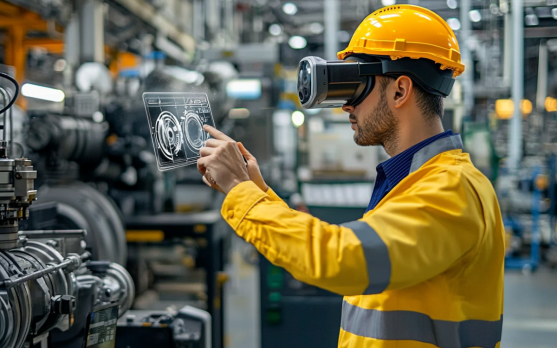
A frozen line is upgraded over a weekend. A new conveyor section goes in, a checkweigher is added, the old case packer is tied into a newer safety PLC, remote access is opened for maintenance, and production is expected back on Monday morning. Every supplier has paperwork for its own machine. The awkward question is who can sign for the line.
The machine is no longer one machine
Frozen food factories rarely grow in clean, architectural lines. They grow in layers. A spiral freezer bought a decade ago. A belt changed after a breakdown. A metal detector added after a customer audit. A wrapper upgraded when film changed. A robot cell installed when labor became harder to find. A palletizer linked later, because the cold end of the line was wearing people down.
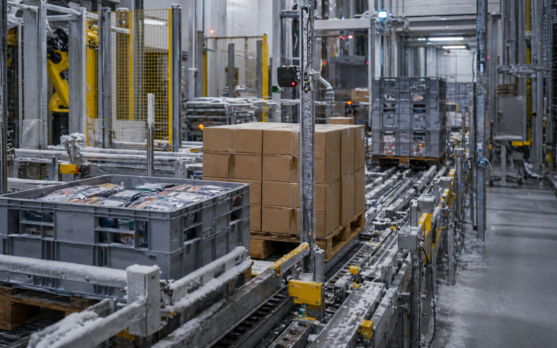
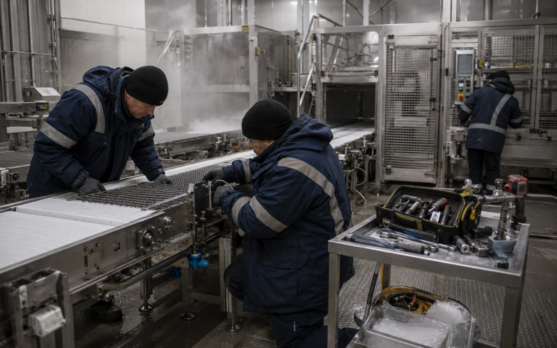
On paper, each addition may look manageable. In the plant, it becomes one moving system. Product drops, travels, freezes, weighs, rejects, packs, seals, labels, cases, stacks and exits toward storage. Operators step in when bags jam, cartons skew, frost builds, a sensor misreads, a belt drifts or a robot stops mid-cycle. The line is not a catalog. It is a working negotiation between old steel, new software and people under pressure.
That reality is about to matter more. Regulation (EU) 2023/1230 replaces the Machinery Directive 2006/42/EC and applies from 20 January 2027. The headline sounds legal. The practical impact is much sharper: integrated, modified and digitally connected machinery will be harder to treat as a set of separate boxes with separate certificates.
In frozen food, where automation projects often mean retrofitting rather than replacing an entire production hall, that changes the investment conversation.
The uncomfortable word is modification
The most sensitive term in the new framework is “substantial modification”. It matters because many factories are not buying entirely new lines. They are modifying old ones. Sometimes the change is physical, such as a new guarding system, robot cell or conveyor route. Sometimes it is digital, such as a new control program, a changed safety logic, remote access, a software update or new communication between machines.
The danger for processors is assuming that a change is small because it looks small on the project schedule. A new sensor can alter stopping behavior. A faster conveyor can change access risk. A robot added after the case packer can create a new interaction between people, pallets and moving arms. A safety PLC upgrade can change the way the line restarts after a fault. The paperwork problem begins when nobody has looked at the line as a single safety system.
This is where commercial tension enters. The OEM can say its machine was compliant when supplied. The integrator can say it connected the equipment according to specification. The plant can say it asked for a production solution, not a legal identity crisis. After an incident, an audit failure or a blocked certification process, those positions may no longer fit neatly together.
The frozen processor may discover that the person who created the final system has also inherited more of the responsibility for proving that system is safe.
Frozen factories make certification messier
A dry packaging hall is one thing. A frozen food line adds its own unpleasant details. Cold surfaces. Condensation. Ice. Cleaning chemicals. Gloves that reduce dexterity. Wet floors. Low temperatures around operators who still have to clear jams, inspect rejects, change film, adjust belts and handle blocked cases. The safety assessment cannot live in an office drawing alone.
Food machinery also has hygiene duties. Surfaces must be cleanable. Product zones must avoid traps, crevices and contamination risks. Cleaning, rinsing and disinfection have to be considered as part of real operation, not as a paragraph in a manual nobody opens. When a retrofit adds guarding, sensors, frames, brackets or robot fencing, it can alter cleanability as well as safety. A beautiful automation fix can become a sanitation headache if the design creates dead spaces or hard-to-access areas around frozen product flow.
That is why frozen food is exposed. The sector wants more automation because labor is tight, throughput is expensive and manual work in cold areas is hard to sustain. But the very projects that solve one problem can create a certification burden if they are bolted onto older lines without a full risk view.
A plant manager may see a practical upgrade. A safety reviewer may see a changed assembly of machinery.
Cybersecurity has entered the production hall
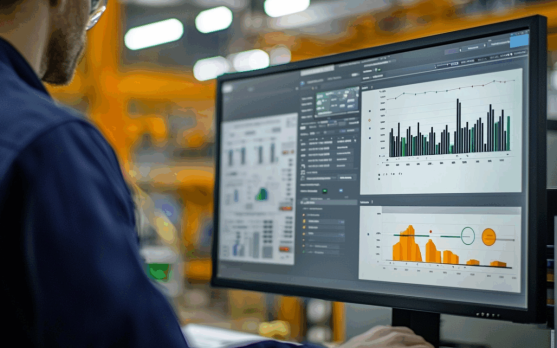
Another shift sits behind the machinery rulebook: software can now be part of the safety question. That matters in a frozen plant where equipment suppliers increasingly want remote maintenance access, where lines feed data into OEE dashboards, where scanners and vision systems steer rejects, and where safety-related functions may depend on software, networks or programmable controls.
In older discussions, cybersecurity belonged to IT. In a connected production line, a digital interference can become physical. If a remote connection, update, configuration change or corrupted signal can affect motion, stopping, restart or access control, it is no longer just a server-room issue. It belongs in the machinery risk conversation.
This will be uncomfortable for some factories. Many processors are good at mechanical maintenance. They know bearings, belts, motors, freezing tunnels, ammonia or CO2 systems, packaging jaws and conveyor hygiene. They are less comfortable documenting software integrity, access control, version history and remote changes in a way that supports machinery conformity.
The 2027 shift will not make every frozen line a cybersecurity project. That would be an exaggeration. It will make connected safety-relevant functions harder to ignore.
The certificate stack is not enough
One of the most common illusions in machinery projects is the belief that a stack of supplier documents equals line conformity. It may help. It may be necessary. It is not the whole answer.
A wrapper may be CE marked. A robot may arrive with documentation. A checkweigher may be properly supplied. A metal detector may be installed according to its manual. Still, the finished line can create risks that none of the individual suppliers assessed alone. How does the line stop? What happens when one machine faults and another continues feeding product? Can an operator reach a jammed case without entering a hazard zone? Does an emergency stop in one area trigger the correct response elsewhere? Can sanitation staff safely access the machine after production?
These are not theoretical questions. They appear at the worst possible moments: during commissioning, before a customer audit, after a near miss, when an insurer asks for documentation, when an authority investigates, or when a production manager wants to restart after a modification and the safety file is still incomplete.
The commercial cost is easy to underestimate. A delayed start-up can swallow the savings from a retrofit. A line that needs redesign after installation can turn a neat capital project into months of dispute. If the supplier, integrator and processor did not agree early who owns final conformity, the argument arrives when patience is lowest.
The new procurement question: who signs the line?
Frozen food companies will need to ask harder questions before the purchase order is raised. Not only capacity, footprint, energy use, washdown rating, speed, availability and price. Also who owns risk assessment for the integrated line, who prepares the final technical file, who validates safety functions, who updates instructions, who documents software changes, and who signs the declaration when the system enters production.
That may sound like paperwork. It is more than that. Certification has become part of operational resilience. A line that cannot be documented cleanly is a weaker asset. It is harder to expand, harder to sell, harder to relocate, harder to insure and harder to defend after an incident.
By 2027, some processors will have modern equipment and old habits. They will still treat CE marking as something attached to machines by suppliers. Others will treat the line as a living system, with every modification logged, assessed and tied back to safety, hygiene and software control. The difference will show up when something goes wrong.
Retrofit will not disappear, but casual retrofit will
No serious frozen food manufacturer can replace every line just because rules evolve. The sector will continue to retrofit. It has to. Margins are too tight, energy investments are too heavy, and many factories have strong legacy assets that still produce well.
The change is that retrofit will need a better discipline. A small upgrade will need a pre-assessment before tools arrive. A digital change will need a record. A robot cell will need integration responsibility clearly written. Safety PLC work will need validation, not just a successful restart. Instructions and operator training will need to reflect the line as it actually runs, not as it existed three modifications ago.
The processors that struggle most will not necessarily be the ones with the oldest equipment. They will be the ones with the poorest memory. A factory can operate an older freezer with confidence if the documentation, modifications and safety logic are clear. A newer automated line can be a problem if its history lives in emails, contractor notes and the head of one engineer who has since left.
From 2027, machinery compliance will become less forgiving of industrial folklore.