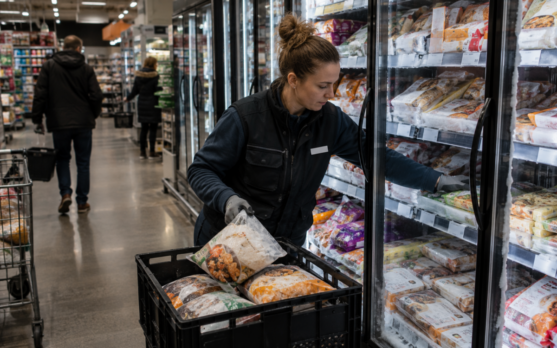
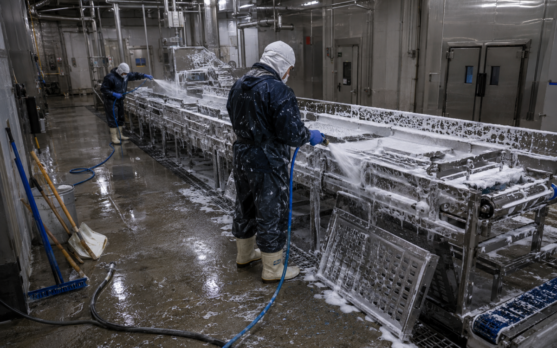
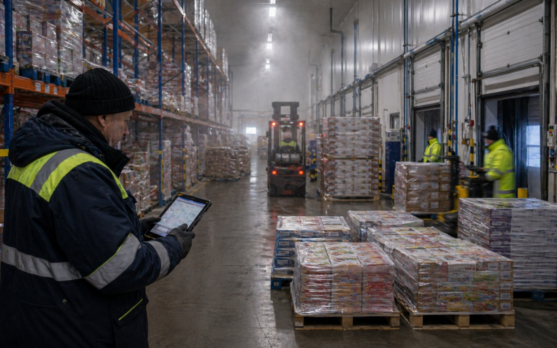
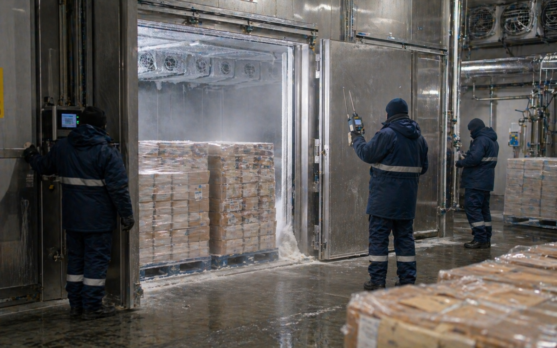
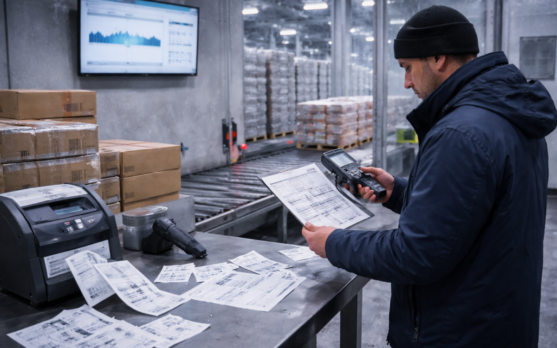
The frozen factory already has plenty of screens. Line speeds, freezer temperatures, OEE charts, metal detector checks, packaging alarms, compressor loads, batch records, labour gaps, late orders. The harder problem is what happens when all of them are shouting at once, and the shift team has ten minutes to decide whether to slow the line, hold a batch, call maintenance, change the sequence, protect a customer order or let the cold store absorb the mess. Agentic AI becomes interesting only when it enters that uncomfortable space, where timing, temperature, food safety and commercial pressure meet.
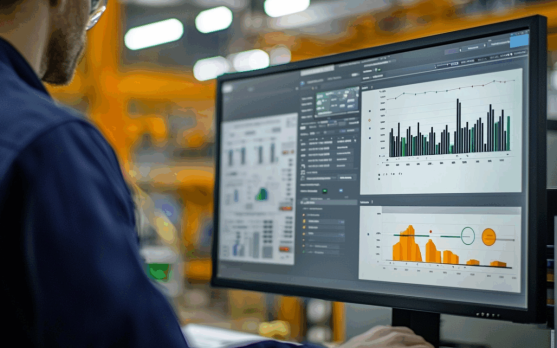
The factory does not need another dashboard
A frozen plant can look controlled from the office and still feel fragile on the floor. The spiral freezer is full. A packaging line is running just below target because film tracking is poor. The next SKU needs an allergen changeover. QA is waiting on a temperature record. The planner wants to protect a retail order due out that evening. Maintenance knows the case packer has been making the same noise for three shifts.
None of these signals is dramatic alone. Together, they decide whether the day finishes cleanly or slides into overtime, rework, waste and customer apology. Most factories already collect enough data to see pieces of the problem. Fewer factories have a system that can connect the pieces fast enough to change the outcome while the product is still moving.
That is where agentic AI deserves a place in the conversation. Not as a clever chatbot for factory managers. Not as a digital supervisor with a heroic name. As a controlled software layer able to watch conditions across systems, understand an operating objective, prepare actions, escalate exceptions and, in narrow cases, execute approved steps before a minor disruption becomes a shift-wide problem.
Frozen food gives this idea a hard test. Time and temperature are not background variables. A tray can wait only so long. A semi-frozen component can lose quality quickly. A missed freezer window can push stress into packaging, cold storage and dispatch. The category punishes late decisions.
Agentic AI has to live inside the plant stack
The weak version of agentic AI imagines a model floating above the factory, reading everything and making smart choices. Real plants do not work like that. They run through layers: PLCs and control systems acting on machines, SCADA supervising processes, MES managing production execution, ERP handling business planning and orders, WMS tracking stock, QA systems controlling release, hold and records.
An agent that cannot respect those layers is not a factory tool. It is a risk.
The useful agent sits between systems with defined permissions. It may read production status from the MES, freezer data from SCADA, open work orders from maintenance, available stock from WMS and customer priority from ERP. It may recommend a sequence change, draft a maintenance escalation, prepare a hold record or calculate what happens if a line runs 12% slower for the next hour. In some areas, after validation, it may trigger a workflow automatically.
That sounds less glamorous than an autonomous factory. It is also closer to what food manufacturing can actually use.
There is a simple rule here: the nearer an AI system gets to food safety, labelling, allergen control, cook steps, freezing parameters or product release, the stronger the guardrails must be. A factory can give software room to act. It cannot give away responsibility.
The first value will come from messy decisions
Agentic AI will probably earn its first serious role in frozen factories by helping with decisions that are too small for board meetings and too frequent for manual coordination.
Take freezer load. If upstream production is feeding faster than the freezing step can handle, the usual response may come late: reduce speed, build WIP, call a supervisor, push stress into packaging. A controlled agent could spot the imbalance early, compare orders and freezer capacity, propose a temporary feed-rate adjustment and show the effect on dispatch. It should not change a critical freezing curve without approval. It can still save the shift from discovering the problem too late.
Packaging recovery is another obvious area. Frozen meals, pizza, vegetables, fries and protein lines often lose time downstream, not because the product is hard to make, but because film, coding, tray handling, checkweighing or case packing creates a blockage. An agent connected to MES, maintenance and the schedule could identify the knock-on effect, suggest running a less fragile SKU next, call the right technician and prepare the updated batch record. That is not science fiction. It is disciplined coordination.
QA exception handling may be even more valuable. When a batch raises a concern, people spend time collecting evidence: line, time, temperature, operator, product, batch, recipe, hold status, corrective action. An agent can assemble that file in minutes. It can highlight what is missing. It can recommend who needs to review it. The release decision still belongs to QA.
Maintenance triage also fits. Predictive maintenance has been discussed for years, but the agentic layer adds a practical question: if a failure risk is rising, when should the plant intervene, what orders are exposed, what spares are available, and which changeover window causes the least damage?
Food safety is the line AI must not blur
The food industry has a habit of adopting technology language from other sectors and then discovering that food does not forgive vague control. A frozen factory is not a software office. It has allergens, pathogens, foreign-body risk, sanitation windows, validated process steps, label controls and customer specifications that can shut down shipments if mishandled.
Agentic AI will need to work inside that discipline. It can prepare. It can compare. It can alert. It can propose. It can document. In carefully bounded areas, it can execute. But it should not quietly alter a control point, bypass a hold, shorten a sanitation requirement, change an allergen sequence or release a questionable lot because the schedule looks uncomfortable.
The best implementations will probably feel conservative. Clear scopes. Permission levels. Audit trails. Human approval for critical actions. Rollback paths. Validation records. A visible difference between recommendation and execution. It may sound bureaucratic to technology sellers. On a food line, it is the price of being allowed near the process.
Cybersecurity belongs in the same discussion. Once an agent can touch workflows connected to operations technology, it becomes part of the plant’s risk surface. A hacked dashboard is one problem. A compromised system that can influence production, maintenance or dispatch is another. Food companies that treat factory AI as an IT experiment will eventually learn that OT has its own rules.
The energy case will tempt factories first
Frozen plants are energy businesses whether they like the description or not. Freezing, cold storage, compressors, defrost cycles, air movement and refrigeration maintenance all sit inside product cost. The temptation to let AI chase energy savings will be strong.
Some of that work is sensible. An agent could help align production with cold storage capacity, reduce avoidable peaks, flag inefficient compressor behaviour or suggest a better sequence of freezer-heavy and packaging-heavy work. It could compare production plans against energy tariff windows where the data is available. It could tell the planner that a decision made for labour efficiency will create a refrigeration penalty later in the shift.
But energy-aware production cannot become temperature gambling. The frozen category has too much history of invisible quality damage: ice crystals, texture loss, freezer burn, softening and refreezing, packaging stress, shelf complaints that appear days or weeks after the bad decision. AI can help expose trade-offs. It should not be used to hide them.
The same caution applies to waste. Agentic AI can reduce waste by catching problems earlier, protecting borderline batches, improving sequencing and limiting unnecessary rejects. It can also create waste if alerts are crude, rules are badly designed or people stop trusting the system. More intelligence does not automatically mean better judgment.
Controlled autonomy is the realistic path
The phrase "lights-out factory" will keep appearing because it sounds clean. Frozen food should be more sceptical. The more realistic direction is controlled autonomy: agents handling defined tasks, under validated rules, with humans responsible for exceptions, food safety and commercial judgment.
Between 2026 and 2027, most serious use will likely sit in copilots and assistants: shift summaries, maintenance prioritisation, QA record preparation, schedule impact analysis, energy recommendations and exception routing. Useful work, but not full autonomy.
By 2028 to 2030, the stronger factories may have agents coordinating across MES, SCADA, ERP, WMS and QA. A downtime event could trigger a revised production sequence, maintenance workflow, customer-risk view and cold-store capacity check in the same operational loop. That is where the value begins to look less like software convenience and more like factory resilience.
Beyond 2030, some actions may become automatic in bounded areas. Reordering non-critical consumables. Opening a maintenance ticket. Reallocating labour to a packaging bottleneck. Preparing a hold file. Recommending a slower line speed. Adjusting a non-critical schedule rule. The critical word is bounded. Autonomy without boundaries is not progress in a frozen food plant. It is a liability with a user interface.
The factories most likely to benefit will not be the ones with the boldest AI language. They will be the ones with clean data, disciplined master records, modern MES habits, reliable sensors, well-defined workflows and leaders willing to say no when a vendor demo skips the hard parts.