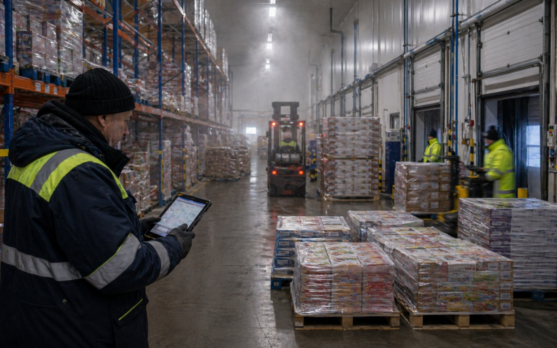
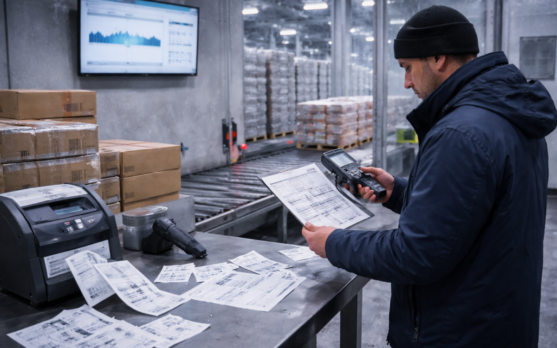
A frozen supplier can win the listing, book the volume, run the line, ship on time and still feel the business getting tighter. That is the uncomfortable part of growth in this category. Frozen food does not only ask a manufacturer to make product. It asks the manufacturer to buy ingredients, print packaging, reserve labour, freeze, test, store, move and insure inventory long before the retailer's payment arrives. On the shelf, it looks like momentum. In the bank account, it can look like a slow leak.
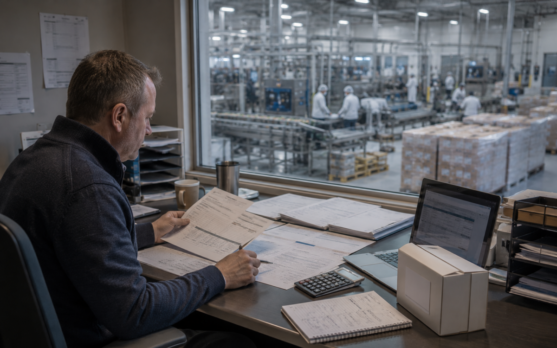
The order arrives before the oxygen
In a buyer meeting, the language is usually clean. More volume. Better availability. A seasonal push. A private label refresh. Maybe an extra line for a retailer that wants to strengthen its frozen range without taking too much price risk. The supplier hears opportunity, and in many cases it is opportunity. Frozen food has become more central to grocery economics, foodservice resilience and household planning than it was before the inflation years.
Then the factory has to make the promise real.
Potatoes, vegetables, dough, proteins, prepared meals, sauces, trays, films, cartons, pallets, freezer slots, lab checks, shift planning and transport bookings start moving before cash comes back. If the product is private label, the packaging is often specific. If the order is promotional, production may happen ahead of the selling window. If the product has a narrow specification, rejected or delayed inventory is not easily redirected. The supplier is not simply waiting for an invoice to be paid. It is financing a cold version of time.
That is where frozen food differs from many ambient categories. Inventory in frozen is not sitting quietly. It is being held inside a paid-for thermal system. The cold store does not care that a retailer payment portal has a query. The electricity bill does not wait for a debit note to be resolved. The haulier, the packaging converter and the temporary labour agency are not interested in the buyer's payment cycle. They sit much closer to the front of the cash queue.
Europe is tightening the rules, but cash still moves slowly
The regulatory pressure is no longer theoretical. The EU has reinforced cross-border enforcement against unfair trading practices in the agricultural and food supply chain, with new cooperation rules for cases where suppliers and buyers sit in different member states. That matters for a sector where sourcing, processing, packing and retail buying rarely stop at national borders.
The existing unfair trading practices framework already bans payments later than 30 days for perishable agricultural and food products and later than 60 days for other agri-food products. It also restricts several behaviours that suppliers know well: shifting the risk of loss or deterioration, unilateral changes, charges linked to stocking, display, listing, marketing or promotion unless agreed clearly in advance.
None of this means the frozen supplier is suddenly safe. Legal limits and practical cash strain are not the same thing. A 60-day payment term can still be punishing if the supplier started buying raw materials and packaging weeks before delivery. A contract can look compliant and still leave the producer carrying the working capital burden of the range.
The broader European late payment debate shows the tension. Policymakers want shorter, cleaner payment discipline. Retail and wholesale groups warn that rigid limits could damage contractual flexibility and create financing gaps. Both sides have a point, which is exactly why the issue is commercially uncomfortable. Somebody finances the time between production and sale. The only argument is who.
Private label gives volume, not necessarily breathing room
Private label makes this sharper. Across Europe's largest grocery markets, store brands have reached a scale that would have seemed much less likely before the recent cost-of-living squeeze. That growth is important for frozen food because frozen is one of the places where private label can look especially attractive: comparable utility, strong household value, efficient merchandising and room for retailer-led architecture.
But private label is not soft volume. It usually comes with tight specifications, dedicated packaging, strict quality requirements, retail audits, promotional calendars and a price architecture that leaves little room for operational mess. For a well-capitalised manufacturer, that can be a rational trade. For a smaller processor, it can become a beautifully presented trap.
The line runs. The freezer fills. The product is shipped. The factory looks busy. Yet the supplier may be stretching its overdraft to support a customer relationship that appears healthy in sales reports. Growth becomes less like acceleration and more like loading weight onto a thin plank.
There is also a quiet imbalance in the conversation. Retailers discuss availability, service level, price points and range performance. Suppliers discuss the same things, because they have to. But behind the conversation sits another spreadsheet: receivables, inventory days, packaging stock, energy exposure, cold storage charges, invoice deductions and the cost of funding the gap. That spreadsheet rarely appears in the range review, although it may decide whether the supplier can support the range at all.
The cold chain turns payment terms into operational pressure
Frozen food's cash problem is physical. It is not just a finance department concern dressed up in industrial language. Cold storage has a real energy load. Refrigerated warehouses are among the more energy-intensive commercial buildings, and refrigeration can dominate electricity use. In Europe, non-household electricity prices still vary widely by country, so two suppliers operating under similar commercial terms may face very different carrying costs for frozen inventory.
That geography matters. A processor holding stock in a high-cost electricity market is financing a more expensive waiting period than a competitor in a lower-cost market. The buyer may see the same case price and the same payment term. The supplier feels a different pressure underneath it.
The same applies to storage access. The growth of public refrigerated warehouse capacity shows how central third-party cold infrastructure has become, but capacity is not free resilience. It is rented resilience. If a delivery window shifts, if a promotion is moved, if a customer delays release, the supplier can be left paying for the temperature-controlled pause. In frozen, delay has a meter attached to it.
Foodservice adds another version of the squeeze. Distributors want reliability and breadth. Operators want product on hand. Manufacturers want stable orders. But the frozen supplier still has to carry the physical burden of availability. A case of frozen fries, pastries or ready meals may move through several commercial hands before final consumption. The funding of that chain is rarely as visible as the pallets themselves.
Payment disputes are more than accounting noise
One of the most revealing signals comes from the UK grocery market, where the Groceries Code Adjudicator has repeatedly shown that payment delays, deductions and dispute processes are not minor back-office irritations. In 2025, the regulator opened a targeted investigation into whether Amazon had delayed payments to suppliers under the Groceries Code. The case is specific and should not be stretched beyond what has been alleged. Still, the detail is important: the investigation looks at payment processes, supplier concerns around deductions and the use of deduction settlements in commercial negotiations.
That is the part many suppliers recognise. The invoice is not always simply paid or unpaid. It can be queried, reduced, matched against a claim, blocked in a portal, delayed by missing documentation, or trapped in a process where nobody with authority answers quickly. For frozen suppliers, every extra week has a cost because the original production cycle was already cash-heavy.
A deduction may be legitimate. A delivery error may be real. A quality issue may require investigation. The commercial danger appears when the dispute mechanism itself becomes a source of financing pressure. The supplier pays for the product first, then pays for the time needed to argue about the payment. Large companies can absorb that irritation. Smaller frozen processors feel it in raw material buying, maintenance delays, recruitment decisions and the willingness to take on the next retail programme.
Growth can select for balance sheet strength before product quality
The uncomfortable forecast is that frozen food growth may increasingly favour suppliers with the strongest financing capacity, not always the best product or the most efficient plant. That does not mean quality disappears. Retailers still need reliable food safety, service levels and consumer acceptance. But when energy, cold storage, packaging and payment delays all sit inside the same operating cycle, the balance sheet becomes a commercial capability.
Short term, expect more pressure around payment discipline, clearer contracts and better documentation of promotional, storage and deduction practices. Suppliers will push harder for predictable cash timing. Retailers will protect their own working capital and may translate pressure elsewhere: sharper pricing, tighter supplier selection, stricter forecasts, fewer second chances on service failures.
Medium term, private label frozen suppliers with weak liquidity will face a difficult choice. They can accept volume and fund it, finance receivables at a cost, negotiate harder and risk the relationship, or step back from programmes that look prestigious but consume too much cash. Some will merge. Some will be bought. Some will quietly stop bidding for business they cannot afford to win.
Longer term, the industry may discover that supplier resilience is not only about dual sourcing, food safety audits and cold chain continuity. It is also about whether the companies making the product can survive the gap between the production run and the payment run. A freezer aisle can look full while the supplier base behind it becomes thinner.
Frozen food has spent years proving its relevance: less waste at household level, better availability, convenient meal solutions, stronger value, more technical product development. The next test is less photogenic. It sits in credit control, stock financing and the quiet negotiation over who carries the cost of time. The category can keep growing. The harder question is how many suppliers can finance that growth without freezing their own cash.