The most interesting food innovators now are not the ones promising a clean break with the old system. They are the ones working inside the messy one: extending shelf life, cutting edible waste, making sourcing less fragile, putting cold food closer to the point of demand and giving procurement teams something more useful than another beautiful pitch deck.

Innovation has been dragged back to the loading dock
Food innovation had a loud decade. New proteins, new farming systems, new apps, new claims, new kitchens, new packaging, new everything. A lot of it was useful. A lot of it was expensive theatre. The colder funding climate has done the industry one favour: it has made weak promises easier to spot.
The food system does not lack clever people. It lacks enough solutions that work after procurement, QA, operations, logistics and retail buyers have finished pulling them apart.
That is where the more serious innovation story sits now. Not in a perfect concept store or a polished founder quote, but in the awkward places where food value is lost. Produce that spoils before it finds a channel. Surplus that is still edible but commercially stranded. Ingredients exposed to climate and commodity risk. Cold products that need smaller, better distribution points. Factories that know they are losing food but cannot see exactly where or why.
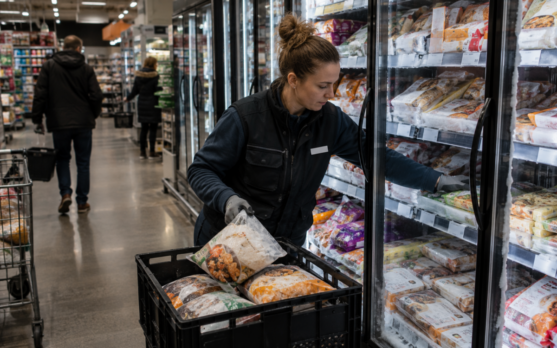
For frozen food, this matters because the category has always lived between preservation and pressure. Freezing can protect value. It cannot fix poor raw-material timing, bad data, weak cold access or a sourcing base that becomes too expensive to trust.
The useful idea is often upstream of the freezer
Apeel is a good example of why shelf-life science should not be treated only as a fresh-produce story. Its coatings are aimed at keeping produce such as avocados, apples and mangoes fresher for longer. That does not make it a frozen product technology in the direct sense. The relevance for frozen manufacturers is earlier in the chain.
Raw material timing is one of the least glamorous problems in food processing. Fruit arrives too fast, too soft or too uneven. Vegetables lose condition before they are sorted. A crop window shifts and the factory has to absorb more variation than the commercial team expected. Shelf-life innovation, if it works economically, gives processors more room to manage quality before the freezer takes over.
The freezer extends value after processing. It does not remove the need for better handling before processing.
That distinction is important. Too many food innovations are judged by whether consumers notice them. Some of the better ones may never be noticed by consumers at all. They will show up in yield, fewer rejects, better grade management, less panic buying and fewer arguments between procurement and operations during the intake season.
Small cold nodes may matter more than big food visions
Farmer's Fridge is usually discussed as fresh vending or healthier convenience. The more interesting reading is colder and more infrastructural. A network of refrigerated cabinets in offices, airports, hospitals and campuses is a reminder that food distribution is fragmenting into smaller controlled points, not just larger retail boxes.
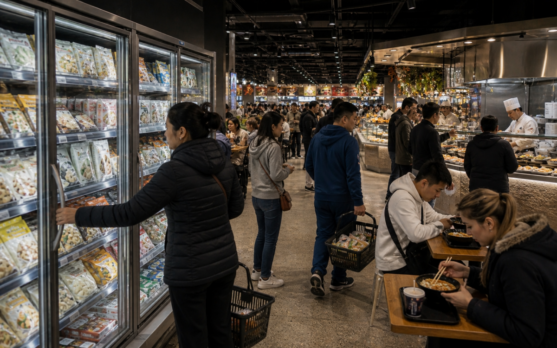
That has implications for frozen food, even if the model is not a direct copy. Cold access is becoming more granular. Food does not always have to travel through the same store format, the same lunch channel or the same weekly shop. It can appear in smaller nodes where the old retail footprint was too blunt.
For frozen products, the question is whether similar thinking can work for premium meals, workplace foodservice, vending, healthcare, travel, education or late-hour retail. Not everywhere. Not with every SKU. The unit economics will be unforgiving. But the direction matters.
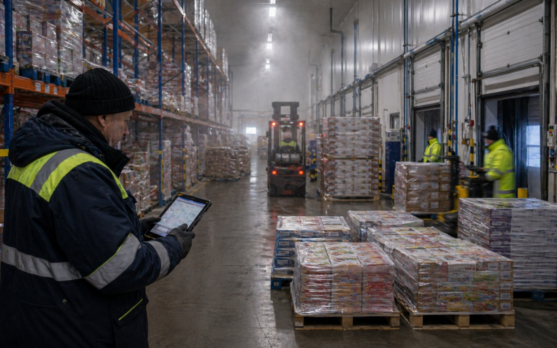
Cold-chain innovation is not always a new warehouse. Sometimes it is a smaller, smarter point of controlled access placed exactly where demand exists.
Ingredient alternatives are becoming insurance, not novelty
Atomo Coffee sits in a different part of the food system, but its signal is relevant. Beanless coffee sounds like a novelty until coffee prices, climate pressure and supply volatility enter the meeting. Then the question changes. A substitute ingredient is no longer just a curiosity. It becomes a hedge against a fragile commodity.
Frozen food has several of these pressure points. Cocoa in desserts. Coffee and vanilla in premium formats. Fruit inclusions. Plant proteins. Oils. Dairy. Seafood. Spices. Nuts. Some ingredients are small in the formula and large in commercial risk.
The same applies to Little Sesame's regenerative chickpea positioning, though in a different way. Regenerative sourcing only becomes interesting for mainstream food when it survives the harder tests: taste, volume, price, consistency, supply planning and retailer velocity. A nice farming story is not enough. The product still has to move.
Frozen ready meals, snacks, dips, plant-forward formats and meal components will all face that test. Ingredient innovation has to become something operations can buy repeatedly, not something marketing can admire once.
Local seafood shows what repair can look like
American Unagi is a useful case because the problem it addresses is not abstract. The old eel supply chain often involved wild-caught young eels from Maine being shipped overseas for grow-out before returning to U.S. markets as a finished product. That is a long loop for a food that depends heavily on quality, traceability and trust.
Keeping more of that production closer to origin does not solve every seafood problem. It does show the kind of repair the frozen and chilled seafood trade should watch: fewer handovers, cleaner origin control, shorter chains, better buyer confidence and less exposure to distant processing routes.
Frozen seafood has lived with complicated routes for a long time. Some complexity is unavoidable. Some is simply inherited. The industry should know the difference.
Regionalisation will not replace global trade. It may, however, become a premium form of risk reduction in categories where origin, labour exposure, certification, freshness before freezing and transport complexity all matter at once.
Waste technology is becoming a factory tool
Some of the most useful innovation now sits far away from the product launch calendar. The Zest AI food-waste work trialled with manufacturers including Nestle is a good example. The interesting point is not that AI is involved. The interesting point is that edible surplus can be identified faster and redirected before it becomes invisible loss.
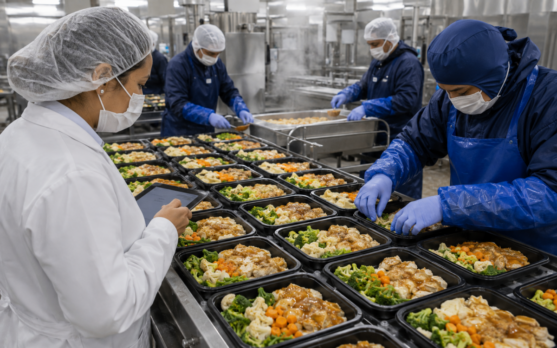
Factories often know they waste food. They do not always know early enough which surplus is recoverable, where it is forming and who can use it. Frozen, chilled and ambient manufacturers all face the same practical difficulty: edible food can fall out of the commercial channel for reasons that have little to do with safety or quality. Short date. Broken packs. Overruns. Forecast misses. Production mismatches.
For frozen food, waste innovation is especially valuable when it connects production, storage, charity redistribution, secondary channels and inventory decisions. A tonne saved after the product has been made is not only a sustainability point. It is labour, raw material, energy, packaging and cold storage that did not have to become a write-off.
The better food-system fixes are often like that. They are not beautiful from the outside. They are useful because they stop value leaking out of the chain.
The best test is whether operations can use it
The agrifoodtech funding reset has made one lesson clearer. Food businesses have less patience for ideas that need the whole system to reorganise around them. They want tools that fit into procurement, processing, QA, cold storage, retail, foodservice or waste recovery without creating a new mess somewhere else.
That is a tougher standard, and a healthier one.
For frozen food, the innovation that matters most may not come from frozen brands. It may come from shelf-life science, crop resilience, AI waste routing, ingredient alternatives, micro cold-chain networks, better temperature monitoring, smarter packaging or regional seafood models. The common thread is not glamour. It is friction removed from the chain.
There will still be room for bold products and new consumer stories. But the industry has had enough of invention that works only in a demo. The next useful question is simpler: does it make the food system less fragile once real buyers, real factories and real logistics get involved?