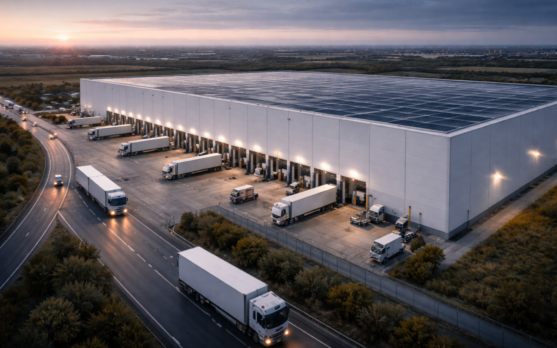
The cheapest cold storage site can look perfect until the utility meeting begins. The land is flat, the motorway is close, trucks can turn, labour is within reach, and the spreadsheet smiles for a few weeks. Then someone asks how many megawatts are actually available, when the connection can be delivered, who pays for the upgrade, and whether the site can still carry refrigeration, automation and a second phase five years later. That is the moment cheap land starts to reveal its real price.
The land deal is no longer the first victory
Cold storage development used to start with a familiar map. Road access, food production clusters, retail distribution corridors, labour, land price, planning risk. Power was important, of course, but often treated as part of the technical work that followed the site choice. That order is becoming dangerous.
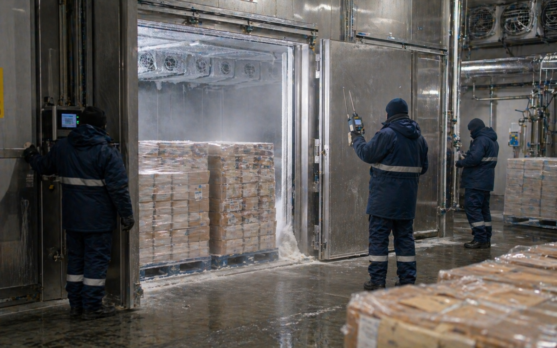
A freezer warehouse is not a dry shed with a few compressors attached. It is a heavy energy user that has to protect product every hour of the year. Refrigeration load, dock activity, temperature zones, blast freezing, battery charging, automation, lighting, fire protection systems, offices and future expansion all meet at the electrical connection. If the site cannot carry the load, the building starts compromising before construction even begins.
Developers still like cheap land because cheap land is visible. Grid capacity is less visible. It sits inside studies, queues, utility letters, transformer lead times, substation limits and assumptions that may change by the time a tenant is ready to sign. A parcel can be bought quickly. Power can take longer than the building.
Cold storage is an energy project with walls
The refrigeration system is the anchor load. In many cold storage projects, refrigeration equipment takes half or more of the facility’s power requirement, and it is sized for peak cooling demand, often under summer conditions. That detail matters. The site is not judged by an average winter day. It is judged by the hot afternoon when compressors work hardest, doors open often, trucks are waiting, and product still has to stay inside specification.
Frozen food makes the calculation tougher. A pizza producer may want storage, picking and fast dispatch. A potato processor may need frozen storage near blast freezing or export handling. A bakery supplier may need several temperature profiles and predictable flow into foodservice. A retailer may want a facility that can absorb promotional pressure without manual chaos at the dock.
Each of those demands pulls on the same electrical question. How much load can the site carry today? How much can it carry after the business grows? Can the operator add automation, more frozen chambers, EV yard equipment, better controls or a new customer without begging the grid for another answer?
A cold store without electrical headroom becomes old early. It may open new, but it has already placed a ceiling over its future.
The grid queue is now part of site selection
The power constraint is no longer a niche problem for data centres. Industrial users, logistics developers, renewable projects, storage projects, EV charging and cooling demand are crowding the same infrastructure. The International Energy Agency estimates that more than 2,500 GW of renewable, large-load and storage projects are stalled in grid connection queues worldwide. It also expects average annual electricity demand growth from 2026 to 2030 to run 50 percent higher than the average of the past decade.
Cold storage operators do not need the global figure to feel the issue. They feel it when the utility says reinforcement is required. They feel it when the connection date slips beyond a customer’s timetable. They feel it when a site can support a basic warehouse but not a freezer project with expansion. They feel it when the budget for grid works starts competing with refrigeration, insulation and automation.
In Europe, the pressure is already changing real estate language. CBRE has warned that reliable power supply is becoming more important as electricity grids approach capacity. JLL has gone further, describing power availability as a driver of asset feasibility, value and operational resilience. For cold storage, that is not theory. A site with power certainty can protect a development schedule. A site without it turns into a bet on someone else’s infrastructure.
Permits can kill the calendar quietly
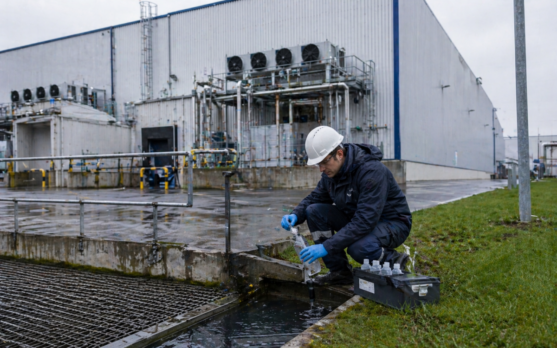
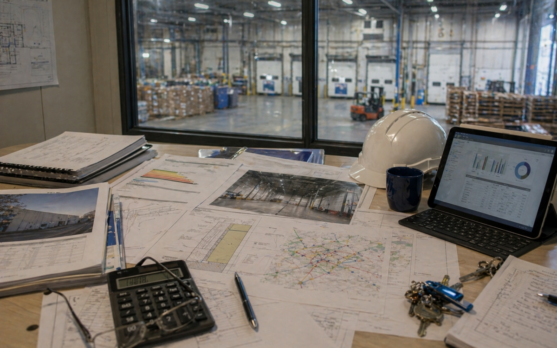
Power-ready land is not just land near a line. It is land where the difficult sequencing has been understood before the cheque is written. Utility studies, grid reinforcement, transformer availability, substation access, environmental permits, noise from condensers, water requirements, traffic approvals and fire-safety design all have to meet the same opening date.
Cold storage has little patience for a broken sequence. A dry warehouse can sometimes be adapted, phased or occupied with fewer technical consequences. A frozen facility cannot improvise its way around missing power. The refrigeration plant either runs or it does not. The dock either protects temperature or it does not. A blast-freezing plan either has the load or becomes a redesign.
That is where cheap land hides cost. The purchase price may be lower, but the project pays later through delay, redesign, temporary solutions, smaller first-phase capacity or lost tenant confidence. A tenant looking for a frozen site does not only ask whether the facility can be built. It asks whether it can be live when the supply contract needs it.
The best developers now ask utility questions almost like leasing questions. What is reserved? What is only indicative? What triggers reinforcement? What happens if the second phase doubles part of the load? Who signs the connection agreement, and when? If those answers are vague, the land discount may be the market warning you.
Expansion capacity is the hidden premium
The first phase of a cold store rarely tells the full story. The attractive site is the one that can accept the second customer, the added freezer chamber, the automated picking zone, the extra refrigeration package or the future shift from manual forklifts to more electric equipment. A site that cannot grow becomes a one-version asset.
That is particularly risky in frozen food, where customer demand can change faster than the real estate. A retailer may consolidate frozen volume into fewer nodes. A QSR supplier may need more temperature-controlled capacity near a menu launch. A frozen vegetable or potato processor may want seasonal overflow. Foodservice distributors may ask for more fragmented picking and shorter delivery windows.
If the site cannot take more load, the operator has to say no, split the work, move product elsewhere or squeeze a building that was already working hard. None of those choices appears in the land acquisition headline. They show up later, in operating cost and missed growth.
Power-ready sites will therefore trade at a different logic. The premium is not only connection today. It is the right to keep developing the asset tomorrow.
Cheap land can make an expensive warehouse
The old real estate instinct says land bought well protects the project. In cold storage, that is only partly true. A cheap parcel with weak grid access, slow permits and no expansion path may produce a more expensive warehouse than a site that looked costly on day one.
The maths changes once delay enters. Construction inflation. Financing carry. Lost customer timing. Refrigeration redesign. Temporary storage. Smaller usable capacity. A postponed automation package. An owner who expected a clean development suddenly owns a negotiation with the utility, the contractor, the tenant and the bank at the same time.
For frozen food, delay has a harsher edge. A factory cannot always wait for the warehouse. A retailer cannot pause a seasonal range. Foodservice demand moves. Product that should have been handled through one efficient cold node may be spread across older sites with more transport, more handling and more risk.
Power-ready land does not remove every development problem. It simply removes the problem that cold storage can least afford to discover late.
The site that can switch on will win
The next few years will make utility diligence a first filter, not a late technical step. More cold storage projects will be rejected before purchase because the load does not work. More offers will be conditional on grid evidence. More build-to-suit negotiations will ask for connection proof before drawings become serious. Brownfield sites with heavy existing infrastructure may look more attractive, even when the land story is less elegant.
By the end of the decade, power-ready status should begin to show up more clearly in rents, valuations and investor appetite. Not every market will price it the same way, but the direction is hard to miss. A cold store with strong power, expansion capacity and a credible energy strategy will look different from a cold store waiting for the grid to catch up.
After 2030, the better projects may look less like warehouses that happen to use power and more like energy-aware logistics assets. Some will use on-site solar, batteries, thermal storage, demand response or smarter refrigeration controls. Some will simply secure robust grid access and treat it as a strategic asset. Either way, the site decision will move closer to energy strategy.
The freezer building of the future will still need roads, labour and customers. It will also need a utility answer strong enough to carry the business it is promising.