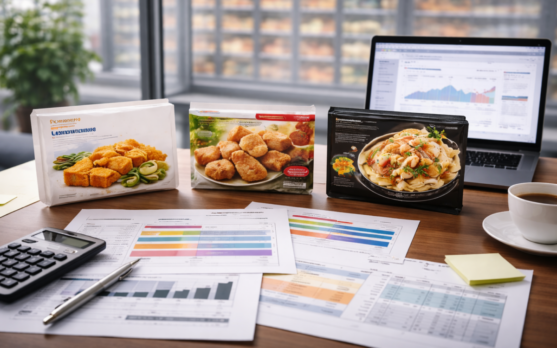
A frozen pizza used to be judged in one blunt moment: did the cheese melt and did the base stay crisp enough to forgive the shortcut? That test still exists, but the shelf has become more demanding. A pizza now has to explain its crust, its oven cue, its topping logic, its price, its origin story and its reason for being in the freezer when delivery, private label and pizzeria-style competitors are all close enough to make the comparison uncomfortable.
The crust is carrying the premium claim
Frozen pizza has always lived with a credibility problem. The shopper wants convenience, but still judges the product against a hot pizza pulled from a proper oven. That gap used to be covered with more cheese, more pepperoni, more sauce on the box. The better products now start lower down, with the base.
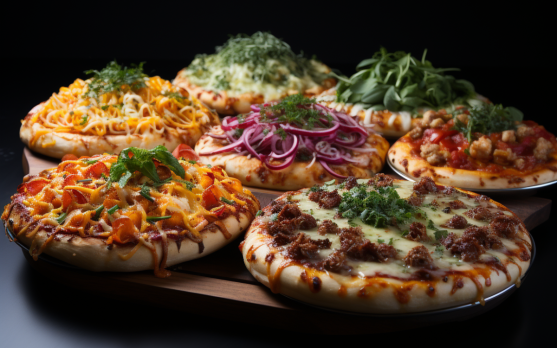
Crust technology has become the part of the category where premium claims either become visible or collapse. Wood-fired-style, stonebaked, sourdough, Roman-style, tavern-style, Detroit-style, New York-style, pinsa and naan-based pizzas all tell the shopper that the product is more than a disc of dough carrying toppings. They promise chew, char, crunch, fermentation, edge, lift or a different bite.
That is hard to fake. A lightly blistered edge can suggest pizzeria craft, but only if the bake at home brings back enough texture. A thin tavern-style base has to crack properly. A Detroit-style pizza needs the edge to matter. A Roman-style base needs structure, not just length. A naan pizza cannot eat like a standard frozen crust with Indian words added to the box.
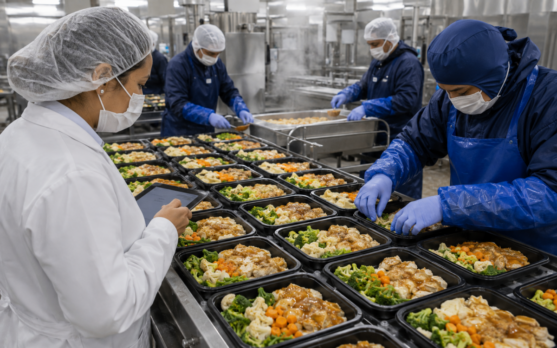
In the factory, this is where the argument becomes practical. Pre-baking, hydration, proofing, sauce barriers, topping moisture, freezing speed and packaging all decide whether the consumer gets crispness or cardboard. The crust is no longer just the carrier. It is the product’s first witness.
Global flavour is easier to print than to bake
Pizza is one of the world’s most forgiving food formats. It can absorb hot honey, chorizo, pesto, taco beef, Korean barbecue, tandoori chicken, kebab meat, paneer, buffalo ranch, roasted vegetables, za’atar, nduja or barbecue sauce without confusing most shoppers. That flexibility makes frozen pizza attractive for global flavour migration.
It also creates lazy products.
A Korean BBQ pizza needs more than sweet sauce and scallions. A tandoori chicken pizza needs spice architecture, not orange chicken on mozzarella. A kebab pizza needs garlic sauce logic, onion, heat and meat texture without turning the centre wet. A taco pizza needs crunch, salsa or crema cues, and enough distance from a regular beef pizza with seasoning. Global toppings work when the product has a reason beyond novelty.
Flatbreads often make the migration more believable. Naan, pinsa, focaccia-style bases and thinner oval flatbreads can carry non-Italian toppings with less friction than a standard round pizza. Deep Indian Kitchen’s naan pizzas are a useful example of that logic: the base itself belongs to the flavour world being sold. The product does not ask a normal crust to perform an accent.
That distinction matters. The most credible global frozen pizzas will come from formats where base, sauce and topping speak the same language.
Premium pricing has less room to hide
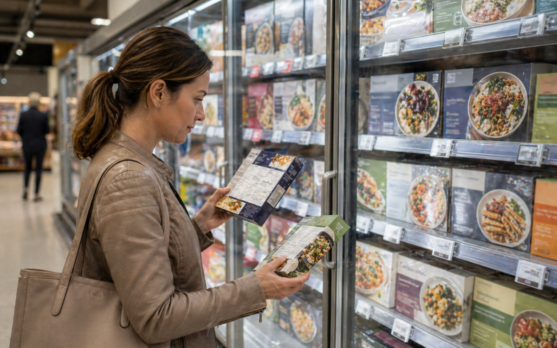
Frozen pizza is a crowded shelf with unusually sharp price comparisons. A shopper can see the value brand, the private-label stonebaked option, the familiar national brand, the premium pizzeria-style box and the delivery app on the phone in the same mental frame. The premium product has to earn the extra money before the oven even heats.
That is why visible difference matters. A better crust. A sauce that looks less sweet and more cooked. Cheese that melts with character. Toppings that are not sprinkled like decoration. A finishing drizzle that has a job. A pack image that does not promise a restaurant pizza and deliver a dry supermarket compromise.
Goodfella’s move into New York-style frozen pizza is interesting because it points to the fakeaway logic now shaping parts of the category. Larger crust, stonebaked base, bolder toppings, hot honey, barbecue chicken, loaded pepperoni. The language is not “quick meal”. It is cheaper-than-takeaway indulgence.
That is a useful lane, especially while restaurant and delivery costs stay high. But it is not safe. Fakeaway only works if the product feels close enough to the thing it is replacing. If the crust is dull and the toppings feel cost-engineered, the shopper notices.
Private label will squeeze the middle
Private label is dangerous in frozen pizza because the category is easy to understand and easy to compare. Margherita, pepperoni, ham and mushroom, four cheese, meat feast, barbecue chicken. Once a retailer has the right manufacturing partner, many mid-market products become exposed.
Freiberger’s private-label model shows how sophisticated this side of the market has become. This is not basic copycat manufacturing. Large pizza specialists can tailor crusts, recipes and concepts by market, freezer space and retailer brief. That puts pressure on branded products that rely on habit rather than difference.
The middle will feel the pinch. Too expensive to be value, too ordinary to be premium, too familiar to feel like innovation. In that space, global flavour can help, but only if it is specific. A vague “spicy chicken” pizza will not defend much. A well-built tandoori flatbread, kebab pizza, hot honey pepperoni, Korean BBQ chicken or Roman-style vegetarian slab has a better chance of being remembered.
Brands need to decide whether they are selling trust, crust, restaurant-at-home, flavour adventure or dietary solution. Trying to sell all of them at once usually produces a confused box.
Local adaptation is where pizza gets interesting
Pizza travels globally because it localises without apology. Kebab pizza makes sense in parts of Europe where kebab is everyday street food. Taco pizza belongs more naturally to the US than to some European shelves. Tandoori chicken has a different weight in India and the UK than it does in markets with less South Asian food culture. Korean barbecue may be premium curiosity in one market and closer to mainstream in another.
Foodservice often tests this faster than frozen retail. Pizza Hut’s Crafted Flatzz rollout, with country-specific flavours such as Tandoori Chicken, Korean BBQ, Nashville Hot Chicken and Pesto Veggie with balsamic drizzle, shows how a global pizza platform can be adapted locally. Frozen retail can learn from that, even though its production timelines are slower and its freezer space is tighter.
The adaptation question is practical. Does the flavour have enough recognition? Can the toppings survive freezing and baking? Does the sauce migrate into the base? Can the product be explained in a few words online and in store? Is the price still credible once the ingredient list becomes more complex?
Cross-market flavour work is not about throwing the world onto a crust. It is about knowing which local shortcut the shopper already understands.
The flatbread future may be more useful than gourmet pizza
The word “gourmet” has become tired in frozen pizza. Too often it signals packaging rather than eating quality. The more useful territory may be flatbread: smaller, more flexible, more open to global toppings, easier to position for lunch, sharing, snacking or restaurant-at-home.
Flatbreads also loosen the rules. A naan pizza does not need to behave like Naples. A pinsa-style base can carry premium Mediterranean toppings without the weight of classic pizza comparison. A long Roman-style slab can be sliced for sharing. A thinner oval base can carry Korean, Indian or Middle Eastern flavours more naturally than a family-size round pie.
There is still engineering behind the romance. Sauces with sugar can burn. Vegetables release water. Meat toppings dry. Cheese can oil out. Drizzles and finishing sauces must be placed carefully or left to the consumer. A premium frozen pizza is a moisture management system with a nicer photograph.
That may be the most honest way to view the category now. Frozen pizza still has comfort-food reliability, but its growth energy is moving into crust specificity, global adaptation and products that feel closer to foodservice without pretending the freezer is a brick oven.