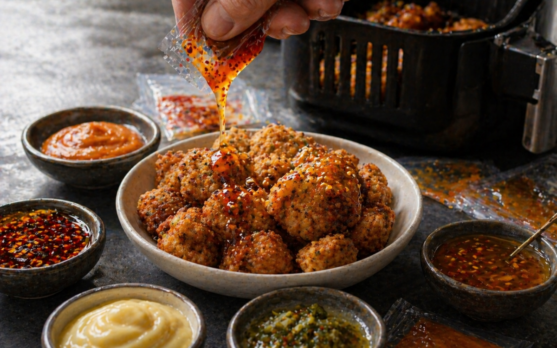
A Thai-style spring roll can look perfect in a buyer presentation and still lose the household test in one evening. If the wrapper dries out, if the filling leaks, if the sauce is too sweet, if the air fryer basket turns half the pieces crisp and the rest pale, the product becomes another freezer curiosity with one trial and no habit behind it. The sharper story in imported frozen appetizers is not simply that shoppers want global food. It is that the best products now have to behave like they were built for the air fryer from the beginning.
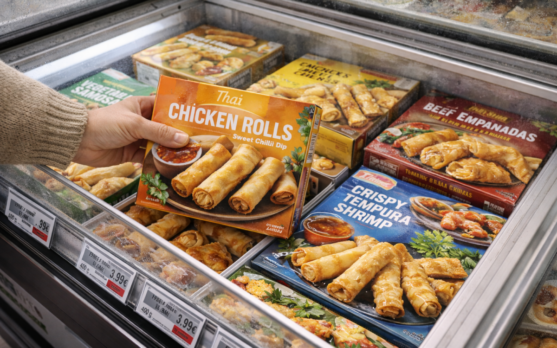
The air fryer has changed the rules of the frozen snack
The air fryer did something uncomfortable to frozen appetizers. It raised expectations. Consumers who once accepted oven-baked compromise now expect a frozen snack to crisp quickly, brown evenly and reach the table with very little mess. Eight to ten minutes has become a commercial promise, even when nobody says it that bluntly on the front of the box.
That matters for Thai-style and Southeast Asian-inspired appetizers because many of these products live or die on surface texture. Spring rolls, curry puff-style bites, prawn cakes, money bags, satay-style pieces and small pastry snacks are not forgiving products. A dumpling can sometimes survive softness. A rice bowl can hide weakness under sauce. A spring roll cannot. If it does not crackle, the sale has not really been earned.
Air fryer ownership has moved far enough into the kitchen that manufacturers can no longer treat it as an alternative instruction for enthusiasts. The appliance is now part of frozen-food design. Conagra reported that frozen foods with air-fryer instructions jumped sharply over four years, and food companies from Nestle to Conagra and Perdue have been adjusting products around the appliance. The signal is obvious in the aisle: more callouts, shorter cook times, more promises of crispness, fewer apologies for oven results.
For imported appetizers, that shift is useful but unforgiving. The air fryer gives global frozen snacks a route into mainstream homes without deep frying, restaurant equipment or complicated cooking. It also exposes weak product engineering very quickly.
Thai-style works when the structure is honest
Thai street-food cues fit the modern freezer because they are naturally built around contrast: crisp wrapper, moist filling, sharp sauce, small portion, repeatable bite. Sweet chili, basil, ginger, garlic, lime, peanut, soy, tamarind and curry notes all travel well as signals, but the product still has to work physically. Flavor cannot rescue a wrapper that turns leathery.
Target's Good & Gather Thai Basil Chicken Spring Rolls show how mainstream this language has become. The product is not hidden in a specialist Asian grocer. It sits in a major retailer's private-label frozen range, with chicken, vegetables, Thai basil and sweet chili dipping sauce. The proposition is easy to understand: heat, dip, share. That simplicity is a big part of the appeal.
Royal Asia's vegetable spring rolls make the operational point even clearer. The instructions tell the shopper to air fry at 375 degrees Fahrenheit for eight minutes, flipping halfway through, while defrosting the sauce packets under cool water. That is not culinary romance. It is frozen-food choreography. The sauce is handled separately, the wrapper is protected, the shopper is given a short path to a better plate.
The same logic appears in larger imported appetizer assortments. Club-store packs with spring rolls, prawn cakes, potstickers and dipping sauces are designed less like individual novelties and more like a freezer version of a shared platter. They give the household variety without asking anyone to understand the full regional background of each item. Retailers like that. It lowers the risk of trial.
The sauce ritual is part of the product
There is a reason these products almost always come with a sauce. A Thai-style frozen appetizer without the right dip can feel unfinished, even if the base product is technically sound. The sauce brings acid, heat, sweetness, gloss or salt. It gives the eating occasion a final movement. It also hides some of the psychological distance between frozen grocery and takeout.
But sauce can also cheapen the whole item. A thin, sugary dip in a stubborn little packet is not premium. A sauce that takes longer to thaw than the snack takes to cook creates irritation. A pouch that leaks in the box damages trust before the shopper has tasted anything. These are small failures, but frozen repeat purchase is often decided by small failures.
The better products treat sauce timing as seriously as cook time. The base crisps first. The sauce waits. The shopper dips or pours after heat has done its work. That order matters for Thai-style rolls and similar appetizers because moisture migration is the quiet enemy of the whole category. Crispy retail photography has no value if the household result is limp.
This is where imported Asian appetizers have an advantage over many older frozen snacks. The eating ritual is already natural. Dip the spring roll. Spoon sauce beside the prawn cake. Share from the tray. The product does not have to invent theatre. It just has to preserve enough of it through freezing, shipping, warehousing and a crowded family freezer.
Mainstream buyers are buying a repeatable occasion
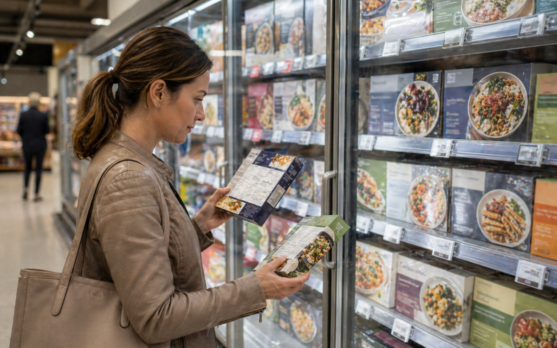
A retail buyer may like the taste, but the shelf decision is colder than that. Can the item survive distribution without broken wrappers? Does the sauce stay where it should? Is the pack size right for a couple, a family or a party? Will the air-fryer instructions work across different machines? Does the item look good after the consumer overloads the basket, because many will?
Imported shareable snacks also have to justify their space against familiar frozen players: wings, nuggets, mozzarella sticks, fries, pizza bites, potato skins. Thai-style appetizers bring something those items often lack: global variety without a full-meal commitment. The shopper does not need to plan dinner around them. They can be a side, a snack dinner, a party plate, a lunch shortcut or the thing pulled out when takeout feels too expensive.
That flexibility is why the category has room to grow. Industry reporting has shown frozen appetizers and snacks sitting in the multi-billion-dollar range, while frozen street-food formats such as bao, dumplings and egg rolls have posted strong unit gains. Thai-style rolls and appetizer assortments benefit from the same consumer behavior, even when the exact regional label varies by brand and retailer.
The imported angle helps, but only when it supports credibility. "Product of Vietnam" or a Southeast Asian manufacturing base can add interest, especially for shoppers already familiar with Asian frozen aisles. Still, origin is not enough. Mainstream retail does not run on authenticity claims alone. It runs on availability, compliance, margin, cold-chain discipline, complaint rates and whether people buy the product twice.
Factories need to design for the basket, not the brochure
The air fryer basket is an ugly test environment. Products overlap. Consumers forget to flip. Some machines run hot. Others run weak. A household may cook ten pieces when the instructions assume five. Any product developer working on Thai-style appetizers has to design around that reality.
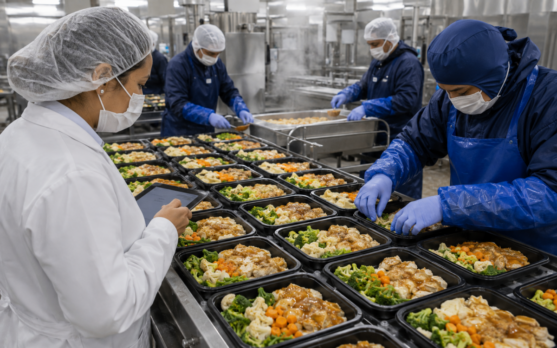
The wrapper needs enough oil and structure to brown without becoming greasy. The filling needs flavor and moisture without steaming the shell from inside. Vegetable cuts matter. Protein particle size matters. Sauce viscosity matters. So does the cooling step before freezing, the way pieces separate in the bag, and how much breakage the product can tolerate before the pack looks like factory waste.
Thailand's ready-to-eat sector gives the broader supply story some weight. Krungsri Research has described a sizeable domestic and export RTE food industry, with chilled and frozen ready meals as an established segment and the U.S. among key export markets for Thai chilled and frozen ready-to-eat products. That does not mean every Thai-style appetizer in Western retail is made in Thailand. Many are produced elsewhere in Asia or domestically. It does show that the region is not just a source of flavor inspiration. It has industrial capability behind convenience food.
Over the next few years, the split will become clearer. Some products will merely add air-fryer instructions. Better ones will be air-fryer engineered: smaller pieces, faster heat transfer, better wrapper systems, cleaner sauce handling and pack formats designed for sharing rather than novelty. The difference will show up in repeat purchase, not in launch announcements.
The mainstream freezer has enough adventurous labels now. What it needs are imported and globally inspired appetizers that deliver the same plate twice: once in the brand photograph, and again in a real kitchen, on a weeknight, with someone shaking the basket and hoping dinner looks close enough to takeout.