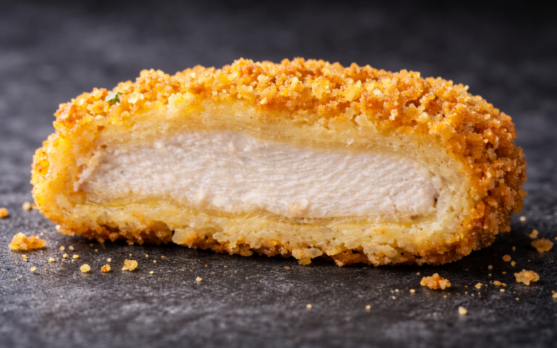
A breaded frozen product is sold twice: once through the health language on the pack, and again, more brutally, after twelve minutes in an air fryer, when the coating either cracks cleanly under the bite or tells the shopper that the reformulation went too far.
The coating is now carrying more than crunch
For years, the coating on frozen chicken and seafood had a simple job in the shopper's mind. It made the product golden, crisp, familiar and a little closer to foodservice. In the factory, of course, it was never that simple. Predust, batter, crumb, pickup, par-fry, freezing, packaging and home cooking have always formed one connected system. Change one part and the whole product can behave differently.
That system is now being asked to carry a new set of promises. Less refined starch. Better carbohydrate language. Gluten-free. Higher protein. More pulses. More fiber. Cleaner ingredients. Sometimes lower oil. Sometimes air-fryer ready. In some markets, the language comes close to glycemic positioning, although the legal room for that claim depends heavily on jurisdiction and product testing.
It is a difficult place to make a health claim because the coating is also the pleasure engine. A frozen nugget, strip, fillet or fish bite does not get a second chance if the crust fails. Shoppers may like the idea of chickpea flour, resistant starch or a lighter breading system, but they still expect color, bite and a clean break between crust and center. The health story gets attention. The crunch gets repeat purchase.
That tension makes low-glycemic-oriented coatings one of the more interesting technical stories in health-focused frozen food. The category is not moving toward salad logic. It is trying to keep the comfort of a breaded product while changing the carbohydrate and ingredient architecture underneath.
Refined starch is being questioned, but it still has a job
Refined starch became common in coating systems for good reasons. It is predictable, affordable, functional and easy to build around. It helps with adhesion, viscosity, film formation and texture. It can support the kind of crispness consumers recognize immediately. In a high-speed plant, those are not small advantages.
Replacing it is not like swapping one flour name for another on a recipe card. Pulse flours bring protein, fiber and a better nutrition story, but they can also bring beany notes, darker color, different hydration behavior and changes in batter flow. Resistant starch and high-amylose starches may help with film formation and carbohydrate positioning, but they still have to work through pumping, recirculation, temperature shifts and cook validation. Vegetable powders can improve the label story while complicating color, flavor and moisture behavior.
Some brands have already pushed this direction in the market. Real Good Foods has built frozen chicken nuggets and strips around low-carb, high-protein and grain-free positioning. Caulipower uses coatings that bring ingredients such as chickpea flour and cauliflower into the frozen chicken space. These are not laboratory curiosities. They are signs that the coating has become part of the front-of-pack conversation.
The risk is overclaiming. A product can reduce refined starch and still fail to qualify for a glycemic claim. It can use pulses and still be a breaded, par-fried frozen item. It can look better on a nutrition panel and still eat poorly. The honest work happens between the claim and the cooking instruction.
Factories do not run on ingredient stories
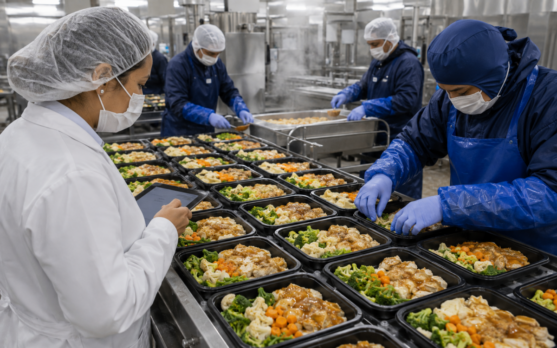
On a coating line, nice language disappears quickly. The predust has to attach to a surface that may be chilled, moist, uneven or delicate. The batter has to stay within viscosity tolerance through the run. The crumb has to apply evenly without creating excessive waste. Pickup has to remain controlled, because too much coating changes cost, nutrition and bite, while too little gives bare patches and weak appearance.
Then comes the set step. Par-fry or oven setting has to lock the coating enough to survive freezing, bagging, transport and retail handling. A coating that performs beautifully in a bench trial can break under industrial throughput. A batter that looks stable for twenty minutes may sediment in recirculation. A pulse-based system can thicken during the shift. A lighter coating may reduce refined carbohydrate but lose the surface structure that made the product recognizable.
Chicken and seafood also behave differently. Chicken can tolerate a firmer bite and a more assertive crust, especially in strips, chunks and nuggets. Seafood is less forgiving. A fish bite or fillet releases moisture differently, carries a softer center and can be ruined by a coating that is too hard, too thick or too greasy. The better system for chicken is not automatically the better system for seafood.
This is where some better-for-you breaded products lose their way. The formulation team improves the label. The line team inherits instability. The sensory panel likes the first cook. The product in the shopper's freezer tells a more complicated story three months later.
Oil uptake is a cost issue before it is a nutrition issue
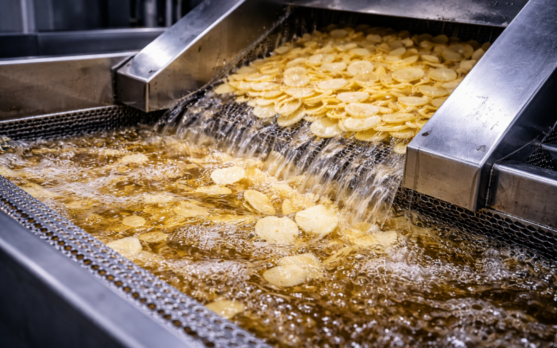
Oil absorption often gets discussed through the health lens, but processors see it on several ledgers at once. More oil can mean higher cost, heavier eating quality, softer texture, more oxidation concerns and a product that feels less aligned with its better-for-you positioning. Less oil is not automatically better either. If the coating does not set, brown or fracture correctly, the product can look pale and eat dry.
Batter formulation has a direct role here. Film-forming ingredients, hydrocolloids, starch type, flour particle size, hydration and cooking method can influence how moisture leaves the product and how oil enters or stays at the surface. In par-fried systems, that balance matters before the consumer ever opens the bag.
There is also a commercial psychology to oil. A consumer may not measure fat uptake, but they recognize greasiness. They see oily residue in the tray. They feel a heavy bite. In air-fryer cooking, where the promise is often crispness with less added oil, a product that eats greasy can feel out of step with the appliance itself.
The strongest coating systems will not simply chase the lowest oil number. They will manage oil, moisture and structure together. That is less catchy than a claim. It is also closer to the work that decides whether a frozen coated product survives beyond first trial.
The air fryer has become the unofficial audit
The air fryer changed the standard for frozen coated foods. It did not create the demand for crunch, but it made the test more visible at home. Consumers now expect supermarket frozen chicken, seafood bites and appetizers to behave closer to foodservice products, without deep frying and without much patience.
That is a harsh environment for reformulation. Air fryers move hot air aggressively and can reveal weak coatings quickly. A coating may blister nicely, or it may dry out. It may crisp, or it may toughen. It may hold to the substrate, or it may shed crumbs into the basket. The shopper sees all of it.
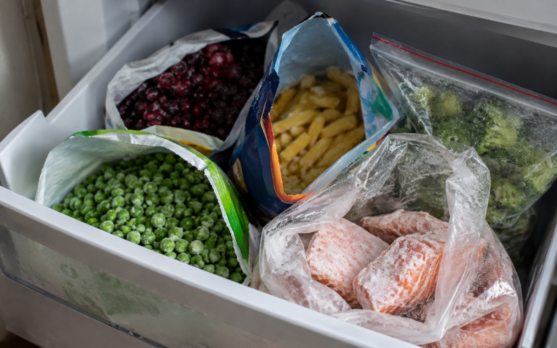
Freezing adds another layer. Ice crystals, moisture migration and temperature fluctuation can weaken the crust before cooking starts. Bag handling can break crumb. Seafood products can release moisture into the interface between center and coating. Chicken products can dry at the edges while the coating is still trying to finish.
That is why a commercial claim and a freezer-to-oven performance claim should be treated separately. A coating can support a better carbohydrate story, use less refined starch and still fail the appliance test. The pack can say gluten-free, high-protein or made with chickpea flour. The air fryer asks a simpler question: does it crunch?
What buyers should be watching
Retail buyers do not need to become coating technologists, but they do need sharper questions. The freezer aisle is full of products that sound better than they perform. A breaded product with a health angle should be tested like a breaded product first and a health product second.
The first check is physical. Is there coating loss in the bag? Does the surface color evenly? Does the product cook from frozen without a gummy layer under the crust? Does the seafood release moisture into the breading? Does the chicken center stay juicy without the coating becoming leathery?
The second check is repeatability. One perfect air-fryer sample is not enough. The product has to perform after storage, across production lots, with normal retail handling and with the cooking behavior consumers actually use. Some will undercook. Some will overcrowd the basket. Some will use an oven. Some will ignore the instruction completely.
The third check is the claim. Lower refined starch is a formulation direction. Low glycemic is a regulated and test-dependent claim in many markets. A retailer that treats those as interchangeable invites trouble. Better carbohydrate architecture can be valuable without pretending every product has earned a medical-sounding promise.
Over the next few years, coating suppliers are likely to sell more systems rather than single hero ingredients. Pulse flour alone will not solve the problem. Resistant starch alone will not solve it either. The winning approach will be blends designed around substrate, line speed, pickup, setting method, freezing and final cook. Less romantic, more useful.
Longer term, breading may become one of the most contested spaces in frozen health innovation. Not because consumers want technical coatings, but because they want the impossible mix: better ingredients, less heaviness, familiar crunch, air-fryer performance and a price that still feels like frozen food. The coating is where that promise either becomes product or falls apart in crumbs.