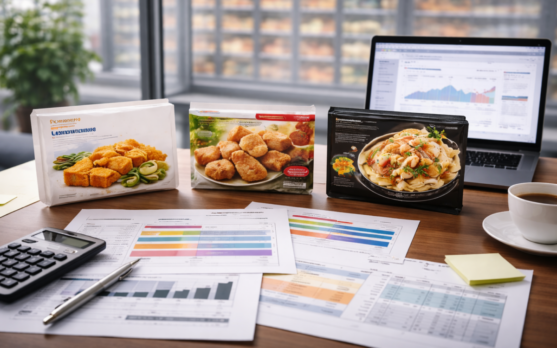
The freezer has become a blunt test for plant-based food. A shopper can forgive a lot in a restaurant, and a little in chilled convenience, but a frozen product has no server, no counter theatre, no fresh garnish and no story once the door closes. It has to justify the space it takes at home. That is where the category is being stripped back to something more useful: fewer heroic meat replacements, more dumplings, samosas, bao, pakoras, spring rolls and snack formats that were never built around meat in the first place.
The old pitch has worn thin
Plant-based frozen food came into retail with a lot of volume in its voice. Better future, better protein, better planet, better choice. The shelf did not reject all of it. Some products stayed. Some consumers stayed. What faded was the easy belief that a plant-based claim could carry a weak product.
Buyers know the pattern now. A new burger comes in with good deck language, a promising first listing, maybe strong trial. Then the repeat rate tells the truth. The patty is too dry, too expensive, too processed in the consumer’s mind, or simply not as satisfying as the thing it tries to replace. In frozen, the judgment is even colder. The product may sit for weeks before the shopper gives it another chance.
The category still has room. It just needs to stop behaving as if the burger is the centre of the story. A vegetable dumpling has an easier brief. So does a samosa. So does a bao with mushroom, cabbage or tofu. These products do not ask consumers to suspend disbelief. They ask for appetite, a pan, an air fryer, maybe a dipping sauce.
Dumplings understand frozen better than burgers do
Some formats seem almost designed for the freezer. Dumplings, gyoza, mandu and momos travel well as ideas because consumers already expect to cook them from frozen. The wrapper protects the filling. The portion size encourages sharing. The pack can be used for a meal, a side, a snack or a late dinner when nobody wants to cook properly.
That gives plant-based an advantage it rarely gets in meat replacement. The product is not being compared bite for bite with a beef burger. It is being judged as a dumpling. Is the wrapper thin enough? Does the filling have moisture? Does it smell good when steamed or pan-fried? Does the bottom crisp without tearing? Those are demanding questions, but they are fair questions.
Asian frozen formats also allow vegetables, tofu, chives, cabbage, mushrooms and soy-based fillings to feel normal. The plant-based label can be present, but it does not need to do all the selling. Bibigo’s plant-based Korean mandu and Nasoya’s vegan tofu dumplings are useful examples because they sit inside formats shoppers already understand. The dish carries the permission.
Indian snacks show the cleaner route
Indian frozen bites may be even more instructive. Samosas, pakoras and bhajis are not trying to imitate meat. Their appeal is built from spice, potato, onion, chickpea flour, peas, heat, chutney and crunch. When these products are vegan or plant-based, it often feels incidental rather than engineered.
That matters. The best plant-based products in frozen may be the ones that do not behave like plant-based products at all.
Look at the eating occasion. A tray of samosas or pakoras can work for parties, quick lunches, family sharing, vegetarian households, flexitarian shoppers, Ramadan or Diwali ranges, student meals, or the kind of freezer backup that disappears on a Friday night. Air-fryer instructions make the pitch simpler. Ten minutes, hot snack, crisp edges. No moral speech required.
There is also less texture anxiety. A vegetable samosa does not need the fibrous bite of chicken. It needs a crisp shell and a filling that holds together. A pakora needs crunch and seasoning. A bhaji needs onion sweetness, frying character and enough structural integrity not to collapse after reheating. These are not easy products, but they are honest ones.
The air fryer has exposed weak products
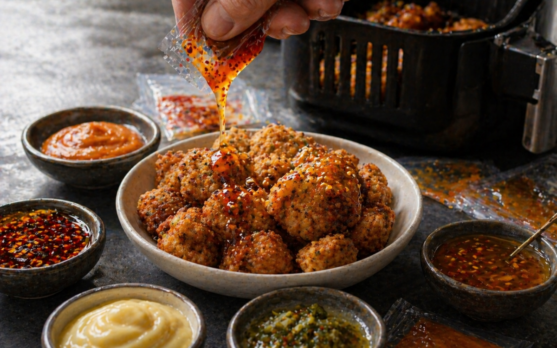
The air fryer has been kind to frozen snacks, but it has removed hiding places. Products that once survived with vague oven instructions now have to perform quickly and visibly. The consumer opens the basket and sees the result before reading any brand language.
For plant-based, that is useful and dangerous. A good spring roll, samosa, dumpling or bite can come out looking close to foodservice. A poor one leaks, dries out, splits or tastes hollow. Sauce can help, but only for a moment.
This is where many meat-free products still struggle. Plant-based chicken-style pieces can work when the coating is strong and the interior has enough moisture. But if the protein core is spongy or dry, the air fryer sharpens the failure. It crisps the outside and leaves the middle exposed.
Frozen snacks with naturally plant-forward fillings avoid some of that pressure. They can lead with spice, crunch, dough, vegetables, pulses and sauce. They feel less like substitutes and more like food from a freezer drawer that has earned its place there.
Private label will not save bad eating quality
Retailers will push private label further into frozen plant-based. They have reasons. Price matters. The category lost some shoppers when premium claims ran too far ahead of eating quality. Private label can pull the shelf back toward routine purchase.
But cheaper alone will not rebuild trust. A poor-value branded product and a poor-value private-label product fail in the same kitchen. The difference is only who takes the blame.
Private label is better suited to some plant-based frozen formats than others. Indian snack selections, vegetable dumplings, spring rolls, falafel-style bites, chickpea snacks, lentil bowls and Mediterranean mezze can carry value ranges without feeling stripped down. A cheap meat analogue has a tougher job. It sits closer to comparison with meat, and every shortcut is felt in the chew.
There is a shelf lesson here. Plant-based should not be treated as one block. A frozen vegetable bao and a pea-protein burger do not need the same margin logic, the same shopper message or the same cooking promise. Grouping them under one tired banner makes the aisle less useful.
Global flavour gives the category some oxygen
Global flavour helps plant-based when it gives the product a real culinary frame. Korean mandu, Indian samosas, Japanese gyoza, Chinese spring rolls, Middle Eastern falafel, Mexican bean-based snacks, Thai vegetable curries, Mediterranean spinach pastries. These are formats where plant ingredients already have a job.
The weaker route is to take a meat-centred product, remove the meat, add a broad spice cue and hope the packaging does the rest. Consumers have seen too many of those launches.
Frozen plant-based can grow, but its growth will probably look less like the early hype promised. It will be patchier, more format-led, more dependent on texture and price. Some meat analogues will remain, especially where protein is clear and quality improves. The more interesting work will happen in products that consumers buy because they want dumplings, bites, wraps, bao or snacks, with plant-based as an added fit rather than the whole identity.
That is a more modest future. It may also be a stronger one.