Edible packaging has always had a strange power over food executives. It sounds clean, clever and almost too elegant: no wrapper to throw away, no plastic guilt, no awkward end-of-life question. Then the frozen category interrupts. A pack has to survive cold storage, retail handling, home freezers, allergens, labelling rules, consumer suspicion and the quiet brutality of moisture loss. In frozen food, the most serious edible packaging opportunity may not be a wrapper the shopper eats. It may be a functional layer the shopper barely notices.

The edible wrapper is the least useful version of the idea
There is a reason edible packaging keeps returning to the stage. It photographs well. It gives sustainability a simple visual story. A consumer holds a product, eats the product, and the package disappears. For a category struggling with plastic, contamination and waste, the appeal is obvious.
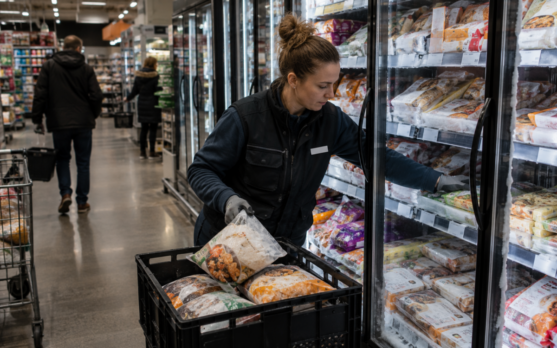
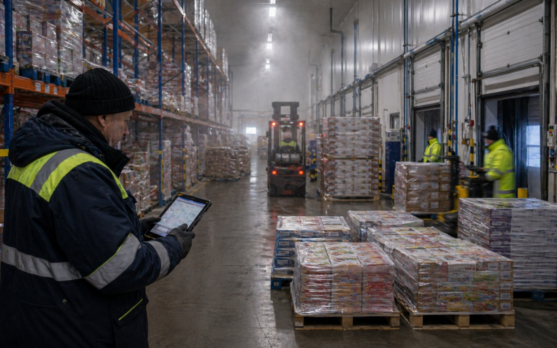
Frozen food makes the story less tidy. A frozen pack is touched by production staff, carton systems, cold-store operators, retail teams and consumers before it ever reaches a kitchen. It is stacked, compressed, frozen, thawed slightly at the edges, refrozen in domestic routines, and pushed around in cabinets where shoppers dig for the bag behind the front row. Asking that outer layer to be eaten is not only a technical challenge. It is a trust challenge.
More than a decade ago, Stonyfield and WikiFoods gave the market one of the more memorable examples: frozen yogurt pearls wrapped in edible skins and sold in selected Whole Foods locations. It was clever, visible and genuinely interesting. It also showed the gap between a brilliant demonstration and a packaging system ready for broad frozen retail. The product still needed protection, consumers still had hygiene questions, and the idea did not become the new frozen aisle template.
That history matters. Edible packaging has already had its showpiece moments. The useful future is likely to be quieter.
Frozen food changes the test
A frozen packaging manager does not begin with the question, “Can the consumer eat it?” The first questions are more severe. Does it protect the food? Does it behave at minus 18 degrees? Does it resist moisture migration? Does it affect taste, odour or texture? Does it introduce allergens? Does it run on the line? Does it hold up in a freezer cabinet after weeks of abuse?
Edible materials are often built from proteins, polysaccharides, lipids, starches, alginates, gelatin, whey, chitosan or plant-derived polymers. These can be highly useful. They can form films, coatings or barriers. Some can carry antioxidants or antimicrobial compounds. Some can slow moisture loss or oxidation. But once they are placed in a commercial frozen food system, they stop being laboratory materials and become part of the product’s food safety, allergen and quality profile.
That is a different level of responsibility from a disposable wrapper. Milk proteins, gluten, soy, gelatin, egg-based ingredients or chitosan derived from shellfish create labelling and acceptance questions. Vegan claims, halal or kosher requirements, allergen control, cleaning protocols and cross-contact management all enter the conversation. A material can be edible and still be commercially awkward.
There is also the sensory issue. If the packaging is meant to be eaten, it cannot merely be safe. It has to be acceptable. It must not taste stale, absorb freezer odours, crack, become slimy, stick to fingers, dry out, or feel like a laboratory trick. Frozen consumers are more conservative than the innovation circuit sometimes admits. They will accept novelty in a dessert bite or premium snack. They may be less comfortable eating the outer surface of a product that has travelled through a retail supply chain.
The serious opportunity sits closer to the food
The better industrial case is not an edible outer wrapper. It is an edible coating, glaze, film or internal layer that improves the food itself.
Frozen fish is a useful place to start. The category already understands surface protection. Glazing is familiar. Moisture loss, oxidation, freezer burn and texture damage are not abstract issues; they affect yield, eating quality and complaints. Edible coatings based on materials such as alginate, chitosan, gelatin or protein systems have been studied for their ability to slow quality loss in fish and other perishables. That does not make them a universal answer, but it does put them in the right part of the conversation: product protection.
The same logic can apply to frozen fruit, meat portions, plant-based components, desserts and ready-meal inclusions. A thin edible layer might separate sauce from pastry, protect a surface from dehydration, carry flavour, reduce ice crystal damage, or improve how a product behaves after reheating. In this role, edible packaging stops competing with the pouch or carton. It becomes part of food design.
That is a more modest claim, and a stronger one. A coating that reduces freezer burn by a measurable amount has more industrial value than a concept pack that dazzles visitors at a trade show. A dissolvable ingredient sachet in a foodservice kitchen may matter more than a retail pack that asks shoppers to suspend their hygiene instincts. A portion barrier inside a frozen meal may be commercially useful long before a supermarket sells vegetables in edible bags.
Foodservice may move first
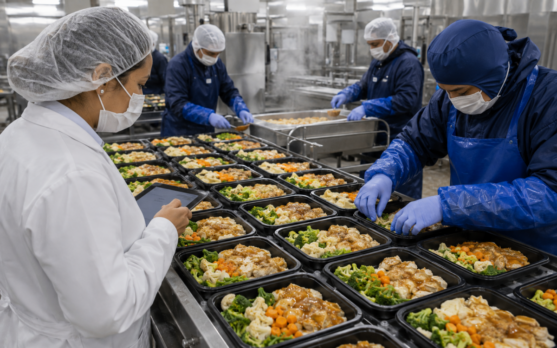
Foodservice and manufacturing environments give edible and dissolvable systems a better chance because they are controlled. Staff can be trained. Waste routes are known. The product is handled in bulk or semi-bulk. A chef, line operator or institutional kitchen team may care less about the romance of edible packaging and more about dosing accuracy, less mess, faster prep and fewer small plastic sachets.
MonoSol’s food-grade water-soluble film applications point in that direction. The concept is not a frozen retail wrapper. It is closer to process packaging: pre-dosed ingredients, controlled release, fewer handling steps and less residual packaging in kitchens or manufacturing lines. That may sound less glamorous than an edible outer pack, but in B2B food it is often where adoption starts. Operations buy discipline before they buy theatre.
Foodservice frozen meals also offer some space for experimentation. A controlled catering environment can test edible films, soluble sachets, coatings or portion layers with less exposure to the chaos of household disposal and retail shelf handling. Hospitals, canteens, airlines, universities and quick-service kitchens are not easy customers, but they are organised customers. That matters.
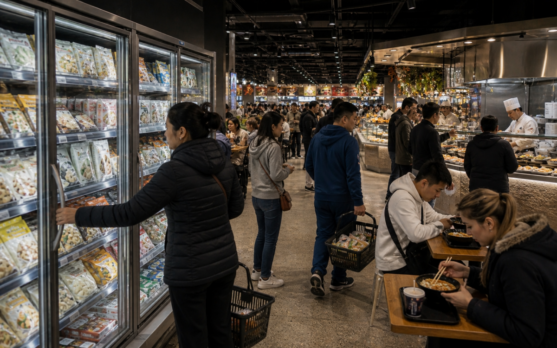
Retail frozen has a longer road. Even a technically sound edible layer needs a story the consumer can understand without feeling manipulated. The moment the claim sounds too cute, the credibility drops. “Eat the wrapper” may work for a novelty dessert. It is a harder sell for a family bag of frozen fish fillets.
Regulation and perception will slow the fantasy
Food-contact regulation already demands discipline from packaging materials. Edible packaging raises the bar because the material may become part of the food experience, not just a surface touching the food. Migration, composition, intended use, additives, allergens and safety evidence are not optional details. They are the gatekeepers.
Retail buyers will also ask about liability in practical terms. What happens if a consumer with an allergy eats the coating? How is it labelled? Can it be stored next to conventional products without confusion? Does it change nutrition information? Does it affect clean-label positioning? Can the supplier guarantee consistency across batches? Can quality teams test it quickly enough for commercial operations?
Cost will be another filter. Frozen food is already squeezed by energy, labour, logistics and retailer margin pressure. Edible systems that add cost must either protect value, reduce waste, simplify operations, improve yield or create a premium position strong enough to defend the margin. Being edible is not enough.
That may sound severe, but it is healthy. The category does not need edible packaging to behave like a sustainability toy. It needs technologies that earn their place on a factory floor, in a cold store and in a freezer aisle.
The useful future may be almost invisible
The most credible future for edible packaging in frozen food is probably not the dramatic replacement of bags, cartons and trays. It is a set of smaller interventions: coatings that protect seafood, films that separate meal components, glazes that reduce dehydration, capsules that deliver sauce or flavour, dissolvable sachets for kitchens, and edible barriers that improve product quality without asking the consumer to change behaviour too much.
Seaweed-based materials, plant polymers, starch systems, whey films, alginate coatings and other biopolymer platforms will keep improving. Notpla has shown how seaweed-based materials can move from edible liquid capsules into coated foodservice packaging and dissolvable formats. The lesson for frozen food is not that seaweed will replace every pack. It is that material platforms can find their place when the application is specific enough.
The phrase “edible packaging” may eventually become less useful than the technologies behind it. Frozen food may not need an edible pack. It may need edible protection, edible separation, edible dosing, edible moisture control. That sounds less spectacular. It also sounds much closer to the way this industry actually changes.