India may not build the frozen aisle the Western way. It may build it through dark stores, rider fleets, app search, neighbourhood freezers and small evening decisions made minutes before dinner. That is what makes India’s quick-commerce boom more than a delivery story. For frozen food, it could become the missing retail infrastructure.
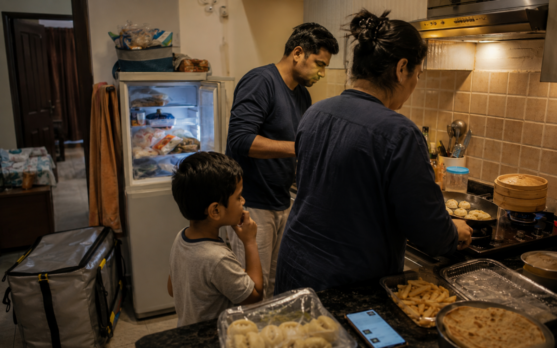
The freezer is moving behind the app
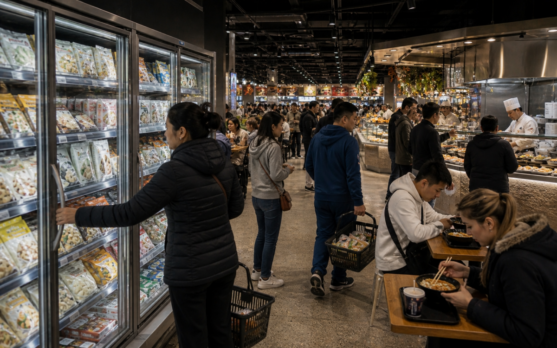
In a Western supermarket, frozen food announces itself. There is a long aisle, bright doors, chest freezers, promotional end caps and a weekly shopping habit built around stocking the home freezer. The consumer sees the category before choosing the product. In India’s large cities, the route may be less visible and more powerful. The frozen aisle can sit inside a dark store, a few streets away, with the consumer meeting it only through a phone screen.
That sounds like a small retail detail. It is not. Frozen food adoption has always depended on infrastructure: reliable storage, predictable temperature control, visible assortment, trust, habit and a reason to buy beyond emergency convenience. Quick commerce changes the order of that adoption. It does not wait for every household to behave like a European or American stock-up shopper. It allows frozen food to enter the kitchen as a last-minute snack, a dinner helper, an ice cream craving, a children’s treat, a cricket-night plate or a quick meal for two.
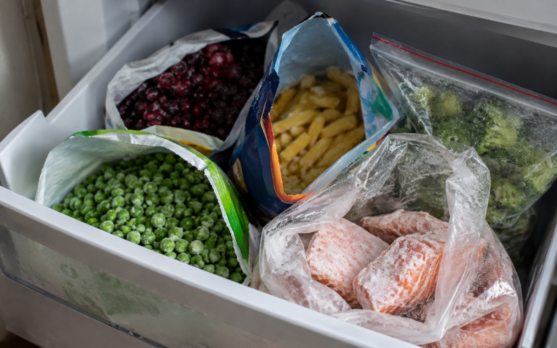
That is a very Indian path into frozen food. Not a freezer full of boxes. Not necessarily a trolley loaded once a week. More likely a pack of momos, fries, aloo tikki, paratha, nuggets, paneer snacks or ice cream ordered when the need appears. The freezer is no longer only inside the home. Part of it is outsourced to the neighbourhood warehouse.
A delivery controversy with deeper retail consequences
Quick commerce in India has already moved into the uncomfortable zone where a new model becomes too large to ignore. Government pressure over the public promise of “10-minute delivery” forced several major players to soften or remove that language, after concerns about road safety and rider conditions. The label became politically sensitive. The behaviour did not disappear.
The figures explain why the pressure matters. India’s quick-commerce sector has been valued at around USD 11.5 billion, with more than 2,000 neighbourhood warehouses serving dense urban demand. Blinkit, Swiggy Instamart, Zepto, Flipkart Minutes and others are not simply delivering groceries faster. They are building micro-retail grids across Indian cities, each one tuned to local density, basket behaviour and repeat orders.
For frozen food, that grid is more interesting than the slogan. Ten minutes is a marketing claim. A thousand-plus dark stores with temperature-controlled capacity is retail infrastructure. A platform that knows when a neighbourhood orders ice cream, when another searches for frozen snacks, and where a third has higher demand for ready-to-cook non-veg products is not just selling convenience. It is producing category intelligence at street level.
The tension around quick commerce may actually make the frozen story sharper. A model criticised for speed could end up doing something slow and structural: normalising cold-chain food in urban households that never had a strong supermarket freezer habit.
India’s frozen habit may be built through occasions, not aisles
The Indian frozen food market is already growing, but broad market growth is the least interesting part of the story. The more important detail is the shape of demand. Frozen vegetables, potato snacks, momos, parathas, vegetarian snacks, poultry products, seafood portions and ice cream do not all play the same role. Some are pantry helpers. Some are indulgence. Some are protein. Some are party food. Some sit between foodservice and home cooking.
Quick commerce is well suited to that messy reality. A frozen snack does not need to be part of a planned weekly shop if the platform can deliver it before guests arrive. Ice cream does not need a large freezer at home if the dark store sits close enough. Frozen peas or corn can be a kitchen rescue item. A pack of momos can sit somewhere between restaurant replacement and home preparation. Paratha can solve breakfast, dinner or the late return from work.
This is where the Indian model begins to diverge from the old supermarket logic. In a hypermarket, the freezer aisle competes for space and attention. In quick commerce, frozen competes for intent. Search, app placement, repeat purchase prompts, bundles, discounts and local availability become as important as freezer door visibility. The pack still matters, but the first shelf is digital.
That changes the work inside food companies. A frozen product made for quick commerce needs more than a good recipe. It needs a clear app image, an instantly understandable cooking promise, a size that fits dark-store economics, a pack that survives rapid picking and two-wheeler delivery, and enough rotation to justify cold space in a compact warehouse where every cubic foot is contested.
Dark stores will force sharper frozen food discipline
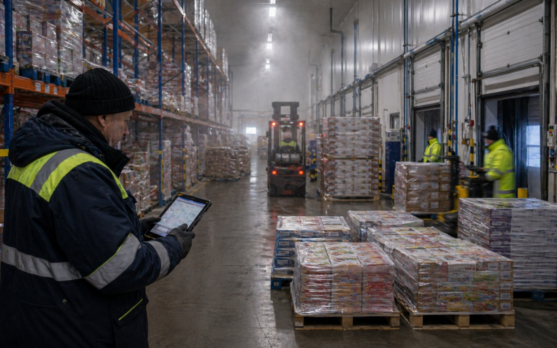
Frozen manufacturers should not romanticise dark stores. They are brutal retail environments. Space is tight. Assortment is curated. Slow movers have nowhere to hide. A freezer inside a dark store is not a generous supermarket aisle where a brand can hope for discovery over time. It is a small, operationally expensive cold box that has to earn its place every day.
That pressure can be good for the category. It will punish weak SKUs, vague positioning and oversized packs. It will reward products with clear occasions: evening snacking, children’s lunchbox shortcuts, air-fryer preparation, single-serve indulgence, family dessert, vegetarian protein, party platters, fast breakfast or restaurant-style food at home. The dark store does not care about a brand presentation. It cares about pick speed, rotation, margin, substitutions, complaints, returns and whether the product arrives in acceptable condition.
There is also a factory angle here that is easy to miss. If quick commerce becomes a meaningful frozen channel, manufacturing decisions will follow. More attention will move to portion formats, stronger secondary packaging, better sealing, clearer reheating instructions, temperature abuse resistance, batch planning around urban demand spikes and SKU architectures that do not collapse under discounting. A product that works in a supermarket freezer may still be awkward in a dark-store freezer. Too bulky, too slow, too unclear, too fragile or simply too dependent on physical browsing.
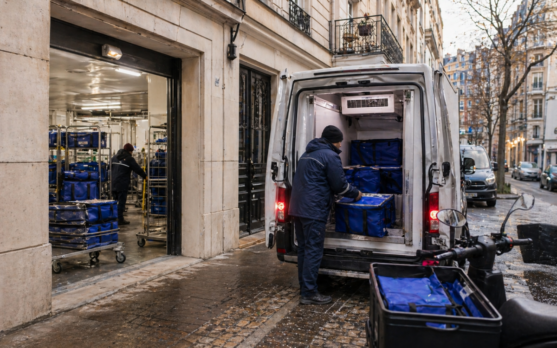
Cold-chain reliability will become part of brand equity. Consumers may forgive a late ambient grocery order. They are less forgiving when ice cream arrives soft or frozen snacks show signs of thawing. One poor delivery can damage trust not only in the platform, but in the category. In a market where frozen food still has to win confidence, that final mile is not an operational footnote.
The brands already appearing in the channel matter
The category is not theoretical. Zepto already carries a visible frozen food and ice cream assortment, with names such as Godrej Yummiez, Prasuma, McCain, ITC Kitchens of India, Sumeru and iD Fresh appearing across frozen or ready-to-cook listings. Blinkit listings show frozen non-veg snacks, sausages, nuggets, momos and potato products. These are not exotic trial items buried in a distant supermarket. They are searchable, deliverable and often promoted inside high-frequency apps.
That matters because quick commerce collapses the distance between impulse and fulfilment. In a store, the consumer has to reach the freezer. In an app, a product can reach the consumer through search, a deal tile, a repeat order nudge or a basket suggestion. For a frozen brand, that is a different commercial battlefield. It looks less like fighting for a freezer door and more like fighting for algorithmic relevance.
There is a danger in that as well. If the channel becomes too promotional, frozen food may grow as a discounted snack category rather than as a trusted meal solution. Heavy price cuts can create trial, but they can also train the consumer to wait for offers. The better long-term play is not only cheaper nuggets or fries in minutes. It is a broader promise: safe, reliable, quick-to-prepare food that fits Indian urban kitchens without pretending those kitchens are Western suburban homes.
The supermarket is not disappearing, but its role changes
India still needs modern trade, foodservice, distributors, cold stores, processors and physical retail. Dark stores will not replace all freezer aisles. They may, however, change what the freezer aisle is expected to do. If quick commerce becomes the place where consumers try frozen snacks, ice cream formats and meal helpers, supermarkets may become the place where they buy larger packs, discover premium ranges or stock known favourites.
That creates a layered market. Foodservice validates taste and formats. Quick commerce drives impulse, repeat and neighbourhood-level data. Supermarkets provide visibility and larger baskets. Traditional retail remains important in price-sensitive and less digitised areas. The companies that treat these channels as separate silos will miss how consumers actually move between them.
There is also a geography issue. The dark-store freezer moment will not arrive evenly across India. It will be strongest in dense urban districts where order frequency, income, digital adoption and delivery density can support the economics. Tier-2 expansion will happen, but frozen food will need disciplined assortment, not a copy-paste version of metro listings. Cold space costs money everywhere. In smaller markets, the wrong assortment can turn quickly from growth story to freezer liability.
What this signals for the frozen food industry
The most important shift is mental. Frozen food companies usually ask how to get more freezer space. In India’s quick-commerce cities, they should also ask how to become part of the evening decision. That is a different brief for product development, packaging, demand planning and sales teams.
It means understanding when products are ordered, not only where they are sold. It means building packs for fast delivery, not only shelf impact. It means working with platforms on substitution rules, image standards, temperature handling, bundle logic and local demand. It also means accepting that the consumer may never see the freezer infrastructure that made the purchase possible. Trust will come from the product arriving right, cooking easily and solving a real occasion.
The old frozen aisle made the category visible. The dark-store model may make it habitual. That is a quieter kind of power. A consumer who orders frozen momos twice a month, fries for guests, ice cream on a hot evening and paratha before a busy morning is already building a frozen routine, even without thinking of themselves as a frozen food shopper.
That may be India’s great difference. The country does not need to repeat the Western freezer journey. It can build another one, through apps, density, local menus, small packs and thousands of invisible freezers placed close to demand. The aisle is still there. It just has no shoppers walking through it.