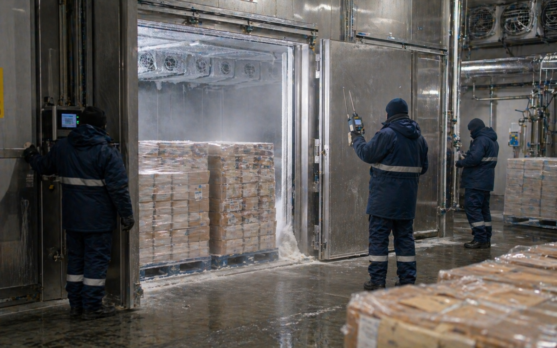
A frozen warehouse already stores value. Pallets of seafood, vegetables, bakery, meat, ice cream or ready meals sit behind insulated doors while compressors fight heat, traffic, defrost cycles and electricity prices. Phase change materials add a different idea to that familiar building: stored cold. Not a replacement for refrigeration, not a miracle panel on the ceiling, but a thermal buffer that can buy time when energy is expensive, the grid is under pressure, or the freezer needs steadier temperatures than the equipment can deliver cheaply on its own.
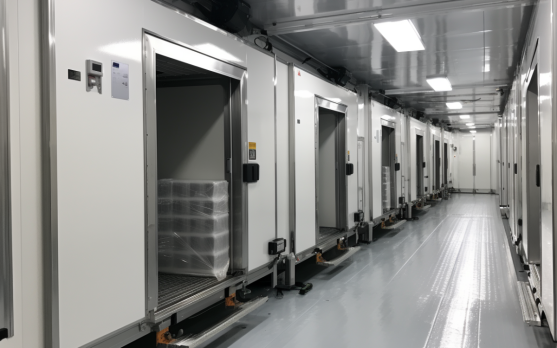
The freezer is becoming a battery, just not an electrical one
Phase change materials are easy to over-sell because the basic explanation sounds almost too neat. A material freezes, melts, absorbs heat, releases cold, and helps the refrigerated space stay stable. In a frozen warehouse, that means PCM can act like added thermal mass. It stores cooling when the refrigeration system has capacity, then gives the freezer more time before compressors have to work hard again.
That does not make a cold store a power station. It makes it more flexible.
The difference matters. Cold storage operators are not looking for science projects. They are dealing with electricity bills, peak demand charges, product quality, customer audits and enough maintenance headaches already. If PCM is useful, it is because it fits into those pressures without asking the operator to gamble with product temperature.
The better description is not “energy-saving material”. It is a cold battery inside the operating envelope of the warehouse.
Unlike an electrical battery, PCM does not send power back to the grid. It reduces or shifts refrigeration demand. The freezer can be cooled harder at one time and allowed to ride through another period with less mechanical cooling, while staying within temperature limits. That may sound small. In a large frozen facility, small changes in compressor operation at the right hour can be financially meaningful.
PCM buys time when electricity is expensive
Most frozen warehouses do not consume electricity evenly. Door activity, defrost, ambient temperature, loading patterns and operating schedules all shape demand. Add time-of-use tariffs or demand charges, and the timing of refrigeration starts to matter almost as much as total consumption.
PCM becomes interesting when the site can shift part of the cooling load. Charge the material when power is cheaper or the grid is cleaner. Let it support temperature stability during expensive or constrained periods. Avoid some peak operation. Reduce cycling. Hold the room more steadily during short interruptions or demand response events.
A Southern California Edison field evaluation remains one of the better practical references because it was not just a lab story. The study looked at passive PCM and controls in a 4,800 square foot frozen food distribution freezer in Rancho Cucamonga. The reported annual energy savings were 19 percent with native controls and 25 percent with supplemental controls, compared with the baseline. Useful results, but also a warning. Controls changed the outcome. The material alone was not the whole story.
That is the point many PCM conversations skip.
A warehouse does not save money because someone installs thermal mass. It saves money when the refrigeration system, control logic, temperature limits, tariff structure and operating staff all work together. Otherwise the PCM becomes an expensive slab of confidence.
The warehouse case is stronger than the brochure case
Frozen storage has a natural fit with thermal buffering. The product is already held at low temperature. The rooms have thermal inertia. The refrigeration load is large. Many facilities have predictable operating patterns, at least compared with foodservice kitchens or small retail sites.
But the site still has to be right.
PCM makes more sense where electricity pricing rewards flexibility, where demand response is available, where equipment is in good condition, and where the warehouse has the monitoring needed to prove what happened. It also helps when the racking layout, air movement and product mix allow the PCM to do useful work rather than sit in the wrong thermal corner.
Some sites will be poor candidates. A badly maintained freezer with leaking doors, blocked evaporators, chaotic traffic and weak monitoring should probably fix those problems first. PCM cannot repair poor operations. It can make a disciplined site more flexible.
The Minnesota Refrigeration Thermal Energy Storage work is useful here because it frames PCM as one option within thermal storage, not as a universal answer. Thermal flywheeling, simply using the product and space as thermal mass, may be cheaper but shorter in duration. PCM can extend load shifting further when tuned correctly, but it comes with higher capital cost and more design questions.
The practical test is blunt: does the site have enough price signal, enough load, enough control and enough product-temperature margin to justify the investment?
Controls decide whether stored cold has value
PCM is often discussed as a material issue. In cold storage, it is at least as much a controls issue.
The material has to be charged and discharged at the right time. Charge too aggressively and the system may run harder than necessary. Discharge too cautiously and the operator gets little benefit. Push too far and the product temperature risk becomes unacceptable. Leave the system on basic controls and much of the economic value may stay on the table.
That is why PCM becomes more interesting when paired with better metering, predictive controls and site-level energy management. The warehouse needs to know more than room temperature. It needs load, compressor status, tariff windows, door patterns, defrost timing and product temperature confidence. The best systems will not simply ask, “Is the room cold enough?” They will ask, “When should this room use power?”
The commercial refrigeration flexibility projects in Australia show where the wider market may be heading. ARENA-backed work with Enel X aims to demonstrate flexible demand at retail refrigeration sites and refrigerated warehouses, including Lineage Logistics sites, with load shifting rewarded through a dedicated commercial structure. That kind of model matters because it gives flexibility a price. Without a price, a grid asset is only a nice phrase.
Cold storage already has the physical characteristics the grid wants: a large controllable load, thermal inertia and relatively fast response. PCM can deepen that flexibility. It does not create the business case by itself.
Product quality is the line that cannot be crossed
Frozen food operators will tolerate complicated energy projects only up to the point where product risk enters the conversation.
A few degrees on a chart may look harmless to an energy manager. To a frozen food manufacturer or cold-chain operator, temperature history is tied to texture, ice crystal growth, customer specifications, insurance, claims and audit records. Ice cream, seafood, bakery, vegetables and prepared meals do not all behave the same way under thermal stress. Some products are forgiving. Some are not.
PCM must therefore sit inside the product’s commercial and safety boundaries. It cannot become an excuse for looser temperature discipline. The strongest case is not that the freezer can be allowed to warm casually. The case is that the room can be held more steadily, with less compressor work at bad hours, because additional thermal storage is available.
There are material questions too. The phase change temperature has to fit the application. The material has to remain stable over many cycles. Encapsulation has to hold. Heat transfer has to be fast enough to matter. Leakage, phase separation, supercooling and poor placement are not academic concerns if the system is expected to work for years in a warehouse that runs every day.
Operators should ask hard questions before treating PCM as a retrofit shortcut. What temperature range is the material designed for? How many cycles has it been tested through? What happens if modules are damaged? How is performance measured? Does the supplier guarantee energy savings, demand reduction, temperature stability, or only the installation?
In frozen food, confidence is not a brochure. It is measured in temperature records and claims that do not arrive.
The next cold store will be judged by flexibility
Cold storage used to be judged mostly by capacity, location, temperature performance and service reliability. Those will remain essential. But energy flexibility is moving into the discussion, especially where renewable generation, grid congestion, demand charges and volatile electricity pricing are becoming normal business conditions.
PCM will not be right for every freezer. It will not rescue inefficient equipment. It will not replace sensible maintenance, door discipline, air management or proper insulation. It is a tool for sites where stored cold can be used intelligently.
The strongest opportunities are likely to sit in large frozen warehouses, supermarket back-of-house systems, cold-chain logistics hubs and selected transport applications where thermal buffering can protect temperature while reducing peak load. New-build sites may have the cleaner path because PCM, controls and racking can be designed together. Retrofit projects will need sharper measurement and verification.
After 2030, the more advanced cold stores may be valued not only for what they store, but for when they can reduce demand. That changes the language of refrigeration. A freezer is no longer only a cost centre. In the right market, with the right controls, it can become a flexible load the grid is willing to pay for.
That is the useful promise of PCM. Not magic material. Not effortless sustainability. Stored cold, released at the hour when it matters.