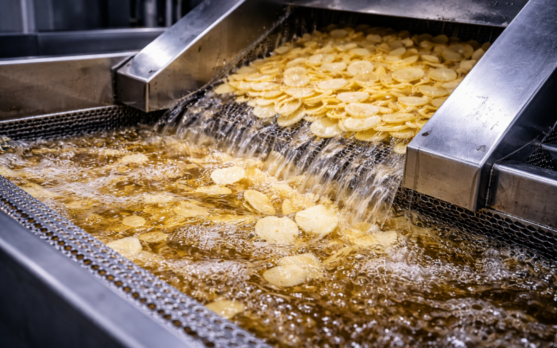
For years, Asia-Pacific was the growth story frozen fry suppliers liked to tell from a distance: more QSR units, more urban consumers, more delivery, more imported fries moving into ports and cold stores. That story has aged. China and India are no longer only eating into the global fry supply. They are building it, financing it, farming for it, freezing it and, increasingly, shipping it into the same regional markets that once looked safely open to Europe and North America.

APAC used to import the fry. Now it is building the line.
The old map was tidy enough. Large processors in Europe and North America made frozen fries at scale, and fast-growing Asian foodservice markets pulled in the product. China, Southeast Asia, the Gulf, India, Japan, Korea, all of them appeared in export conversations as demand destinations. Some were premium, some were price-sensitive, some were difficult, but the trade direction felt familiar.
It does not feel quite so familiar now. Between 2019 and 2024, global trade in frozen processed potato products climbed sharply in value. At the same time, China and India moved from being mostly import-dependent stories toward becoming visible export players. That shift matters more than a simple growth chart. It changes how buyers negotiate, how processors plan capacity and how regional QSR chains think about supply security.
APAC still needs imports. It still offers growth. But the more interesting question is where the fry is made. A container from Belgium or Canada is now competing with local or regional capacity that is closer to customers, closer to ports in Asia and, in some cases, cheaper to land. The product is still a strip of potato. The commercial map behind it is getting harder to read.
China’s QSR network helped build a supply base
China is the clearest example of how demand turns into production. The country has the world’s largest potato crop, but raw production alone never made China a frozen fry power. The missing pieces were processing-grade supply, industrial lines, cold-chain reliability, consistent specifications and enough foodservice pull to justify the investment.
That pull is now visible everywhere in the Chinese QSR system. KFC and Pizza Hut operator Yum China ended 2025 with more than 18,000 restaurants. KFC China alone had nearly 13,000 units. McDonald’s China has been pushing toward 10,000 restaurants by 2028, with thousands of stores already operating across hundreds of cities. Delivery, kiosks, mobile ordering and smaller-city expansion have made the channel more repeatable and more data-driven.
A fry supplier serving that network is not selling a casual side dish. It is feeding a machine. Stores need consistency, not a romantic local story. A fry has to work in rush-hour kitchens, delivery orders, value meals and smaller-city outlets where labor training and equipment discipline may vary. That is the kind of demand that forces a supply chain to mature.
China’s export numbers show the change. In the first five months of 2025, China reportedly shipped 139,000 tonnes of frozen French fries, compared with 206,000 tonnes in the whole of 2024. Imports have fallen sharply from earlier levels. Much of the export focus has gone into East and Southeast Asian markets, where proximity gives Chinese processors an obvious advantage if quality and reliability are good enough.
That last phrase matters. Good enough is not a small hurdle in fries. Buyers can test cheaper product quickly in a fryer. They can also reject it quickly if color, length, texture or cold-chain condition fails. China’s challenge is not only making more fries. It is proving that its regional supply can behave like industrial QSR product, not just lower-priced volume.
India is turning Gujarat into a frozen fry platform
India’s story is less sudden, but just as important. Fifteen years ago, frozen fries in India were still closely tied to imports and the early development of organised QSR. Today, India is exporting frozen potato products from Gujarat to markets such as the UAE, the Philippines, Malaysia and beyond. The shift has not come from demand alone. It has come from contract farming, processing-grade varieties, investment in plants and a cold-chain system built around frozen export.
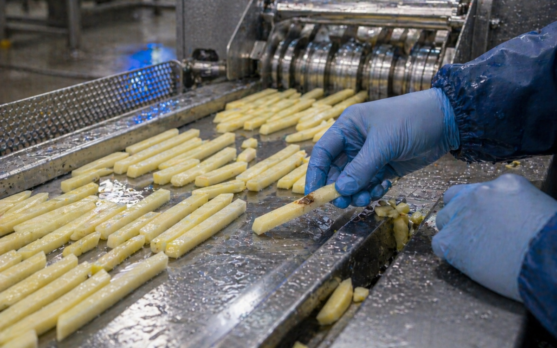
Gujarat is the centre of the story because it has the agronomy, the processors and the logistics in the same commercial frame. Companies such as McCain Foods, HyFun Foods, Iscon Balaji and Falcon Agrifriz have helped move the sector beyond occasional supply into industrial volume. The crop is not just bought. It is planned. Farmers grow for processing specifications. Varieties are selected for dry matter, low sugars and shape. The factory wants length, colour and solids, not just tonnes.
That is where India becomes strategically interesting. It has a huge potato crop, but the processing share is still a different question. A table potato does not automatically become a QSR fry. The raw material has to match the line. Kufri Frysona, developed for processing, and introduced European varieties such as Santana and Innovator have become part of the country’s move toward export-ready supply.
India exported around 180,000 tonnes of frozen potato products in 2024-25, according to industry reporting. That is not enough to overturn the global trade map on its own. It is enough to make buyers pay attention. It also gives India a dual position: a domestic QSR market still growing through pressure and discounting, and an export platform aimed at the Gulf, Southeast Asia and other price-conscious destinations.
QSR expansion brings volume, but also harder pricing
It would be lazy to write APAC as a fast-food boom without friction. China has vast QSR scale, but consumers remain value-aware. India has large long-term potential, but urban demand has been uneven, and operators are leaning on value offers and promotions to pull traffic. In May 2026, Devyani International, a major KFC and Pizza Hut operator in India, reported improved KFC same-store sales but within a QSR market still dealing with weak urban demand.
For frozen fry producers, that means growth with pressure attached. New restaurants need fries. Delivery needs fries. Value meals often need fries. But the supplier conversation can become uncomfortable when the customer wants expansion, low menu prices and reliable product at the same time.
In a buyer meeting, the fry may be treated as a cost line until something goes wrong. Then it becomes quality, brand trust, kitchen performance and customer complaint risk. A shorter fry looks cheap. A dark fry looks tired. A soggy fry hurts delivery. A poor case yield annoys the operator. Local supply helps only if it reduces cost without creating those problems.
That is the practical test for China and India. Their advantage is not simply lower cost or proximity. It is whether they can serve QSR systems with the same reliability buyers expect from long-established suppliers. If they can, APAC demand starts feeding APAC supply. If they cannot, imports remain protected in the better segments.
Cold chain is the quiet test
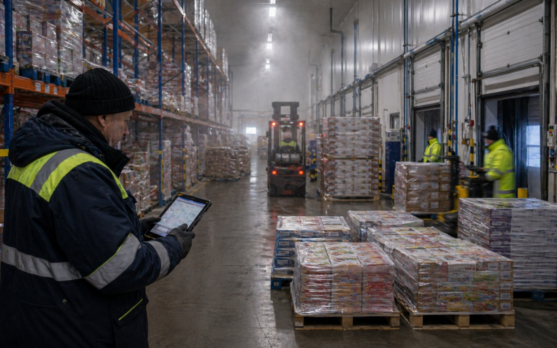
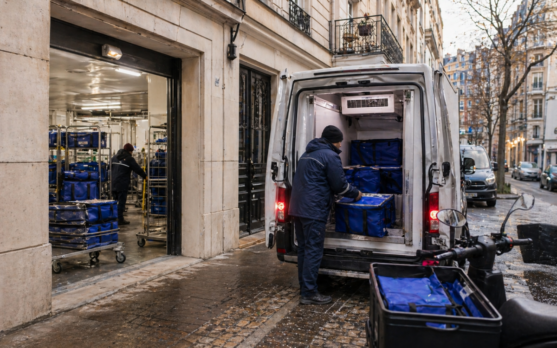
Frozen fries are unforgiving in the wrong logistics network. A factory can make a good product and still lose it through weak storage, poor transport discipline or temperature abuse before it reaches the restaurant or distributor. In APAC, cold chain is not an infrastructure footnote. It is the line between credible regional supply and a cheap product that buyers try once.
China has been able to support a large QSR system partly because foodservice logistics have become highly organised. India is more uneven, which makes Gujarat’s progress more notable. The cluster works because farming, processing, freezing, storage and export movement have started to connect. It is still not simple. Energy cost, storage availability, port handling, inland transport and quality monitoring all matter.
Southeast Asia and the Gulf will be the proving grounds. These markets are close enough for China and India to compete hard, large enough to matter, and mixed enough to expose weak supply. A hotel group, a QSR franchisee and a distributor in Manila or Riyadh may all buy fries, but they do not all buy risk the same way.
Cold-chain reliability gives regional suppliers permission to compete above price. Without it, they remain bargain alternatives.
The next fight is for processing-grade supply
APAC has potatoes. That has never been the whole point. The future of frozen potato processing in the region will depend on how much of that potato base can be converted into reliable industrial supply.
That means seed, varieties, farmer training, irrigation, disease management, storage, sugar control, dry matter, tuber size and contract discipline. It means processors need growers who can produce for the fryer, not just the market yard. It also means growers need contracts that make the switch worth the trouble.
China’s strength is scale and speed. India’s strength is the emerging cluster model, especially in Gujarat. Southeast Asia remains more of a demand and import region, although local processing may grow where agriculture and logistics allow. The Gulf will remain a valuable customer zone because foodservice demand is strong and regional sourcing options are attractive when landed cost matters.
European and North American suppliers should not read this as a simple threat. Premium buyers will still pay for reliability, specification discipline and established supplier performance. But the middle of the market will become more contested. If Chinese and Indian processors keep improving, they will not need to take every customer. They only need to take enough volume in price-sensitive channels to change the conversation.
APAC’s frozen potato boom is therefore entering a more industrial phase. Demand created the opening. Local supply, cold chain, processing-grade farming and capacity investment will decide who captures the margin.