The weakest superfood product in the freezer is easy to spot. It has berries on the front, a few green leaves in the corner, a promise that sounds almost medical, and no clear answer to a basic retail question: what will the shopper actually do with it on Wednesday morning? Frozen berries, greens, grains, legumes and smoothie kits have real value, but the category has spent too long dressing ordinary ingredients in wellness language. The freezer does not need more miracle food. It needs products that are useful enough to be bought again.

The superfood word is tired, but the ingredients are not
Superfood is one of those words that entered food marketing with energy and then lost some of its sharpness. It now sits on packs, landing pages and product decks so often that it can mean almost anything: a blueberry, a pouch of acai, a handful of spinach, a seed blend, a grain bowl, a smoothie mix, sometimes just a product with a purple pack and a health halo.
That does not mean the ingredients are weak. It means the word has become lazy.
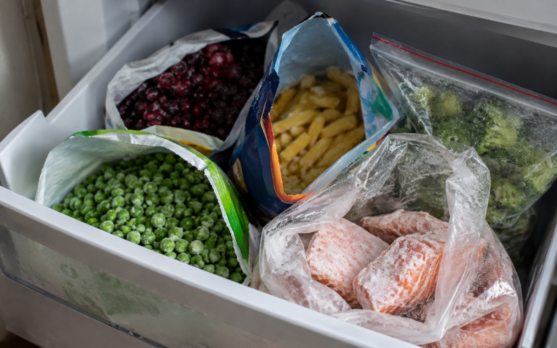
The freezer still has a strong role here. Berries freeze well. Mango works. Spinach and kale have obvious uses when they are handled properly. Lentils, chickpeas, peas, edamame, oats, quinoa and brown rice give structure to meals. These are not fantasy ingredients. They belong in breakfast routines, bowls, soups, sides, smoothies and meal prep.
The mistake is asking them to behave like supplements. A frozen berry mix does not need to promise vitality. A spinach blend does not need to sound like a health programme. A grain bowl does not need to introduce itself like a wellness retreat. It needs to taste good, portion well, store cleanly, cook or blend properly and make sense in the shopper's week.
Berries are still the freezer's easiest health cue
Frozen berries have a practical honesty that many newer health products lack. They are visible. They are familiar. They work across breakfast, bakery, desserts, smoothies, yogurt, foodservice prep and retail private label. A shopper understands what to do with them before reading the back of the bag.
That is powerful.
But even berries can be mishandled. A bag that turns into a frozen block is not convenient. Fruit with weak flavour damages the repeat purchase. Poorly managed frost makes a premium blend look tired. A beautiful pack cannot rescue a smoothie that tastes watery or a breakfast bowl that bleeds colour into everything else.
For retailers, berries are also a dangerous comfort zone because private label can move quickly. Blueberry, mixed berry, tropical berry, organic berry, smoothie blend. The codes are easy to copy. Brands need a reason beyond the ingredient: better sourcing, better cut quality, better freezing, better pack closure, a cleaner blend logic, a clearer occasion.
The same rule applies to acai-style and antioxidant-led blends. They can work, especially when tied to breakfast and smoothie occasions. They become weaker when the pack talks louder than the product.
Greens are useful, but they punish weak development
Spinach and kale carry one of the strongest visual signals in health-focused frozen food. They also create some of the least forgiving product problems.
In a smoothie kit, greens have to disappear just enough. The consumer wants to feel sensible, not punished. Too much bitterness, too much leaf fibre, or a muddy colour and the product becomes a one-time experiment. In a frozen bowl or side, greens have to survive heat without turning the tray wet and dull. Spinach can be useful. It can also flood a sauce. Kale can add a good cue. It can also eat like rough garnish if the cut and blanching are wrong.
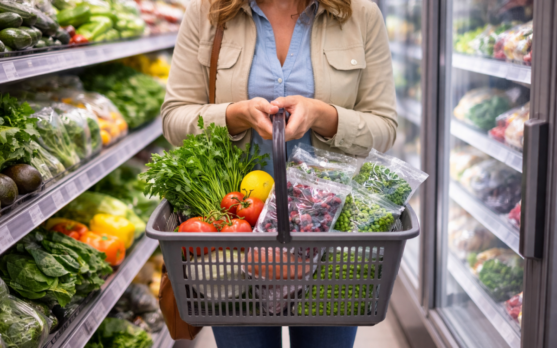
This is where the old superfood language hides the real work. Greens are not just a claim. They are moisture, colour, flavour, texture and cost. They need the right partner ingredients. Mango can soften a smoothie. Citrus can brighten it. Dairy or plant-based creaminess can carry it. In meals, grains, legumes, sauces and fats have to be built around what the greens will actually do after freezing and heating.
A greens product that works can become a freezer staple. A greens product that does not work becomes the thing the shopper bought because it looked virtuous and then never finished.
Smoothie kits are convenience products first
The best smoothie kits do not succeed because they are poetic. They succeed because they remove steps.
No washing. No peeling. No cutting. No half-used bag of spinach going soft in the refrigerator. No forgotten mango. No guesswork on portion. Add liquid, blend, drink. That is the proposition, and it is a good one.
The product challenge sits behind that simplicity. Piece size matters because blendability matters. Banana is useful, but too much banana makes the kit feel cheap. Berries bring colour and acidity, but cost more. Mango gives body and sweetness. Greens add the health cue, but can dominate if the blend is poorly balanced. Seeds or protein additions may help the nutrition story, but can also complicate texture and price.
Packaging is part of the equation. Individual sachets make portion control easy, but raise cost and material questions. Bulk resealable bags are cheaper and more flexible, but the consumer has to portion correctly. Cups can work for immediate use, but demand more freezer space. There is no perfect answer. There is only the format that fits the shopper and the channel.
The category should stop pretending smoothie kits are automatically healthy because they contain fruit. The stronger claim is more modest: they make better ingredients easier to use.
Legumes and grains are the quieter opportunity
Berries and smoothies get the colour. Legumes and grains may do more of the commercial work.
Lentils, chickpeas, beans, peas, edamame, oats, quinoa, brown rice and similar ingredients give frozen food something very useful: body. They help a product feel like a meal. They bring fibre, protein, cost discipline and structure. They also travel well across cuisines without needing to imitate meat.
A lentil curry, a chickpea bowl, an edamame grain mix, an oat breakfast cup, a quinoa and vegetable side. None of these needs the word superfood to make sense. They need seasoning, sauce, texture and a clear eating occasion.
There is a factory lesson here. Grains can clump. Legumes can go mealy. Oats can turn gluey. Quinoa can dry out. Sauces can vanish into the base. If the product is sold as nourishing but eats like a reheated mass of starch and water, the shopper will not care how many good ingredients went in.
The future of this part of the freezer is less glamorous than the old superfood story, but probably more durable. Bowls, sides, bases and meal components built around legumes and grains can serve health-focused shoppers without sounding like a lecture.
Health language has to be handled with more restraint
There is an obvious temptation around this category. Berries become antioxidants. Citrus becomes immunity. Greens become detox language. Seeds become energy. The pack starts to drift from food into promise.
That is where brands need to slow down.
Antioxidant and immune-support language can carry regulatory weight, depending on market and wording. A product made with berries is one thing. A product implying protection, disease reduction, immune boosting or body repair is another. The difference may look small in a marketing line. It is not small in compliance.
There are safer ways to communicate. Made with blueberries. Contains spinach and mango. No added sugar, if true. Source of fibre, if the serving qualifies. High in vitamin C, if the product meets the rule. Ready for smoothies. Pre-portioned. Made with whole fruit. Built for breakfast.
None of that sounds as exciting as a wellness promise. It is more likely to survive legal review, retailer scrutiny and consumer scepticism.
The useful freezer will beat the mystical freezer
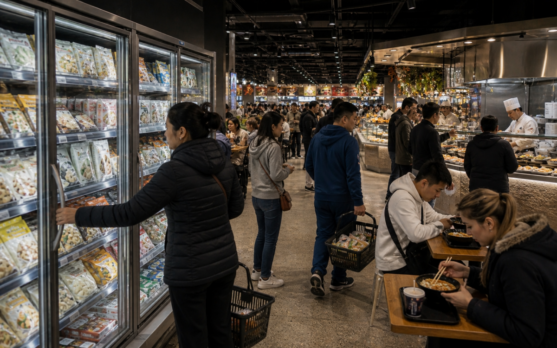
The next stage of frozen superfoods should look less like a trend wall and more like a working part of the store.
There is room for premium berry blends, but also for value fruit bags. There is room for smoothie kits, but they need repeatable taste. There is room for greens, but not if they turn every product bitter or watery. There is room for legumes and grains, especially in bowls and sides. There is room for immune-adjacent ingredients, but not for medical overreach.
Retailers will likely organise this space less around the word superfood and more around use: breakfast, smoothie, bowl, side, snack, baking, meal prep. That is better. It gives the product a job.
A shopper may try a superfood once because it sounds good. They buy it again because it fits a routine.