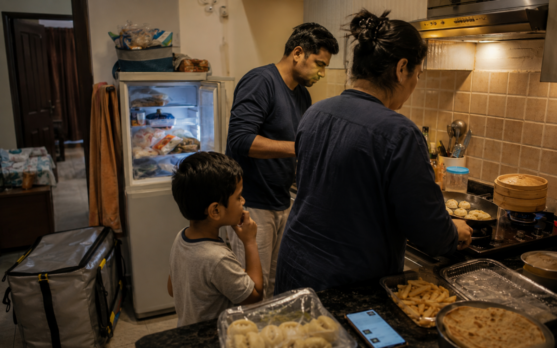
The most revealing moment for children's frozen food is not in a nutrition panel or a brand presentation. It is a Tuesday evening freezer door, opened by a tired parent with one child hungry, another refusing yesterday's leftovers, and twenty minutes before the house starts to unravel. The product that comes out of that drawer has to do two jobs at once: the child has to eat it, and the parent has to feel that choosing it was help, not defeat.

The freezer has become a family safety net
Children's frozen food sits in a complicated part of the supermarket. It is sold as convenience, judged as nutrition, and consumed under pressure. It is rarely part of an ideal meal plan. It is what families reach for when the day has already gone wrong, or when the schedule leaves no room for proper cooking.
That does not make the category weak. It makes it useful. Frozen has a role that chilled and fresh cannot always play: it waits. It gives parents a backup meal, a breakfast option, a quick protein, an after-school snack, a lunchbox-adjacent piece of the routine. It reduces waste because the product is not racing toward a date label in the refrigerator. It can also make cost per serving easier to understand.
But usefulness is not enough anymore. The old idea of "kid food" has become commercially risky: beige, breaded, salty, sweet, playful on pack, nutritionally thin. Parents still buy familiar formats because children are not focus-group theory. They are children. They want nuggets, pasta, pizza-style bites, waffles, pancakes, meatballs, little portions, soft textures, crisp edges, mild sauces. Familiarity matters.
The difference now is that familiarity has to carry more responsibility. A children's frozen meal can look fun, but if the sodium is high, the sugar is careless, the ingredient list feels too engineered or the portion looks stingy, the trust starts to leak away.
Kids decide the repeat purchase, parents decide the permission
There is a blunt rule in children's food: no one wins if the child does not eat the meal. A technically improved product that comes back from the table untouched is not a breakthrough. It is frozen inventory with a better conscience.
This is where children's frozen food becomes harder than adult meal development. Adults may tolerate compromise when a product promises health, protein or convenience. Children usually do not. They reject texture first, then flavour, then appearance, often without giving the brand a second chance. The parent may have liked the cleaner label. The child remembers the odd vegetable piece in the pasta.
Manufacturers know this. That is why hidden vegetables remain attractive. They allow brands to keep the formats children already accept while giving parents a reason to feel better about the purchase. Kidfresh is one of the clearest examples in the US market, with meals built around familiar items such as chicken nuggets, pasta and meatballs, while communicating hidden vegetables, whole grains and lower sodium in specific products.
The approach works because it starts with acceptance. But it also has a limit. If the category leans too heavily on hiding, it risks admitting that better food cannot be made visible to children. The more mature route is not to turn every product into a vegetable lesson. It is to make meals that feel normal to a child and less suspicious to a parent.
Sodium and sugar are moving from label details to range questions
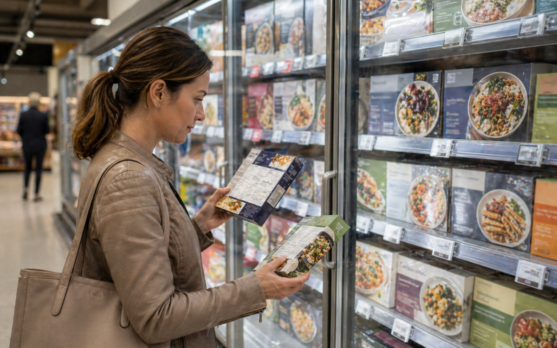
Sodium is the quiet pressure point in children's frozen meals. It helps flavour. It helps familiar products taste familiar. It sits inside breading, sauces, cheese, processed meats, pizza formats and pasta meals. It is also one of the first numbers parents, dietitians and public health groups look at when frozen food is positioned as better for children.
School meal standards are pushing the wider food system toward tighter control of sodium and added sugars. Retail frozen is not school foodservice, but the signal travels. If public-sector meals are being asked to move in one direction, products marketed to families cannot pretend the conversation is not happening.
Sugar is a different problem. It is more visible in breakfast and snackable formats: waffles, pancakes, French toast sticks, sweet bites, frozen fruit products and dessert-adjacent items that can slide from meal support into treat territory. A frozen breakfast product may look harmless on its own, but the way it is eaten matters. Syrup, spreads and sweet toppings can change the real plate very quickly.
The better suppliers will not treat sodium and sugar as claims to be solved at the end of development. They have to be designed into the product from the first bench samples. Less sodium with flat flavour will fail. Less sugar with poor texture will fail. A child does not reward reformulation effort. A parent might notice it, once. The product still has to taste right.
Recognisable ingredients are becoming the new reassurance
Parents do not expect a frozen nugget or mini pasta meal to look like home cooking. Most are realistic. They know these are manufactured foods. What they want is a shorter distance between the product and something they understand.
White meat chicken. Whole grains where they make sense. Cheese that tastes like cheese. Tomato sauce with some body. Vegetables that are either visible enough to be credible or integrated well enough not to ruin the eating experience. No synthetic colours shouting from the back of the pack. No long wellness lecture over a product that still looks like an old frozen dinner.
The rising concern around ultra-processed foods makes this harder. Many frozen products for children will remain processed by definition. They need freezing systems, coatings, formed components, sauces, starches, stabilisers, packaging and heating instructions. Pretending otherwise is not useful.
What the category can do is reduce the feeling of mystery. Better sourcing language helps when it is specific. Ingredient discipline helps more. A parent may not object to processing as much as to processing that looks unnecessary, excessive or hidden behind cartoon energy. The stronger children's frozen products will make the food feel more legible.
That is also where packaging tone matters. Children's food does not need to look childish to be kid-friendly. A more restrained pack can speak to the parent while the format speaks to the child. The aisle has enough bright noise already.
The growth space sits between meals, snacks and lunchboxes
The most interesting part of children's frozen food may not be the complete meal. It may be the formats that sit around the meal.
Mini waffles before school. Small meatballs added to pasta. Nuggets that become part of a plate rather than the whole plate. Veggie tots as a side. Frozen fruit portions for smoothies or yogurt bowls. Bite-size after-school snacks. Mini calzone-style items, small breakfast sandwiches, trayless snacks that can move through an air fryer. These products are not lunchbox items in the old sense, but they live near the lunchbox routine.
That matters because family eating is fragmented. A child may eat breakfast early, snack after school, eat a quick dinner before sport, then want something else later. Parents are looking for building blocks, not always plated solutions. Frozen is well placed for that because it allows small, controlled use.
Foodservice signals are pointing in the same direction. K-12 menus are experimenting with bowls, bite-size formats, global flavours and more flexible meal architecture. Retail frozen does not need to copy school food, but it should pay attention. Children are being exposed to more variety than the old freezer aisle sometimes assumes.
The challenge is to bring variety without losing trust. A Korean-inspired bowl for children, a mini taco-style format or a breakfast bite can work only if the nutrition and eating quality are handled carefully. Novelty alone is cheap. Repeat purchase is not.
The category has to stop sounding like parenting advice
Too much communication around healthy children's frozen food still talks down to the shopper. It tells parents to make better choices, read labels, balance meals, add vegetables. The advice may be correct, but it is not the job of a frozen food brand to lecture the person who is already trying to get dinner onto the table.
The better commercial posture is more modest: here is a product that helps. It is familiar enough for the child. It has a more responsible sodium or sugar profile. The ingredients are easier to understand. The portion makes sense. It cooks reliably. It does not create a fight at the table.
That sounds simple, but it is a demanding brief. It requires R&D restraint, nutrition work, sensory testing with real children, honest packaging and a retailer willing to give space to products that do not rely only on cartoon appeal or discount pricing.
The freezer can earn a better place in family food routines. It will not do it by pretending every children's product is a nutritional solution. It will do it by becoming a more trustworthy backup, one product at a time.