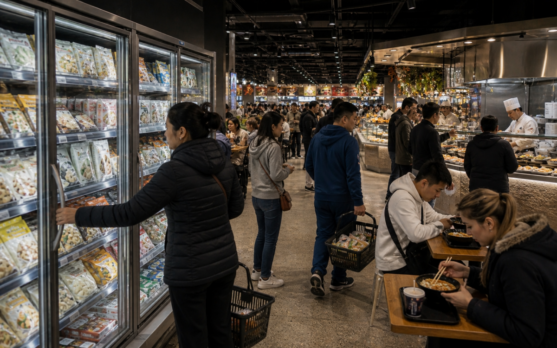
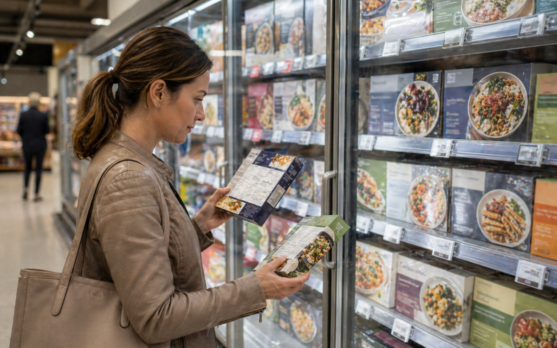
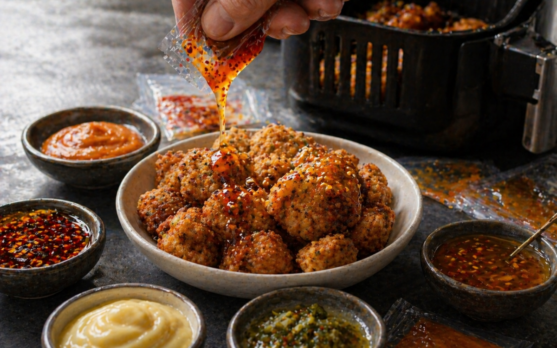
The old party-food corner of the freezer is starting to look more serious. A shopper who once bought a tray of mini snacks for guests now buys samosas for the air fryer, empanadas for a fast lunch, arancini for a restaurant-at-home evening, bao for a child who refuses another sandwich, and mini pies because dinner has become something more fragmented than dinner. Frozen snack bites are no longer just fillers around the main meal. In many homes, they are the meal plan when nobody wants to admit there is no plan.
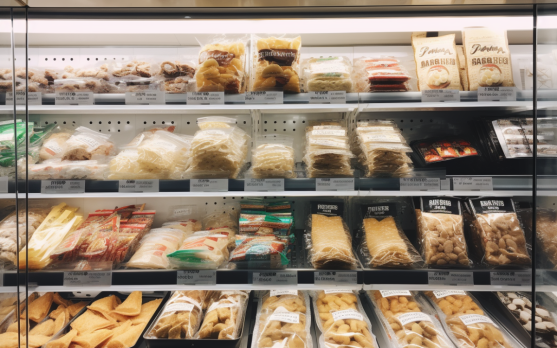
The small-format freezer has grown up
Frozen snack bites used to carry a simple brief: be hot, be easy, be shareable. That still matters, but the format has moved on. The strongest products now sit across several occasions at once. They can be party food, late-night food, a side dish, a quick lunch, a children’s tea, a tray for the air fryer, or the kind of “something small” that turns into dinner.
That flexibility is valuable in a category where the shopper is not always looking for a full ready meal. A lasagne tray asks for commitment. A bag of empanadas or samosas asks for appetite and ten minutes. It also gives retailers a different kind of range logic: not only cuisines, but shapes, textures, fillings, cooking methods and sharing occasions.
The better snack-bite ranges feel less like a random freezer shelf and more like a small map of how people eat now. Indian fried bites, Italian rice balls, Spanish croquetas, Latin American hand pies, Asian dumplings, mini savoury pastries, coated cheese bites, filled potato snacks. Some are premium, some are value, some are almost meal components. The old word “appetizer” is too narrow for what the format is doing.
Air fryers changed the contract
The air fryer did not create frozen snack bites. It made weak ones easier to spot.
For years, many frozen snacks lived with oven instructions that gave the product a little cover. If the pastry was soft or the coating uneven, the consumer might blame the oven, the tray, the timing. Air fryers brought the expectation of speed and surface texture. Ten minutes now has to mean something. Crisp edges. Hot centre. No leaking cheese across the basket. No cold patch in the filling.
That has changed product development. A samosa needs a shell that crisps without turning dry. A pakora needs bite without becoming oily. An arancini has to keep its rice structure and still feel creamy inside. A bao has the opposite problem: it needs softness, not crunch. A spring roll must make noise when bitten. Empanadas and mini pies need pastry that holds and filling that does not collapse into steam and water.
These are not small technical details. They are the category.
Air-fryer readiness has also changed packaging language. It used to be a consumer hack. Now it is a front-of-pack promise in many ranges, or at least a clear cooking route. That matters because snack bites are rarely eaten with patience. They are used when the kitchen is already behind schedule.
Global flavour works best when the format is specific
“Global snacks” is a useful retail phrase, but it can become lazy very quickly. A good range does not need another vague box of crispy world bites. It needs specificity.
Samosas, pakoras and bhajis bring one kind of permission. They already belong to vegetarian, sharing and street-food occasions. They can be value-led or premium, mild or hot, standard party food or part of a more serious Indian frozen range. Their strength is not novelty. Their strength is that consumers understand the shape, the crunch and the role.
Arancini and croquetas work differently. They carry a more premium foodservice cue. Rice, cheese, béchamel, ham, mushroom, ragù, breadcrumb. The product has to feel indulgent, not just convenient. It is easy to ruin. A cracked arancini with a dull centre does more damage than a simple potato bite because the expectation is higher.
Empanadas and mini pies bring the handheld meal into the conversation. They can be snack, lunch, party food or family freezer stock. Their appeal sits in pastry, filling and portability. They also travel well across cuisines: Latin American empanadas, British mini pies, Caribbean patties, curry puffs, hand pies. One format, many identities.
Asian bites may be the broadest platform of all. Dumplings, gyoza, mandu, bao, spring rolls, shumai and dim sum selections already have freezer credibility. They allow retailers to build ranges that feel like takeaway-at-home without depending entirely on a full meal tray. Sauces help. So does the ritual: steam, pan-fry, dip, share.
The filling is where margin meets disappointment
Snack bites look simple on shelf. In the factory, they are not simple at all. They are small units with a lot of failure points.
The filling has to survive freezing, reheating and portioning. It must be generous enough to satisfy but not so wet that it bursts through pastry or wrapper. Cheese has to melt without flooding. Meat has to stay moist. Vegetable fillings need seasoning and structure, otherwise they become paste. Potato is useful, but too much of it makes everything taste like cheap bulk.
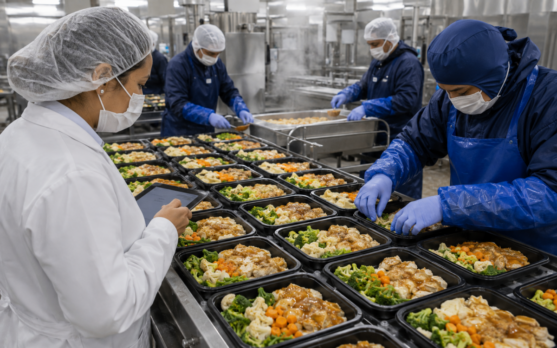
Then there is coating. Breadcrumb, filo, pastry, batter, wrapper, rice crust, tortilla, puff pastry. Each carries cost, texture and cooking behaviour. A buyer may see a compact box with attractive photography. A plant manager sees seal integrity, weight control, line speed, filling viscosity, freeze stability and whether the product survives transport without turning into broken pieces at the bottom of the pack.
That is why some snack-bite ranges feel good once and fail on repeat purchase. The front of pack sells variety. The second purchase depends on whether the product comes out of the air fryer looking close enough to the picture.
Private label will own the base, brands must earn the top
Private label is well suited to frozen snack bites. The formats are familiar, the usage occasions are broad, and consumers often buy them on deal or for a specific evening. Samosas, spring rolls, mini pies, cheese bites, potato skins, jalapeño bites and party selections can all be built into credible own-label ranges.
That does not mean brands have no room. They just need a stronger reason to exist. A branded empanada has to carry a better filling, a clearer origin, better pastry or a more distinctive sauce. A premium arancini has to eat like something closer to foodservice. A dumpling brand needs wrapper quality, filling depth and a cooking experience that does not feel generic.
The middle of the category will get squeezed. Too expensive for value. Too ordinary for premium. Too vague to be destination food.
Retailers should also avoid making every range look the same. Mixed platters are useful, especially at Christmas, game days and entertaining periods, but a wall of anonymous “party bites” can flatten the shelf. A better structure groups products by occasion and cooking behaviour: air-fryer sharing, Indian street-food bites, Asian dumplings, tapas-style snacks, handheld savoury pastries, premium restaurant-at-home.
That kind of merchandising tells the shopper how to use the product, not just where it came from.
From party food to modular meals
The long-term opportunity is not only larger party-food sales. It is the use of small frozen items as modular meals.
Three samosas with salad. Two empanadas with soup. Bao with slaw. Dumplings with noodles. Mini pies with vegetables. Croquetas beside a tray of roasted peppers. A freezer drawer full of small formats gives households flexibility without forcing them into a single ready meal. It also suits smaller households, hybrid work, irregular meal times and younger consumers who build meals from pieces.
This does not make the category immune to price pressure. Ingredients, labour, cold-chain costs, packaging and freezer space will all keep pushing. But snack bites have one advantage many frozen categories envy: they can justify themselves through frequency. They do not need to be the main dinner every time. They can sit in the household as a useful option, pulled out whenever the meal structure breaks.
That is a strong position, provided the product performs. Small bites are forgiving as an idea. They are not forgiving as food.