A pot of egusi, efo riro or cassava leaf stew does not enter the freezer aisle as a novelty. It arrives with memory, argument, texture, family expectation and a retailer’s cold commercial question: can a dish built around slow cooking, regional identity and strong aroma survive the brutal discipline of portion weight, microwave instructions, freezer burn, planograms and repeat purchase?

The aisle is ready, but not automatically
Frozen African stews sit at an unusual point in the ready-meal business. They are not invented for trend decks. They already have eaters. Nigerian, Ghanaian, Sierra Leonean, Senegalese, Ethiopian, Caribbean-African and broader diaspora communities know the dishes, know the smell of the stew reheating, know when the oil split is acceptable and when the rice has gone wrong. That gives the category a base many “global cuisine” launches do not have.
But that same base also makes the job harder. A mediocre curry tray may still survive on convenience. A weak egusi soup will be judged against somebody’s mother, aunt, restaurant, church gathering or weekend batch cook. In diaspora households, authenticity is not a marketing word. It is a memory test.
The frozen aisle is more open to that test than it was five years ago. In the US, frozen food has moved deeper into meal planning, with more shoppers using frozen products every few days or daily. In the UK, online grocery and world foods shelves have trained consumers to search beyond Italian, Indian, Chinese and Mexican. West African food is no longer invisible in restaurant culture either. London’s Michelin recognition for West African cooking did not create the demand, but it helped shift the way buyers, food journalists and premium consumers talk about it.
Still, frozen retail has no patience for cultural importance unless the product works at home. A stew has to come out of a microwave or pan looking intentional, not like a compromise.
Jollof is the bridge, stews are the proof
Jollof rice is the easiest door into the category. It has a name with cultural energy, a format shoppers understand and a built-in debate across West Africa that keeps it visible. It can be sold as a side, a main meal, a bowl, a chicken-and-rice tray or part of a mixed African range. It gives buyers a product they can explain in seconds.
That does not make it easy. Rice is unforgiving in frozen ready meals. Too dry, and it tastes like a bad airplane tray. Too wet, and the tomato base turns heavy. Reheated unevenly, it loses the loose, seasoned grain structure that makes good jollof feel alive. Factories can solve some of this through rice variety, sauce ratio, blast freezing, pack depth and reheating instructions, but the consumer does not see the process. They see a forkful of rice.
The deeper commercial question sits with the stews. Egusi, efo riro, ayamase, cassava leaf stew and peanut-based sauces carry more identity than a generic rice bowl. They also carry more risk. Oil separation may be normal in the cuisine, but on a supermarket shelf it can look like a defect. Leafy greens can darken. Meat can tighten. Strong aromas can be a selling point for one shopper and a barrier for another.
That is where many brands will be sorted. The frozen African meal that wins will not be the one that explains Africa in broad language. It will be the one that gets the reheated spoonful right.
The first commercial models are already visible
AYO Foods showed one route in the US: West African frozen meals moving from a focused launch into broader grocery distribution, with products built around recognizable dishes such as jollof rice, egusi soup, waakye and chicken Yassa. The important point is not only the store count. It is the proof that a West African frozen range can sit inside mainstream American grocery rather than remaining trapped in specialist ethnic retail.
In the UK, Tasty African Food offers a different model. It comes from foodservice, community demand and restaurant credibility, then extends into ready meals and supermarket availability. That path matters. Restaurants understand the dish before they understand the freezer. They know which items customers reorder, which sauces travel, which dishes survive holding time, which flavours can be standardized without being flattened.
Specialist operators and online brands are also doing work that large retailers often underestimate. Frozen African meals delivered through DTC channels or ethnic grocery platforms may look small from a national retail perspective, but they generate useful intelligence: portion size, reheating habits, repeat SKUs, complaints about texture, acceptable price points, what people buy together. A retailer can learn more from a real frozen stew order history than from a broad “world food” trend slide.
The strongest route may be hybrid: restaurant credibility, factory discipline, online data and selected supermarket listings in postcodes where the demand is already concentrated. Launching nationwide too early could damage the product before the format has been properly taught.
Retail education has to do more work than usual
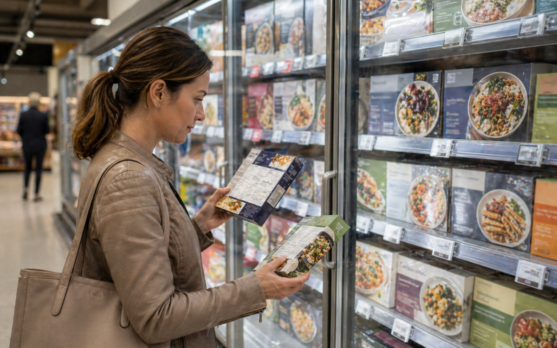
The freezer aisle gives a product very little time. A shopper sees the name, the image, the price, the weight and maybe one flavour cue. With African stews, that is often not enough.
A pack that says “Egusi Soup” speaks clearly to some shoppers and says almost nothing to others. A pack that says “melon seed stew with greens and beef” explains more, but it may strip away the dish’s identity if handled clumsily. The better answer is layered communication: keep the real dish name, explain the eating occasion, show the texture honestly and give a serving cue that does not look staged by a stock photographer.
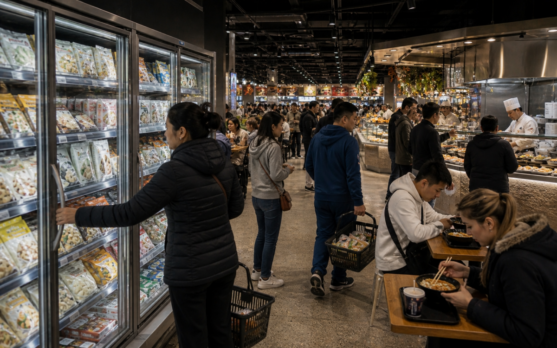
Retailers also need to decide where the product lives. Is it placed with frozen ready meals, world foods, rice bowls, premium meal solutions, African and Caribbean ranges, or online search only? Each choice changes the shopper. Put it beside lasagne and curry, and it must compete as dinner. Put it in a world foods cluster, and it speaks first to recognition and discovery. Put it online, and search terms matter more than shelf interruption.
There is another delicate issue: heat. African food cannot be reduced to spice level, yet heat is one of the first questions new consumers ask. A clear chilli guide may help, but it should not become the whole story. The deeper selling language is savoury depth, palm oil, tomato base, greens, smoked notes, seed-thickened sauce, slow-cooked meat, fermented or roasted undertones. That is what makes the food distinctive.
The factory problem is part of the story
Frozen African stews are not simply recipes scaled up. They are process decisions.
A manufacturer has to control sauce viscosity after freeze-thaw. It has to manage oil separation without making the stew look sanitized. It has to choose proteins that can survive reheating. It has to decide whether rice sits in the same tray or apart. It has to protect aroma without allowing the pack to smell stale. It has to source ingredients that may not be simple commodities in every market.
There is also the question of sides. Many stews are not eaten alone. Fufu, pounded yam, plantain, rice, beans and grains change the meal architecture. A single-tray format may be convenient, but it can misrepresent the eating experience. A two-component pack may preserve quality better, yet costs more and occupies more freezer space. A stew-only tub may suit diaspora households that already have sides at home, while a full meal tray may suit the new consumer.
This is where the category becomes interesting for frozen food rather than just for cultural commentary. The freezer is not a neutral technology. It rewards some dishes and exposes others. Slow-cooked sauces can hold flavour beautifully. Rice, greens and meat need more care. A product developer who treats all African meals as one platform will produce something dull. A good one will treat jollof, egusi and efo riro as separate engineering problems.
Short-term niche, medium-term test, long-term ingredient system
In the short term, frozen African stews are likely to grow through focused distribution rather than mass-market explosion. London, New York, Houston, Atlanta, Toronto, Washington DC, Chicago and other diaspora-heavy metro areas are more credible launch grounds than a blanket national rollout. Online grocery can help, especially where search data already shows curiosity around West African food.
By 2028 to 2030, the category could split into two visible tracks. One track will be authentic, dish-led, community anchored and often stronger in urban stores. The other will be bridge formats: jollof bowls, suya chicken trays, peanut stew with grains, peri-peri meals, spiced rice sides and sauces. The second track will travel faster. The first may build deeper loyalty.
Longer term, the bigger movement may not be “African stews” as a single supermarket category. It may be the absorption of African flavour systems into frozen prepared food: suya seasoning in chicken formats, jollof as a rice platform, shito and berbere as sauce cues, fonio as a grain, plantain as a side, peanut stews as comfort meals. Some of that will be respectful. Some will be lazy. Buyers will need to know the difference.
The commercial prize is not novelty. It is repeatability. A shopper who buys frozen jollof once out of curiosity is useful. A shopper who keeps egusi in the freezer because it solves a midweek meal without insulting the dish is far more valuable.