A frozen pack used to make a fairly simple promise: keep the food protected until someone opens it. Now it is being asked to say much more. Recyclable. Less plastic. Responsible. Circular. Lower impact. Sometimes all of that appears on a bag that still has to survive frost, compression, pallet movement, retail handling, home freezers and a consumer who may not read disposal instructions for more than three seconds. In frozen food, sustainable packaging has stopped being a design preference. It has become a public claim, and the freezer aisle is a harsh place to make promises that cannot be proved.

The freezer aisle does not reward pretty language
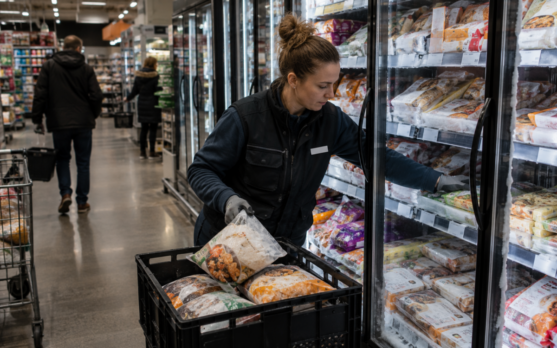
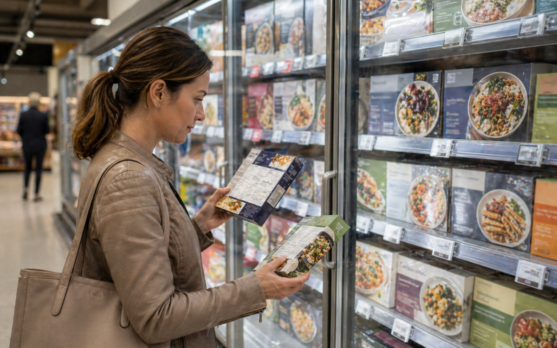
Stand in front of a frozen fixture on a busy Friday evening and the packaging conversation looks very different from the one held in a brand workshop. Doors open and close. Bags slide against wire baskets. Pizza cartons soften slightly at the edges, then harden again. Ice cream tubs pick up frost on the rim. Ready meal trays are handled, rejected, picked up again. In that setting, a green flash, a leaf icon or a neat line about reduced plastic is not just a piece of brand language. It is a claim attached to a pack that must still do its ordinary job.
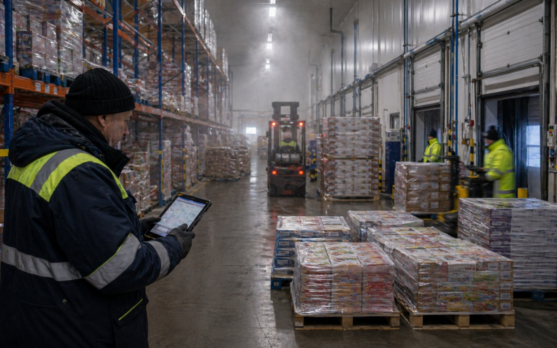
That ordinary job is tougher in frozen food than many packaging debates admit. The pack has to protect against moisture migration, freezer burn, seal failure, scuffing, crushing and temperature fluctuation. It has to hold instructions, nutrition, cooking guidance, recycling information and brand cues, often on limited space. It has to work for retail, foodservice, e-commerce picking and the domestic freezer. It has to look acceptable after being handled by people in gloves, loaded into cages, stacked in cold rooms and left in a freezer cabinet under bright light.
This is why the language around sustainable packaging is becoming more exposed. A frozen pack that claims to use less material may look disciplined on shelf, but if it tears more easily or allows more product damage, the environmental story becomes weaker, not stronger. A recyclable claim may look clean on the front of pack, but if the structure depends on flexible films that local systems do not collect, the word starts to carry legal and reputational weight. Buyers know this. Packaging technologists know it even more.
Minimalism has grown up, or it has become camouflage
Minimalist packaging was once sold as a visual idea: fewer colours, less clutter, cleaner branding, more restraint. That still has value, especially in a freezer aisle where shoppers are surrounded by aggressive colours and crowded claims. But sustainability has changed the meaning of minimalism. A stripped-back design is not automatically a more responsible design. It may simply be a quieter one.
The mature version of minimalism is operational. It asks whether the pack uses fewer unnecessary layers, removes avoidable void space, reduces ink coverage where possible, improves cube efficiency, simplifies material combinations and still protects the product. That is a different discipline from making the bag look more natural or the carton more premium. It belongs in the same room as QA, procurement, legal, sustainability and sales, not only in the creative review.
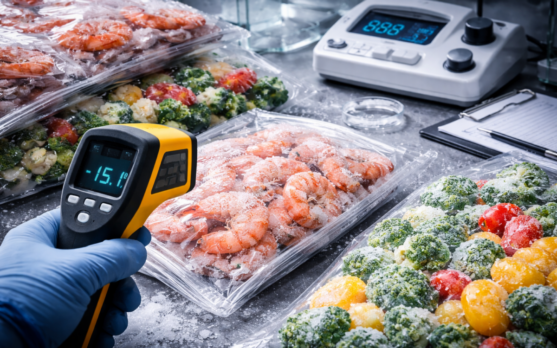
Several frozen categories show the tension clearly. Frozen vegetables rely heavily on flexible bags because they are efficient, light and practical. Potato products often need packaging that copes with sharp edges, moisture and bulk handling. Seafood and protein carry higher expectations around safety and quality perception. Ready meals ask trays, films and sleeves to perform as a system. In each case, the pack can be simplified, but not casually. A reduction that works on a dry grocery shelf can behave differently after weeks in frozen distribution.
The better brands are beginning to treat packaging claims almost like product claims. They are not only asking whether a line sounds attractive. They are asking what file sits behind it. What changed? Compared with what? Was the material reduction measured by weight, surface area, virgin plastic, total packaging or carbon impact? Can the claim be used in every market, or only in countries where collection systems support it? These are not glamorous questions. They are the questions that prevent a sustainability message from becoming a liability.
Recyclable is becoming a more expensive word
Among all packaging claims, recyclable is the one most likely to survive commercially and the one most likely to become harder to use. Consumers understand it. Retailers like it. Regulators are watching it. The word has the advantage of simplicity and the danger of being too simple.
In frozen food, recyclable can mean several different things depending on structure, market and collection route. A carton may be widely accepted in one country and less straightforward in another if coated or contaminated. A plastic film may be technically recyclable in a laboratory or specialist stream but not collected at scale through household systems. A mono-material approach can improve the story, yet it still has to pass the freezer test. Barrier, seal integrity and machinability do not disappear because the artwork says circular.
Retail buyers are becoming less patient with loose language. Private label teams in particular do not want to inherit the risk of a supplier’s green claim. A buyer may like a clean sustainability story, but the compliance team will ask for specifications, certification, artwork approval records and disposal logic. A category manager may want a stronger front-of-pack message, but the technical team will ask whether the same wording is defensible across markets. In a multinational frozen range, one claim can become a spreadsheet of exceptions.
There is another commercial wrinkle. The consumer sees the pack, not the recycling infrastructure. If the front says recyclable and the local system says otherwise, disappointment lands on the brand. That matters because frozen food already fights old prejudices around processing, freshness and quality. Weak environmental language gives sceptical shoppers one more reason to distrust the category.
The retailer will not carry the embarrassment alone
The shift in green claims is not only a regulatory story. It is a retailer story. Large retailers have spent years tightening supplier requirements on nutrition, animal welfare, responsible sourcing and food safety. Packaging claims are moving into the same governance culture. A supplier that once sent artwork for approval may now need to send evidence.
In a buyer meeting, this changes the conversation. The old pitch might have been: new look, less plastic, stronger sustainability message. The better pitch now has to show what was changed, how it was tested, where the claim applies and whether there is any compromise in shelf life or pack failure rate. It also has to be honest about limits. If the film is recyclable only through store take-back schemes, say so. If the pack contains recycled content only in a specific component, say so. If the switch improves material circularity but not total carbon performance, do not pretend otherwise.
That kind of honesty may sound commercially cautious, but it is becoming a form of brand protection. The frozen aisle has no shortage of claims. What it lacks is confidence. A precise claim can look less exciting than a broad one, yet it survives contact with scrutiny. “Reduced plastic by 18 percent compared with the previous pack” is not as smooth as “better for the planet,” but it gives buyers and consumers something firmer to hold.
There is still room for design. In fact, design may become more important, because the pack has to explain complex trade-offs without turning into a legal notice. Good packaging will need to guide disposal, signal quality and communicate restraint while avoiding the visual clichés of sustainability. No more decorative green leaves doing work that data should do.
Food waste is the part of the claim many packs forget
Frozen food has one major advantage in the sustainability debate that is still underused: it can help reduce food waste by preserving product quality over time. But that advantage depends on the pack. A frozen product that is damaged, frost-burned, dehydrated, clumped, leaking or rejected in store has already lost part of its environmental argument before anyone discusses recyclability.
This is where some packaging debates become too narrow. Reducing plastic weight may be positive. Replacing a mixed structure may be positive. Increasing recycled content may be positive. But if the change increases product loss, the calculation becomes uncomfortable. The environmental cost of the food itself is usually far greater than the cost of the pack. In frozen, the pack is not the enemy by default. Bad packaging is.
Factory teams understand this in practical terms. A new film can look promising in a boardroom and behave badly on a packing line. A thinner bag may run at lower speed, seal less consistently or create more rejects. A paper-based structure may carry a better consumer perception but struggle with moisture, grease, condensation or freezer abrasion unless engineered carefully. None of this means the old pack should stay forever. It means the replacement has to earn its claim under industrial conditions, not only in a sustainability deck.
The strongest claims may become quieter
The direction of travel is clear enough. Broad green language is losing authority. Claims built around measurable change, recognised systems and specific instructions are gaining it. Packaging teams will have to work with more evidence, fewer shortcuts and more disciplined wording. That may make some packs less theatrical. Good.
There is a commercial opportunity here for frozen food, but it is not the easy one. The easy route is to dress the pack in green signals and hope shoppers reward the effort. The stronger route is to use packaging as proof of operational seriousness: less excess where it can be removed, better recyclability where systems can support it, clearer disposal instructions, no claim beyond the evidence, no material cut that creates more product loss downstream.
The freezer aisle has always punished weak packaging physically. It now punishes weak claims as well. A pack that cannot survive the cold chain should not be there. A sustainability promise that cannot survive a buyer’s question, a regulator’s review or a consumer’s doubt probably should not be there either.