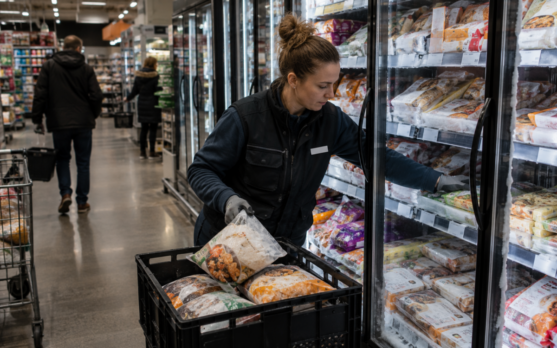
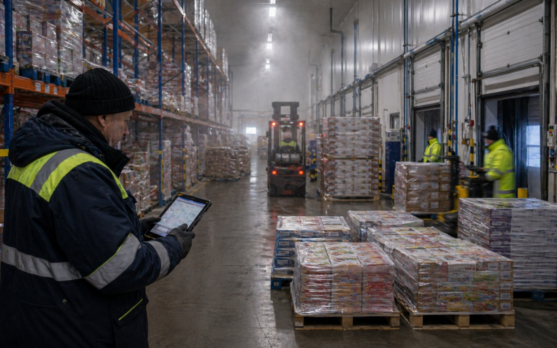
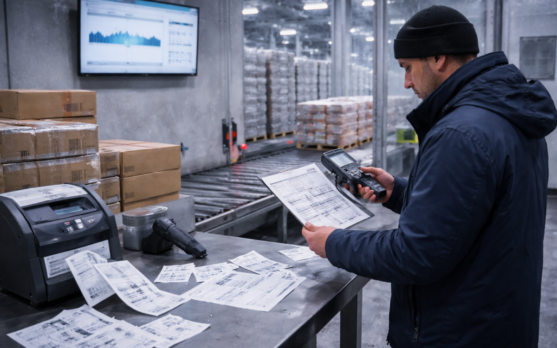
A frozen product can look perfectly calm after a bad journey. The carton is square, the bag is sealed, the pallet arrived on time. Then the customer finds ice crystals, clumping, freezer burn, a tired texture or a product that simply does not cook the way it should. Somewhere between factory, cold store, truck, retail freezer and kitchen, the cold chain left a mark that the pack did not show. Intelligent packaging matters in frozen food when it stops pretending to entertain the shopper and starts doing something harder: making hidden temperature abuse visible.

The frozen pack is learning to remember
Frozen food has always depended on trust. A buyer cannot look at a case of frozen seafood and see every hour of its journey. A store manager cannot always know whether a pallet waited too long near a loading bay. A foodservice operator may receive a delivery that looks acceptable, while the product has already been through a temperature event that will show up later in quality, texture or customer complaints.
That is the uncomfortable gap intelligent packaging is beginning to address. Not the glossy version of smart packaging, with campaign codes and brand stories. The useful version is quieter. A label changes colour. A sensor reacts to accumulated time and temperature. A case arrives with a visible warning that conditions have drifted outside the agreed range. It is not dramatic until it prevents a bad load from becoming a bigger problem.
For frozen food, the pack has usually been treated as a protective layer. Barrier, seal, strength, moisture resistance, printability, machinability. All of that still matters. But in higher-risk chains, the pack may also become a witness. It can carry evidence that the product’s history was clean, or that it deserves investigation before it reaches a freezer cabinet, restaurant kitchen or customer complaint line.
Protection is no longer enough in sensitive categories
Cold-chain discipline is often discussed as if the system is continuous and controlled. Anyone who has watched a busy loading dock knows better. Doors open. Pallets wait. Mixed loads are reorganised. Drivers are delayed. Store teams work with limited space. Last-mile frozen deliveries face traffic, stairwells, customer absence and packaging that may sit briefly in places nobody designed as part of the cold chain.
Some frozen categories can tolerate brief deviations better than others. Some cannot. Seafood, premium ice cream, frozen protein, high-value ready meals and certain foodservice products are more exposed to quality loss, dispute and waste. The product may not become unsafe immediately, but quality damage is still commercial damage. Texture, drip loss, oxidation, dehydration, crystal growth and visual fatigue all matter because frozen food is judged at the moment of use.
Traditional quality control sees much of this after the fact. A logger may show the temperature in a truck. A warehouse record may show dispatch time. A retailer may reject visibly damaged cases. But the product-level or case-level story is often incomplete. Intelligent packaging is useful when it narrows that uncertainty.
TTIs are not gadgets
Time-temperature indicators are the most relevant technology for this article because they answer a frozen-food question that ordinary labels cannot answer: has this product experienced enough temperature exposure to deserve attention?
A TTI does not need to be theatrical. Its value is that it is cumulative. A brief door opening may not matter. A longer exposure may. Repeated small deviations may become meaningful. A good indicator is calibrated to the product, the route and the risk profile. That calibration is the hard part. A generic red mark is less useful than a signal that reflects the quality or safety concern that actually matters for the food inside.
Commercial examples already point in this direction. Timestrip positions freezer cold-chain indicators as small, light, low-cost visual checks that can be attached at product or packaging level. Vitsab’s Freshtag is aimed at seafood applications, using a colour-changing label to track cumulative time-temperature exposure across the cold chain. Evigence works with sensors placed in shipping boxes at packing, reacting to aggregate time and temperature exposure and linking the result to freshness management data.
These are not all the same solution. Some are visual. Some are linked to analytics. Some are better suited to cases or shipping boxes than individual retail packs. That variety matters because frozen food is not one market. A value bag of peas, a pallet of frozen salmon, a premium ice cream delivery and a foodservice case of prepared protein do not carry the same margin, risk or tolerance for added packaging cost.
The hard moment comes when the label changes colour
Intelligent packaging sounds attractive until it creates evidence. Then it becomes commercial.
If a TTI shows temperature abuse at delivery, who pays? The supplier may argue the product left the factory correctly. The haulier may point to trailer logs. The cold store may say the load was handled within procedure. The retailer may refuse the goods. A foodservice operator may accept the load but file a claim later. The label does not remove conflict. It changes the quality of the argument.
That is precisely why these tools will not roll out casually. Buyers will want confidence that the indicator is meaningful. Suppliers will want calibration, validation and clear acceptance rules. Logistics providers will want to know whether the label can be used against them. QA teams will ask whether the signal correlates with product quality, microbial risk, shelf-life loss or only a threshold event.
A bad implementation could create more waste, not less. An over-sensitive label may reject product that is still acceptable. A poorly chosen threshold may create false reassurance. A label that nobody is trained to interpret becomes decoration with consequences. The frozen industry has enough of those already.
Where the technology makes sense first
The first serious uses are unlikely to be universal retail packs. Cost alone will prevent that. The better early homes are narrower: frozen seafood, premium protein, ice cream shipments, export flows, foodservice distribution, e-commerce frozen delivery and retailer trials where temperature disputes or quality complaints already cost money.
Seafood is a natural candidate. It is valuable, quality-sensitive and often traded across long routes. Ice cream is another, because thaw-refreeze damage is not a theory for consumers. They see it in texture and ice crystals. Foodservice also has a strong case. A restaurant group, caterer or hotel operator does not need a storytelling label. It needs a practical receiving signal: accept, reject, investigate, use first.
Frozen e-commerce may become one of the more interesting testbeds. The last mile is messy. A parcel can sit too long after delivery. A customer may open it late. The retailer may have less control than it has in store. A simple condition indicator can help protect the operator and the consumer, although it also creates a new burden: someone must decide what the signal means commercially.
Retail shelf use will be more selective. A visible indicator on consumer packs could build trust in some categories, but it could also confuse shoppers or create panic if not explained well. The freezer aisle is not a laboratory. People shop quickly, through glass, with cold hands and little patience for technical nuance.
The cold chain will not become transparent overnight
There is a limit to what packaging can observe. A TTI can show cumulative exposure, but it does not replace a full logger. A freshness sensor may indicate condition, but it does not automatically prove cause. RFID can identify a unit, but it does not measure temperature unless combined with sensor capability. QR can explain data, but it does not generate it. Each technology has a role, and the frozen sector should resist bundling them all under one lazy “smart packaging” label.
The more mature future is layered. Packaging protects. Indicators warn. Sensors record. RFID identifies. QR explains. Traceability systems connect the events. QA and commercial teams decide what action follows. That is less exciting than saying the pack has become intelligent, but it is closer to how the industry actually works.
Frozen food has a strong sustainability argument when it reduces spoilage and extends usable life. Intelligent packaging can strengthen that argument only when it helps companies make better decisions: accept a good load, reject a compromised one, investigate a weak route, prevent a dispute, reduce unnecessary waste. The pack does not need to become entertaining. It needs to make silence in the cold chain a little harder to hide.