The freezer aisle is a poor place for packaging fantasies. A material that dissolves beautifully in warm water may still fail the duller, tougher exams that frozen food sets every day: frost on the inner bag, crushed cases in a cold store, moisture migration in a home freezer, a retailer rejecting packs with weak seals, a buyer asking whether the new material is actually compliant or just better at disappearing from sight. Water-soluble packaging is not nonsense. PVOH films, edible pouches and dissolvable materials already have real industrial uses. But frozen food exposes the gap between an elegant sustainability claim and a package that can protect value for months.
The freezer does not reward clever slogans
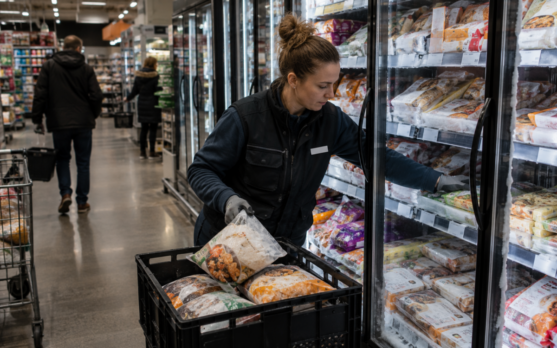
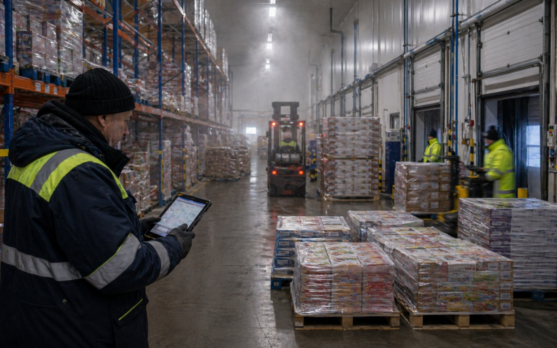
A frozen food pack spends most of its life doing unglamorous work. It sits in a warehouse where pallets are moved quickly and not always gently. It travels through doors, docks, back rooms and display cabinets. It picks up frost. It is stacked, squeezed, scanned, dropped, reopened at home and pushed into a freezer drawer next to ice cream, leftovers and half-open bags of vegetables.
That is the environment in which water-soluble packaging has to prove itself. Not in a clean demonstration bowl. Not in a sustainability slide. In the cold, damp, abrasive reality of a category where the pack is expected to hold the product steady long after the excitement around the material has faded.
There is a useful tension here. The very property that makes these materials attractive, their willingness to dissolve, is also the property that makes frozen food suspicious of them. Frozen supply chains are not dry systems. They are controlled systems, yes, but not perfectly controlled. Condensation appears when packs move between temperature zones. Ice crystals form. Product surfaces can carry moisture. Sauces, glazes and marinades behave differently from dry powders. A pack that responds to water has to be protected from the wrong water at the wrong time.
This is where the older language around water-soluble packaging starts to look thin. The story was often told as if the frozen food sector had one simple packaging problem: too much plastic. It does have a plastic problem. But it also has a food waste problem, a shelf-life problem, a freezer burn problem, a seal integrity problem and a consumer trust problem. If a new material improves one of those and worsens two others, the trade will notice quickly.
PVOH is serious material science, not magic
The most familiar water-soluble films are based on polyvinyl alcohol, usually described as PVA or PVOH. They are already used in unit-dose products, especially household detergents and dishwasher tablets. Kuraray’s MonoSol business is the name most often associated with that market. The technology is mature enough to be industrially credible, and that matters. This is not a garage invention looking for a problem.
There are also food-facing examples. MonoSol’s Vivos edible film was developed for pre-portioned dry ingredients such as instant coffee, tea, hot chocolate mixes, drink powders, whey protein powders and dry ingredients used in commercial pizza dough. That last detail is more interesting for frozen food than the usual consumer packaging story. Pizza dough, sauce systems, seasoning blends and dry functional ingredients are all part of the frozen manufacturing world. A dissolvable pouch in a mixing process may be far more plausible than a dissolvable retail bag around a kilogram of frozen vegetables.
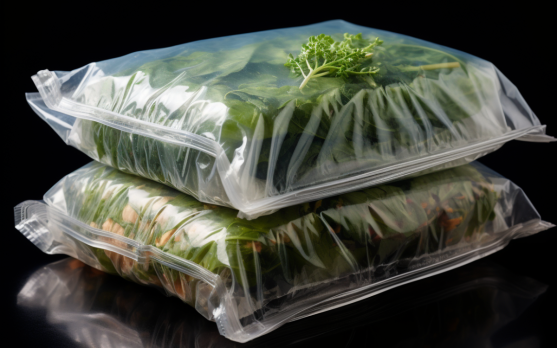
PVOH also has useful barrier characteristics, particularly around oxygen, and suppliers working with PVOH-based materials are trying to solve one of packaging’s hardest puzzles: how to keep performance while improving end-of-life options. Aquapak’s Hydropol, for example, is based on PVOH and is positioned around recyclability, biodegradability and dissolvability. Lactips has worked on casein-based materials. Notpla has pushed seaweed-based packaging in foodservice and takeaway settings. These companies do not all solve the same problem, and they should not be treated as interchangeable. What they show is a wider search for materials that do not behave like conventional plastic at disposal.
Frozen food is entitled to be more demanding. A retail frozen pack is not just a wrapper. It is part of the product’s quality system.
Why the primary frozen bag is the hardest target
Take a simple bag of frozen vegetables. It looks easy from the outside. Low price, basic graphics, thin flexible film, little theatre. In technical terms, it is less simple. The pack has to limit moisture loss, resist puncture, seal well at industrial speeds and protect the product against freezer burn. It must remain flexible at low temperature. It must handle case compression and retail abuse. It must not become brittle, leaky or cloudy in a way that makes the product look tired before it is actually unsafe.
Now move to coated potato products, seafood, frozen bakery or ready meals. The pack has to deal with fats, salt, crumbs, frost, sharp edges, steam instructions, printing, tray compatibility, and sometimes microwave or oven preparation. A water-soluble primary pack would need a very precise use case, very clear cooking instructions and a level of technical validation that goes far beyond the phrase “dissolves in water.”
There may be narrow consumer formats where it works. A frozen soup concentrate designed to go directly into water. A foodservice pouch that disappears in a controlled kettle. A seasoning or sauce component sealed inside a meal kit. A portion used by an operator rather than a consumer. These are believable. A broad replacement for frozen retail pouches is not.
Retail buyers will not say it politely forever. If the pack raises the risk of returns, damaged goods, complaints or confusing cooking behaviour, the sustainability pitch becomes expensive. The cheapest-looking frozen pack on the shelf often protects a surprisingly complex commercial equation.
The regulatory mood has changed
The timing still matters. Europe’s Packaging and Packaging Waste Regulation has made packaging claims more serious. The direction is clear: less waste, more recyclability, clearer labelling, stronger scrutiny of materials and a harder look at what happens after use. Under that pressure, every alternative material will be asked to explain itself in practical terms.
For water-soluble packaging, the old language of disappearance is no longer enough. Dissolving is a physical event. Sustainability is a wider claim. Where does the dissolved material go? Under what conditions does it biodegrade? Is the product intended for industrial wastewater, household drains, composting, recycling or ordinary waste? Does the label help the consumer, or does it add another confusing instruction to a category already crowded with symbols?
Food-contact rules add another layer. PVOH can be permitted under defined conditions, and FDA documents around MonoSol’s edible film show specific intended uses. Specific is the important word. Dry ingredients are not the same as wet sauces. A commercial dough application is not the same as a frozen ready meal heated by a consumer. Meat and poultry jurisdiction can create additional limits. Approval in one use case should not be stretched into a general permission slip for the freezer aisle.
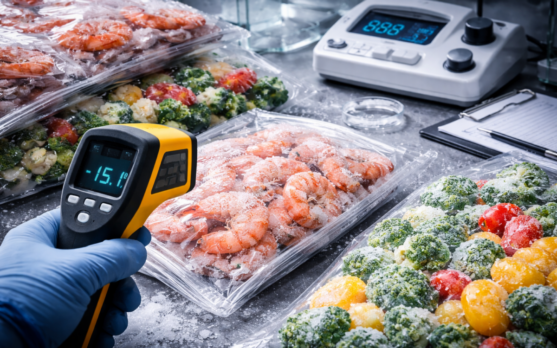
This is where some sustainability materials lose credibility with manufacturers. They arrive with environmental language before the technical file is ready. Frozen food companies do not need theatre. They need migration data, shelf-life trials, seal tests, abuse tests, machinability checks and a disposal route that a retailer can defend.
The better opportunity is inside the plant
The first real opening may be less visible than a consumer pack. In factories, dissolvable pouches can reduce mess and variability. Think of a frozen bakery line where minor ingredients are weighed repeatedly across shifts. A sauce room adding dry blends to tanks. A coating system using seasoning, stabilisers or functional powders. A pizza plant handling dough improvers or flavour systems. Anyone who has seen a busy ingredient room knows the problem: scoops, bags, dust, labels, partial sacks, rework, training gaps, and one small weighing error that travels through a batch.
A pre-measured soluble pouch has a different commercial logic here. It does not need to survive six months in a domestic freezer. It needs to protect a dry dose until the moment it enters a controlled wet process. It can reduce handling. It can improve dosing discipline. It can make sense for high-value ingredients or recipes where consistency is worth paying for.
Foodservice is another credible lane. Operators like formats that cut labour, reduce mess and keep preparation predictable. A frozen sauce base or soup component in a dissolvable portion could work if the cooking process is tightly defined. The pack would not be asking a distracted shopper to interpret a new disposal system. It would be used by trained staff in a repeatable setting.
There is also a quieter future in coatings and layers. Water-soluble or dispersible materials may contribute oxygen barrier, grease resistance or release properties inside a broader structure. That will not make a dramatic headline, but packaging rarely changes in the exact way headlines predict. Often the useful innovation disappears into the laminate, the coating, the sealant or the process specification.
A forecast with less theatre
Between now and 2028, recyclable mono-material films, downgauging, improved PE and PP structures, paper-based formats with functional coatings and clearer disposal labelling will take more commercial space than fully water-soluble frozen packs. Retailers need packaging changes they can scale, audit and explain. Water-soluble materials will remain active in pilots, ingredient delivery, foodservice formats and specialist applications.
From 2029 to 2032, the category could become more interesting. As PPWR pressure tightens and brands run out of easy packaging claims, manufacturers may look again at soluble pouches for controlled use: sauce systems, dry inclusions, prepared bases, steam or kettle formats, and industrial dosing. The technology will not need to win the whole freezer. It only needs to win the right corners of it.
Beyond that, a more mature role is possible. Not the vanishing bag as a mass-market symbol, but soluble materials as part of a packaging toolbox. The frozen food industry will probably adopt them where they remove operational friction without introducing product risk. That is a smaller promise than the early water-soluble packaging narrative offered. It is also a more believable one.
The frozen aisle has a way of stripping ideas down to their working parts. It does not care whether a material sounds modern. It cares whether the peas stay loose, the fish avoids dehydration, the pizza box does not collapse, the sauce does not leak and the shopper does not come back angry. Water-soluble packaging still has a place in this conversation. It just has to earn it in the cold.