Circular packaging looks straightforward from the board table. Lighter packs, more recycled content, refill pilots, returnable formats, clearer recycling claims. The language is familiar now, almost comfortable. The work itself is not. It sits in depots, washing loops, sorting plants, freezer aisles, e-grocery routes and consumer kitchens, where a pack either comes back, gets recycled, protects the product, or quietly fails. FMCG companies have made progress, especially on recycled content and virgin plastic reduction. But packaging does not cut emissions because it has a circular label. It cuts emissions only when the physical system behind the label is strong enough to carry it.
The pledge era is giving way to the operating era
For several years, circular packaging was mainly a promise. Reduce. Reuse. Recycle. Refill. Redesign. The words travelled well through annual reports and investor presentations. They were harder to run through a warehouse, a supermarket back room or a collection network.
That gap is now more visible. The Ellen MacArthur Foundation’s Global Commitment brought more than 1,000 organisations into a shared packaging agenda, including businesses tied to a significant share of global plastic packaging. That changed the tone of the market. It also exposed how uneven the work is. Some major signatories have reduced virgin plastic. Recycled content has moved. Reuse, despite years of attention, remains small. Total packaging demand has not behaved as politely as the targets suggested.
That is the awkward part for FMCG. A pledge can be written across categories. A packaging system cannot. A beverage bottle, a detergent refill pack, a chilled meal tray and a frozen vegetable pouch do not share the same economics, consumer behaviour or waste route.
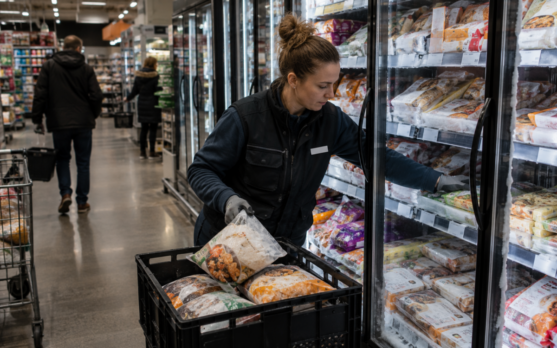
Frozen food is a useful reality check. The pack is not decorative. It has to hold product quality for months, survive cold-chain handling, resist moisture loss and remain clear enough for the consumer to understand after use. If the circular system weakens the product, the carbon saving on packaging can be lost through damage, returns or food waste.
Recycled content is useful, but it does not close the loop by itself
Recycled content is one of the more credible pieces of the FMCG packaging transition. It can cut virgin material and reduce emissions where the source, application and processing route are right. Rigid formats, bottles and some secondary packaging have moved faster because the material streams are cleaner and the technical risk is lower.
Food-contact packaging is a tougher file. The recycled material has to be safe, traceable and suitable for the application. In frozen food, that sits on top of the usual cold-chain requirements: seal strength, moisture control, oxygen protection, puncture resistance and performance on the packing line. A recycled-content claim has little value if the film slows the line, weakens the seal or lets the product dry out in the cabinet.
That is why many FMCG companies will take the first volume in places the shopper barely notices: collation film, outer cases, pallet wrap, transport packaging and other non-contact formats. It may not look like a campaign. It can still move more material than a visible pilot.
Primary food packaging will move more carefully. Certified advanced recycling may help with food-contact polyolefins. Mechanically recycled PET has a more established route in some formats. But the frozen aisle will not buy recycled content on principle. It will buy it when the material is available, safe, consistent, affordable and still behaves under cold conditions.
Reuse has a carbon test, not just a waste test
Reuse is the most attractive circular idea on paper. A pack comes back. It is cleaned. It goes out again. Less waste, fewer single-use packs, a neater story.
The operating version is heavier. Return logistics, washing, inspection, losses, storage, breakage, consumer participation and route density all enter the calculation. McKinsey’s modelling for reusable e-commerce packaging showed how transport can dominate cost and emissions, even when packs achieve multiple rotations. That finding should make every FMCG team more careful with reuse claims.
Some categories have better conditions. Beverages, personal care and parts of household care can work with refill or return systems where formats are standardised and purchase frequency is high. Foodservice and B2B loops can work when collection and washing are controlled. The pack comes back because the system is built for it.
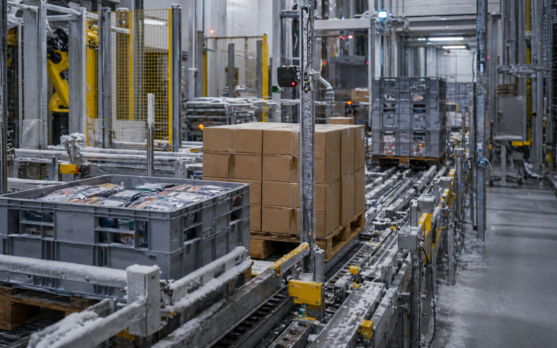
Frozen food has fewer easy openings. Reusable insulated boxes may make sense in e-grocery where vans already return to the depot, customer density is high and cleaning is controlled. Reusable crates and back-of-store loops can be practical. A returnable primary pack for a supermarket frozen meal is another matter. Freezer space, hygiene, condensation, consumer effort and cold-chain handling all push back.
Reuse is not weak. Poorly designed reuse is weak. It belongs where the loop is dense, boring and repeatable. If a system depends on consumers behaving perfectly every time, it is probably not a system yet.
Reduction is less fashionable and often more powerful
The least glamorous route often gives the cleanest result: use less material without damaging the product. Downgauging. Smaller sleeves. Less empty space. Fewer unnecessary components. Better pallet density. Cleaner shelf-ready formats. Secondary packaging that does not carry air around the supply chain.
There is no romance in that work. It happens in drawings, line trials, damaged-case reports and pallet calculations. It also avoids some of the traps that come with bigger circular claims.
Frozen food needs caution here. A thinner bag that tears in a cold store is not a reduction. It is waste in another place. A lighter carton that crushes under case compression will not impress a retailer. A tray that saves material and leaks sauce during heating has simply moved cost into complaints.
The best reduction work is often invisible to shoppers. More units per pallet. Fewer split cases. Less scuffing. Less material in a sleeve that no consumer remembers. A pack that quietly does the same job with less burden.
PPWR will put more pressure on this area in Europe. The rules push recyclability, recycled content, waste prevention, labelling and reuse. EPR will make hard-to-handle packaging harder to hide in the cost base. Packaging that is difficult to sort or explain will become a financial issue, not just a sustainability issue.
Technology helps only when the physical system is ready
Digital tools can help circular packaging. They can support reporting, traceability, sorting, consumer instructions and asset tracking. But they do not create collection infrastructure. They do not wash a reusable container. They do not make a poor material stream valuable.
FMCG has a habit of giving the tool more attention than the system. A QR code can guide a shopper, but it cannot make local recycling available. A platform can track returnable packs, but it cannot fix a thin reverse-logistics network. AI sorting can improve recovery, but it cannot make an over-complex pack easy to recycle.
Frozen food will need a mixed strategy. Recycle-ready primary packs where the product allows. Recycled content in secondary and tertiary packaging. Reuse in B2B and controlled delivery loops. Less material where product protection is not weakened. Better claims discipline across the board.
By 2028, many FMCG companies will still be working through the obvious items: overpackaging, weak labelling, unrecyclable structures and secondary packaging that could already carry recycled content. Around 2030, regulation and EPR will make the harder portfolio choices harder to delay. Some pilots will become operating systems. Many will disappear.
By 2040, the serious companies will no longer talk about circular packaging as a project owned by sustainability. It will sit inside procurement, packaging development, logistics, retailer compliance and finance.
Frozen food will not be the easiest category. It may be one of the most useful tests. If a circular packaging strategy fails in a freezer, in a return loop or in a sorting plant, the issue is not communication. The system was not ready.