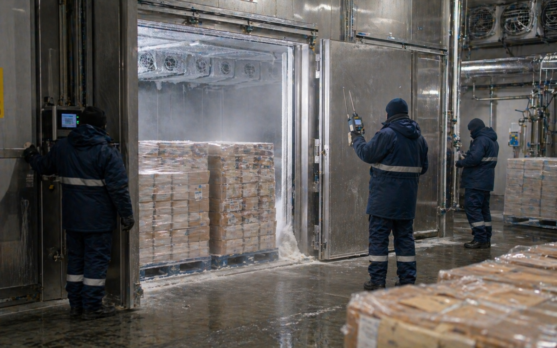
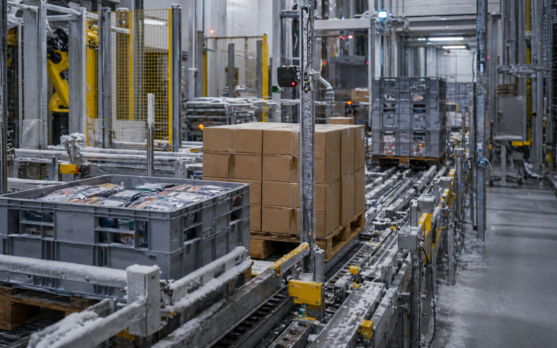
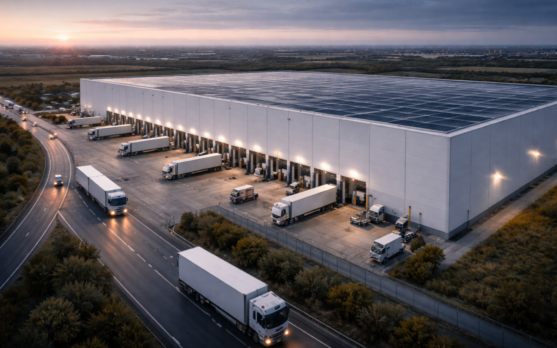
The most revealing thing about NewCold’s Corby operation is not the height of the building, the cranes or the scale of the pallet count. It is what the site says about frozen food itself: the category can no longer rely on ordinary cold rooms, tired buildings and hard-to-staff freezer sheds while retailers ask for tighter service, producers push more volume through fewer windows, and energy sits like a second rent on every frozen pallet.
The warehouse behind the frozen shelf
Frozen food still looks simple at the point of sale. A shopper opens a glass door, pulls out a pizza, a bag of chips, a ready meal, a tray of vegetables, maybe a tub of ice cream, and the product either feels available or it does not. That small retail moment hides a larger industrial question. How much product can sit in the network without becoming dead stock? How fast can it move when a promotion lands badly or too well? How much energy is being burned before the product even reaches the freezer aisle?
NewCold’s UK expansion gives that question a hard shape. Corby is not just another cold store with a modern control room. The site is listed by NewCold as a fully automated, 42-metre-high facility with 185,318 industrial block pallet positions, 19 automated stacker cranes and 43 loading and unloading docks. It operates 24/7 in the Midlands Logistics Triangle, close enough to the country’s main distribution spine to matter for manufacturers, retailers and foodservice networks that cannot afford slow frozen inventory.
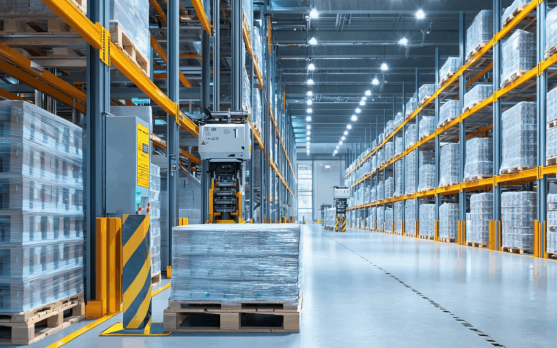
Those figures make the site impressive. They do not, by themselves, make it important. The important part is the operating model underneath them: dense storage, automated pallet movement, fewer people inside the freezing zone, tighter control of doors and product flows, and a digital layer that can connect warehouse movement with customer systems. That is the commercial story. Frozen logistics is becoming less like property and more like industrial infrastructure.
Corby is no longer a single-site story
The original temptation with Corby was to treat it as a landmark building. That still works visually. A high-bay frozen warehouse is almost designed to attract superlatives. But the story has moved on. In June 2025, NewCold launched Corby 3, adding more than 33,000 pallet positions to its UK network and completing a three-phase expansion. By late 2025, the company had also announced Wakefield III, a further automated frozen high-bay development that will add 19,380 pallet locations to its flagship Wakefield site.
Wakefield matters because it turns the NewCold UK picture from one impressive Midlands site into a network argument. The existing Wakefield operation is described by NewCold as a deep-frozen storage and distribution centre operating at -23°C, with 142,800 pallet positions, 16 automated stacker cranes and 28 loading docks. When Wakefield III is completed, NewCold says its UK capacity will reach 344,000 pallet positions, supported by Corby.
That changes the way food companies should read Corby. It is not just capacity. It is a bet on how large frozen supply chains will be run when customers want national reach, controlled temperatures, traceability, overflow capacity and fewer breaks between storage, transport and value-added work.
For a frozen potato processor, the difference shows up in promotion planning and export buffers. For a ready-meal manufacturer, it shows up when production runs have to be smoothed against retailer demand. For ice cream, it shows up when seasonal peaks collide with limited freezer capacity. For foodservice, it shows up in case picking, mixed loads and service recovery when volumes shift suddenly. The old cold store was often a place where pallets waited. The new automated cold store is becoming a pressure valve for the entire frozen chain.
Energy is no longer a back-office cost
Cold storage has always been energy-heavy, but the tone around energy has changed. It is no longer just a facilities problem, or a sustainability paragraph at the end of a presentation. In frozen logistics, energy now sits inside the commercial promise. A warehouse that uses less energy per pallet has more room to protect margins, absorb volatility and support customers under their own emissions pressure.
NewCold has previously stated that its approach can use around 50% less energy per pallet position than traditional cold storage. That claim sits at the centre of the Corby argument. Automation helps, but not in the cartoonish way people sometimes describe it. The gain is not simply that robots can work in the dark. It comes from density, fewer wide aisles, fewer forklift movements in cold rooms, more controlled door openings, high insulation, refrigeration design and systems that move product with less thermal disturbance.
The UK policy backdrop gives this more weight. The Cold Chain Federation has secured a new Climate Change Agreement framework for cold storage from 2026, with staged energy efficiency targets running to 2030. That means operators will be judged against a harder energy discipline just as customers are asking for more frozen capacity, more data and better service.
There is a practical retail angle here. If food inflation stays sensitive and retailers continue to fight over basket value, frozen can benefit. But those products still carry a hidden temperature bill. A bag of frozen vegetables may be cheaper than fresh at shelf level, yet the chain behind it is capital-heavy, electricity-sensitive and unforgiving. A few points of energy performance inside the cold store can matter when contracts are renegotiated.
The labour model is changing, not disappearing
It is easy to write badly about automation and labour. The lazy version says robots replace people. The promotional version says automation elevates everyone into better jobs. Neither tells the whole truth.
In a conventional frozen warehouse, labour is physical, cold, repetitive and difficult to retain. Forklift work in sub-zero conditions is not a romantic craft. Picking, moving, checking and correcting pallets in freezer conditions puts pressure on recruitment, training, safety and productivity. Automation removes much of that exposure from the deepest frozen zone, but it creates a different dependency. The site needs engineers, controls specialists, refrigeration expertise, system discipline, inventory accuracy and people who can read a warehouse through screens as well as through doors.
That is a harder model to build, but a more durable one when it works. It also changes the relationship between the 3PL and the customer. A food manufacturer using a highly automated cold store is not just buying space. It is plugging into an operating system. Poor master data, weak forecasting, late changes and messy pallet discipline become more visible. Automation does not forgive bad upstream habits. It exposes them.
That point is often missed. The automated warehouse is not a rescue service for disorderly supply chains. It rewards clean planning and punishes chaos. In buyer meetings, that will matter. A retailer asking for tighter availability from a frozen supplier may also need to accept that the supporting logistics model needs better forecasting, clearer cut-offs and fewer emergency exceptions.
The UK is building bigger freezers because the old estate is under pressure
Corby is not happening in isolation. CBRE has estimated that around 40% of UK 3PL cold storage stock is 20 to 30 years old, with a further 30% aged 30 years or more. That is a remarkable backdrop for a market expected to carry more frozen food, more chilled and frozen e-commerce complexity, more pharmaceutical demand and higher energy scrutiny.
Other operators are moving in the same direction. Magnavale’s Easton facility in Lincolnshire has brought 101,000 fully automated pallet positions into the market, using a high-bay, rack-clad design and positioning itself around large-scale frozen storage and renewable energy. Lineage’s Peterborough operation also shows how automated cold storage is being tied to 24/7 operations, cross-docking, freight consolidation, case picking and customs support.
These examples matter because they make Corby less exceptional and more diagnostic. The UK cold chain is not simply adding warehouses. It is adding a new class of warehouse. Taller. Denser. More automated. More expensive to build. More demanding to operate. Less tolerant of poor data. Better suited to large customers with serious volume and repeatable flows.
That does not make older stores obsolete overnight. Many will remain useful, especially for local service, flexible handling, smaller customers and less standardized flows. But the benchmark is shifting. A 30-year-old cold store can still hold frozen product. The harder question is whether it can hold it with the energy profile, traceability, speed and labour model that large customers will expect by the end of this decade.
What the next five years are likely to reward
Between now and 2030, the strongest cold storage propositions in frozen food are likely to look less like isolated warehouse offers and more like integrated supply-chain platforms. Capacity will still matter, but capacity alone will not be enough. Customers will look for energy performance, temperature control, stock visibility, fast intake, dependable outbound flows and the ability to handle value-added work without multiplying handovers.
The development path is already visible. Automated high-bay storage will keep gaining ground where the economics work: high volume, stable customers, strong throughput, disciplined pallet flows and locations close to production or national distribution corridors. It will not fit every market or every product mix. Large capex needs large confidence. A highly automated frozen site with weak utilization is not a trophy. It is an expensive freezer with a very cold balance sheet.
For major frozen food producers, the lesson is sharper. Logistics can no longer be treated as the last line of the cost sheet. The cold store is becoming part of product economics. It affects launch planning, promotion risk, waste, working capital, customer service and the credibility of sustainability claims. In categories where margins are tight and service penalties are real, that is not background infrastructure. It is competitive machinery.