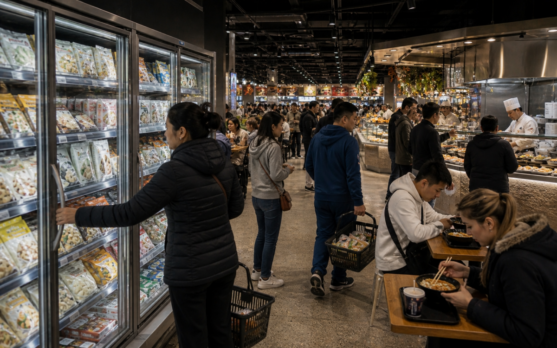
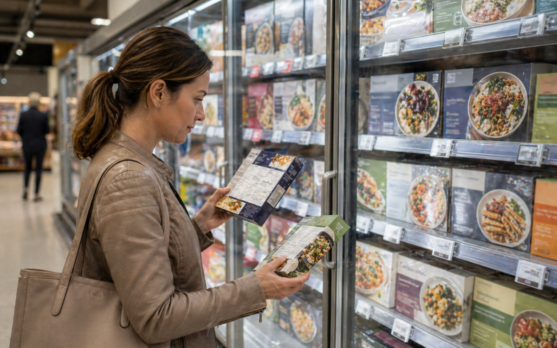
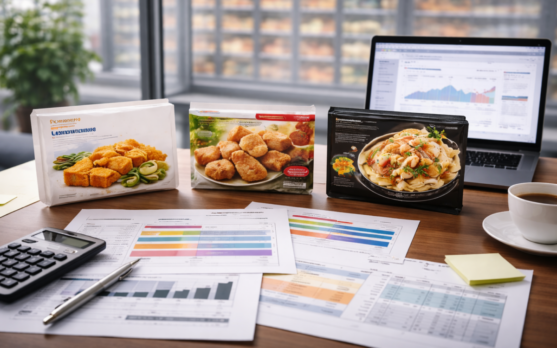
An organic frozen meal sounds strong in a listing meeting until the buyer starts asking ordinary questions: where are the vegetables sourced, how stable is the sauce, what happens if the organic cheese price moves, can the factory keep organic and conventional flows clean, and will the shopper see enough difference to pay more? That is where the romance leaves the room. Organic in frozen meals is not a lifestyle badge. It is a supply chain promise, a certification burden, a formulation constraint and a price premium that has to survive the freezer cabinet.

Organic is a trust signal, not a finished product
Organic still has power. It tells the shopper something about farming standards, sourcing discipline and the kind of food company behind the product. In categories such as milk, eggs, fresh produce or baby food, that signal can be immediate. In frozen meals, it has to work harder.
A frozen burrito, bowl, pasta bake, pizza, curry or lasagna is not a single ingredient. It is a bill of materials. Vegetables, grains, dairy, oils, herbs, spices, tomato products, starches, proteins, sauces, sometimes meat, sometimes plant-based components. Each one carries cost, availability, certification and quality questions.
That is why the organic frozen meal cannot rely on the word organic alone. The shopper still expects dinner. The retailer still expects rate of sale. The factory still needs a product that can run reliably, heat properly and hold quality through storage. If the meal tastes average, looks thin or breaks down after reheating, certification will not rescue it.
There is a harsh but useful way to look at the category: organic gives a frozen meal permission to ask for a higher price. It does not guarantee the answer will be yes.
The supply chain decides what the sleeve can say
Organic sourcing is often discussed as if it were a marketing choice. In frozen meals, it is closer to production infrastructure.
A manufacturer has to know which ingredients can be sourced organically at the required volume, which suppliers can document them properly, which items are exposed to import pressure, which ingredients have seasonal volatility, and which components may force a reformulation if supply tightens. A simple organic vegetable side has one kind of risk. A multi-component organic meal has several.
Certification adds another layer. Organic ingredients need records, audits, traceability and segregation. In mixed facilities, organic and conventional materials have to be handled in a way that protects the claim. That affects storage, line scheduling, cleaning, documentation and procurement discipline. It also affects speed. Organic meals are not as easy to adjust on the fly when one ingredient becomes expensive or unavailable.
That matters in frozen food because meals are often built around commercial timing: a retailer range review, a seasonal promotion, a club store opportunity, a private-label brief. Organic does not always move at that pace. The label may look simple on pack, but the operational work behind it is anything but simple.
Frozen vegetables are the obvious base, and a difficult one
Organic frozen vegetables should be the natural strength of this category. They bring colour, a clean ingredient cue and a logical connection to the freezer. Peas, spinach, broccoli, carrots, corn, peppers, green beans, mushrooms and mixed vegetable blends can make an organic meal feel more credible before the shopper even reads the back panel.
But vegetables are also where weak frozen meals get exposed.
Broccoli can release water. Spinach can darken and flood a sauce. Mushrooms can turn a tray dull and wet. Peppers can lose bite. Cut size, blanching, freezing method, variety choice and supplier consistency all show up in the final product. Organic status does not change that physics.
In fact, organic can make the job harder if supply is less flexible or lot variation is wider. A meal plant needs vegetables that perform consistently, not vegetables that only look good in the ingredient deck. The final tray has to survive a microwave, a consumer who does not stir properly, and sometimes months in a retail cold chain that is less perfect than anyone admits.
There is a strong commercial argument for organic vegetables in frozen meals. There is no automatic technical shortcut. If water control fails, the product becomes a bowl of good intentions sitting in liquid.
Sauces show whether the product has been properly built
Organic frozen meals often live or die by sauce. The sauce is where flavour, moisture, texture and perceived value meet. It is also where the limits of formulation become visible.
A conventional meal developer may have a wider set of tools for stability, texture and flavour delivery. Organic products can have fewer options, depending on the market, label target and certifier interpretation. That does not mean organic sauces must be weak. It means they need more careful work.
Tomato sauces need brightness without becoming watery. Cheese sauces need body after freezing and reheating. Curry sauces need spice impact and emulsion stability. A tahini-style or herb sauce has to avoid separation. A grain bowl sauce has to coat the base without vanishing into quinoa, rice or lentils before the consumer eats it.
This is not a small detail. In many frozen meals, the sauce is the difference between "organic" and "worth buying again." It carries the vegetables, protects the grains, rescues the protein and gives the shopper the feeling that the meal has been cooked rather than merely assembled.
Brands that treat sauce as a late-stage flavour decision usually pay for it. Retailers may buy the organic story once. Consumers buy the second unit because the product ate well.
The retailer still has to defend the price
Organic costs more. Everyone in the chain knows it. The question is whether the price difference is visible enough in the cabinet.
A shopper comparing an organic frozen bowl with a conventional bowl may not understand the certification system, but they understand portion size, ingredient visibility and eating quality. They notice whether the vegetables look generous. They notice whether the cheese behaves. They notice whether the meal feels like a full dinner or a small premium tray with a clean label.
Retailers notice something else: margin pressure. Organic ingredients, certification, segregated handling, smaller production runs and more complex sourcing can push the cost base up before the product has even reached the freezer. If the resulting price sits too high for the category, the retailer needs a very clear reason to give it space.
This is where organic private label becomes uncomfortable for brands. Once a retailer can offer organic vegetables, an organic pizza, an organic burrito or an organic bowl under its own brand, the certification itself stops being enough. The brand has to bring trust, taste, consistency, a strong recipe platform or a loyal shopper base.
Amy's Kitchen remains one of the important reference points because it has years of association with organic prepared foods and frozen meals. That history matters. It gives the brand a reason to be believed. Newer or weaker players do not get that credibility just by printing organic on the sleeve.
The future is tougher than the label suggests
Organic frozen meals have room to grow, but the growth will be selective. The strongest products will probably be the ones that keep the promise clean and the architecture manageable: vegetable-forward meals, burritos, pizzas, soups, bowls, pasta meals and sides where organic ingredients can be seen, tasted and explained without a long speech.
The more complex the recipe, the harder the economics. A meal with organic grains, organic vegetables, organic dairy, organic sauce ingredients, organic oils and organic spices can become expensive very quickly. If that same meal also needs premium packaging, careful line scheduling and strong promotional support, the margin can become thin before launch.
There is still a real opportunity. Organic can work beautifully in frozen when the product feels honest: good vegetables, clear recipes, sauces that hold, portions that make sense, and a price that feels high but not absurd. It can also fit consumer concern around food trust, processed-food fatigue and the desire for convenient meals that feel less anonymous.
But the category needs less lifestyle language and more discipline. Organic frozen meals are not selling a farm scene. They are selling certified convenience. The certification matters. The convenience matters. The meal has to matter most.