Wildtype’s salmon did not arrive in America as a frozen fillet, a supermarket pack or a tray meal. It arrived as sushi-grade saku, handled by chefs, sliced for raw service and presented to diners who knew they were eating something unusual. That matters. The FDA milestone is real, and it deserves attention. But the jump from a controlled restaurant launch to the frozen seafood cabinet is not a short swim. It is a long, cold, expensive route through cost, scale, labeling, texture, distribution and consumer trust.

The milestone is real. The word mainstream is doing too much work.
There is a temptation with cultivated protein to write the revolution before the product has left the tasting menu. Wildtype’s cultivated coho salmon is a genuine landmark: the first cultivated seafood to complete the FDA’s food safety consultation in the United States, with the agency issuing its no-questions letter in May 2025.
That is not a small administrative event. Seafood has been slower than cultivated chicken in public visibility, and salmon is not an easy species to fake. The color, fat, texture, aroma and raw eating quality are exposed. A nugget can hide behind breading. Sashimi cannot.
Still, “FDA approval” and “mainstream” need careful handling. The precise regulatory event was a completed FDA consultation and a no-questions letter for cultured salmon cell material. The commercial launch that followed was not a national retail rollout. Wildtype began with restaurants, including Kann in Portland, then other chef-led venues in cities such as San Francisco, Seattle and Tucson.
That is where the story becomes more interesting. Not less.
Wildtype is not proving that cultivated salmon is ready to sit beside frozen cod, shrimp and conventional salmon portions at retail. It is proving something earlier: that cultivated seafood can pass an important US safety gate and be served in a real culinary setting. For a young sector under financial and political pressure, that is enough of a story without pretending the freezer aisle has already changed.
Sushi-grade is a brave place to start
Wildtype’s first product is not a breaded bite or a processed seafood filling. It is salmon saku, a uniform block intended for raw preparations such as sushi, crudo and ceviche. In food manufacturing terms, that is a bold choice. There is very little cover.
A chef slicing the product can see the structure. A diner can feel the bite immediately. The product cannot lean on heavy seasoning, frying or sauce. If the texture is wrong, it shows. If the color feels false, it shows. If the eating experience lacks the quiet richness people expect from salmon, the whole idea looks weaker.
That makes the restaurant route logical. Chefs can control the portion, the explanation, the service temperature, the menu language and the first impression. A retail freezer does none of that. A retail freezer gives the product a price label, a few seconds of attention and the company of cheaper, familiar seafood.
There is value in starting with chefs, especially for a product that needs trust. But it is also a reminder that cultivated salmon is still being introduced as an experience, not yet as a staple.
The seafood system needs more answers, but it will not accept weak ones
The case for alternative seafood is not invented. Global aquatic food demand is rising, wild capture has limits, and aquaculture is carrying more of the supply burden. FAO reported that fisheries and aquaculture production reached 223.2 million tonnes in 2022, and that aquaculture overtook capture fisheries for aquatic animal production for the first time.
Those numbers explain why investors, chefs, retailers and seafood companies keep looking at new production models. Salmon in particular sits in a commercially attractive but demanding corner of the protein market: high value, strong consumer recognition, pressure on supply, and a role in both foodservice and retail.
Cultivated salmon enters that conversation as a possible extra source, not a simple replacement. The language matters. Conventional salmon has decades of supply chain knowledge behind it. Farmed salmon has scale, cost structure and global logistics. Wild salmon has seasonality, origin stories and established demand. Cultivated salmon has novelty, control and a sustainability promise, but it still has to earn volume.
A buyer will not list a product because it sounds like the future. The buyer will ask the usual cold questions. What does it cost? How stable is supply? What is the shelf life? How should it be labeled? Can staff explain it? Does it need special handling? Does it create complaints? Will consumers come back after curiosity fades?
Those questions are not cynical. They are how food becomes a business.
The freezer could matter, just not in the easy way
For a frozen food audience, the obvious question is whether cultivated salmon eventually belongs in frozen retail. The honest answer is: possibly, but not automatically.
Frozen distribution could help cultivated seafood if the product moves beyond small chef-led drops. Cold-chain infrastructure gives reach, inventory control and longer commercial life. It is how much of the global seafood trade already works. But freezing is not just a logistics decision when the product is raw, premium and texture-sensitive.
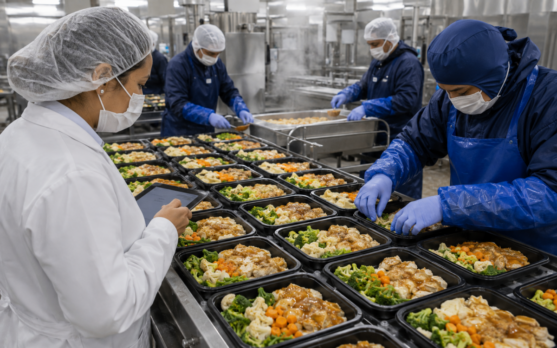
A cultivated salmon saku made for sashimi has a different technical burden from a breaded seafood bite or a dumpling filling. If the product is positioned around clean raw eating, freezing and thawing performance become central. Texture, color, drip loss, slice quality, mouthfeel and appearance all matter. A product that works in a restaurant under controlled handling may face a rougher test after regional warehousing, transport, retail storage and home thawing.
The first frozen opportunities may not be simple fillets. They may be more controlled formats: premium sushi components for foodservice, poke-style portions, limited retail kits in urban markets, or cultivated seafood used inside appetizers, dumplings, spreads or hybrid seafood products. Those applications give manufacturers more room to manage texture, cost and portion.
That is less spectacular than imagining cultivated salmon blocks filling retail freezers. It is also more believable.
The sector is colder financially than the headlines suggest
Wildtype’s timing is important because cultivated meat and seafood are no longer moving through the easy-money years. The Good Food Institute reported that cultivated meat and seafood companies raised USD 73.9 million in 2025, down from USD 144 million in 2024. Investors are asking harder questions about cost, taste and scale.
That changes how the industry should talk. A few years ago, cultivated protein could survive on big market maps and moral urgency. Now it has to show manufacturing progress. It has to show credible unit economics. It has to show that people who are not journalists, investors or early adopters will buy the product twice.
The political environment is also rougher than many early presentations assumed. Several US states have passed laws banning cell-cultured meat, and Florida’s ban survived a federal appeals court challenge in 2026. Seafood regulation has its own details, and Wildtype’s pathway through FDA is different from cultivated meat and poultry, but the broader climate matters. Retailers dislike regulatory confusion. Foodservice operators dislike controversy they cannot control.
For cultivated seafood, the next few years will be less about proving that a product can exist and more about proving where it can be sold without becoming a legal, political or pricing headache.
The hard part starts after the first menu placement
There is a reason the restaurant debut matters. A good chef can make a new food feel credible. The plate can slow down the consumer. Staff can explain the product. The setting can turn hesitation into curiosity.
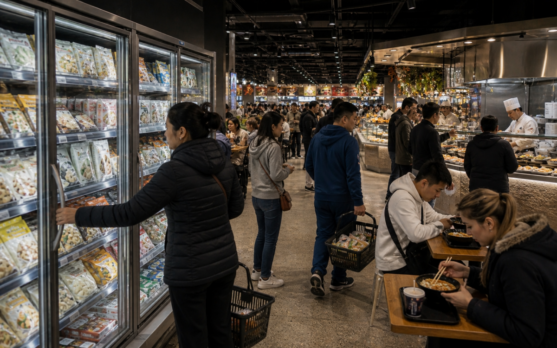
The frozen aisle does the opposite. It speeds everything up.
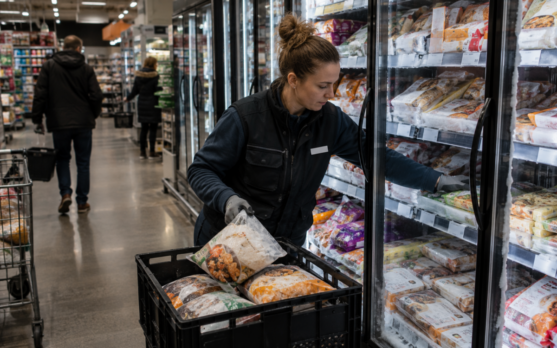
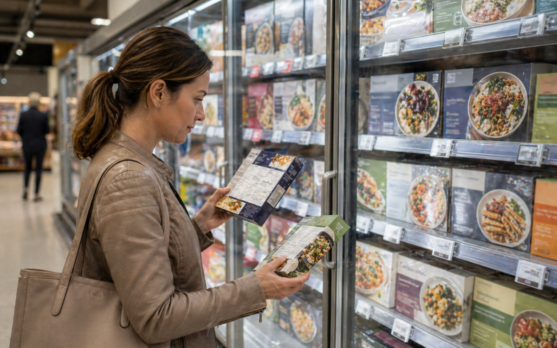
A shopper comparing seafood at retail is thinking about price, trust, meal use, family reaction, cooking method and risk. Frozen seafood already has its own baggage: thawing anxiety, quality variation, origin questions, sustainability labels, glaze, freezer burn, bones, smell. Cultivated salmon would enter that cabinet with an additional question attached: what exactly is this?
That question can be answered, but it will take careful product design and careful language. If cultivated salmon reaches frozen retail, it cannot rely on novelty alone. It will need a clear use case. Sushi kit. Premium appetizer. Poke bowl component. Controlled foodservice portion. Maybe, later, something closer to a retail seafood cut.
The industry should be patient enough to let the format emerge. The first successful cultivated seafood products in frozen may not look like conventional salmon at all.
That may be the real lesson from Wildtype’s milestone. The product has cleared an important door, but the commercial building beyond it has many rooms: restaurants, sushi counters, specialty retail, frozen components, hybrid products, foodservice trials, and eventually perhaps broader seafood cases. Each room has different economics.