A frozen croissant only works commercially when nobody in front of the display thinks about the freezer. The customer smells butter, sees colour, hears flake, buys coffee with it, maybe comes back tomorrow. Behind that small bakery moment sits a colder business: lamination, proofing, storage, staff routines, oven tolerance, waste control and margin per tray.

The freezer sells freshness, if the croissant can carry it
The croissant is an awkward product to industrialize because it was never designed to be forgiving. It depends on layers, fat, air, temperature and timing. A muffin can hide more. A cookie can forgive more. A croissant shows the mistake.
That is why the frozen version matters so much in bakery. It lets a supermarket, café, hotel or forecourt sell a fresh-baked signal without running a pastry room. The dough work is done somewhere else. The final theatre happens close to the customer.
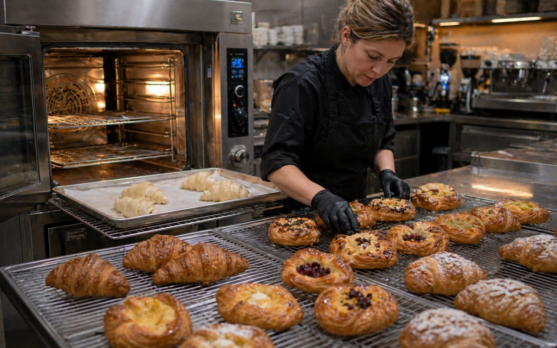
That sounds simple until the product reaches a real site. A store oven is full. A staff member loads the tray too tightly. The bake is delayed by a delivery. A hotel breakfast service starts early. A café runs out at 10:30 and tries to refresh the counter during coffee rush. Frozen croissants live in those ordinary mistakes.
A good one survives them. A weak one turns pale, heavy or greasy and reminds everyone that the bakery moment was borrowed.
Lamination is where the money starts
In croissants, layers are not decoration. They are the value. The product can carry a French name, a premium sleeve and an all-butter claim, but if the layers do not open in the oven, the promise is gone.
Butter remains the strongest cue. It gives aroma, flavour and a cleaner premium signal. It also makes the operation less tolerant. Temperature control matters. Dough strength matters. The fat cannot smear into the dough before freezing. The structure cannot be damaged in storage and still be expected to perform later.
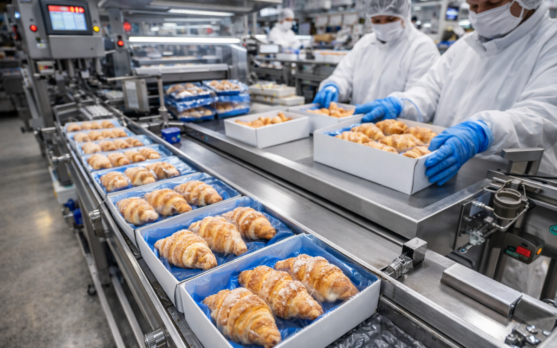
This is where industrial suppliers earn their place. Not by making croissants look handmade, but by making a fragile product repeatable. Same lift. Same colour. Same tray yield. Same case count. Same bake window, or close enough for real operators.
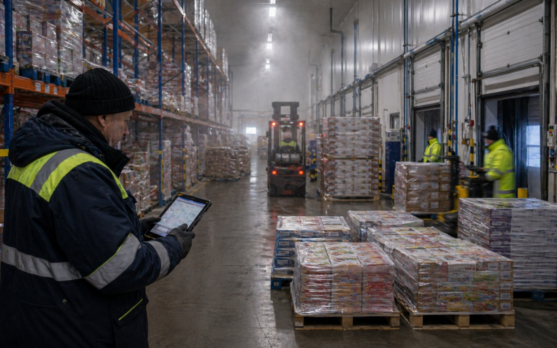
The buyer may taste the sample in a meeting room. The real test comes after the product has moved through warehouse, store freezer and a morning bake handled by someone who is not a pastry chef.
Proofing decides who can use the product
Frozen croissants are not one product. They are several operating models.
Ready-to-prove formats suit operators with time, equipment and stronger bakery routines. They can deliver a better fresh-baked impression, but they ask more from the site. Hotels, bakery cafés and more skilled foodservice teams can use that control.
Ready-to-bake is a different proposition. It moves more skill upstream. That suits supermarkets, forecourts, convenience stores and cafés where the team needs fewer steps. The product must arrive with more of the risk already solved by the manufacturer.
Fully baked or thaw-and-serve croissants solve another problem: speed. They fit catering, buffets, travel and lower-skill operations. The trade-off is clear. Less oven aroma. Less theatre. Less reason for the customer to believe it just happened.
None of these formats is automatically better. The mistake is selling the wrong croissant to the wrong channel. A mini buffet croissant, a sandwich croissant, an all-butter retail multipack and a café croissant do not have the same job.
In-store bakery wants theatre without trouble
Supermarkets use croissants because they make a store feel active. A warm display does more than sell pastry. It suggests freshness across the shop. It helps coffee. It lifts breakfast. It creates an impulse stop near a part of the store that can otherwise feel functional.
But in-store bakery is not a controlled pastry lab. Staff turnover is real. Ovens vary. Timing slips. Products are sometimes held too long. The supplier who ignores that is selling fantasy.
The most useful frozen croissants are not the most delicate. They are the ones that still look acceptable under imperfect handling. They brown properly, release aroma, keep enough volume, avoid a greasy base and hold their shape in the display window. They give the retailer theatre without constant supervision.
Small stores make the brief harder. There is less space, less labour and less patience for complicated steps. A croissant program that works in a flagship supermarket may not work in a city convenience format. The product has to be designed for the channel, not only for the catalogue photo.
Cafés and hotels buy margin, not romance
In cafés, the croissant is rarely just a croissant. It is an attachment to coffee. It is a breakfast line. It can be a sandwich carrier. It can be filled, warmed, sliced, bundled, displayed and used to raise the average ticket.
Hotels look at it differently. They want breakfast volume with minimal drama. Mini croissants, butter croissants and simple filled formats need to look generous on a buffet, bake consistently and avoid waste at the end of service.
Forecourts and convenience operators have another need again: speed, smell, impulse and easy handling. A croissant that takes too much attention loses its place to something simpler.
This is where the margin is made or lost. Bake loss. Labour per tray. Units per case. Display time. Waste. Coffee attachment. Price per piece. A good croissant program knows these numbers before the first pallet ships.
The old language of gourmet frozen croissants does not help much here. Operators do not need romance first. They need a product that pays its way.
The next growth will be more specific
The frozen croissant market will keep splitting by use. All-butter products for premium retail and cafés. Mini formats for hotels and catering. Larger croissants for sandwiches. Filled croissants for afternoon trade-up. Ready-to-bake formats for stores with limited skill. Ready-to-prove for operators that want more control.
That segmentation is healthier than a broad claim about gourmet convenience. It forces suppliers to build products around real conditions. Who handles it? How long does it sit? What oven is used? Is aroma part of the sale? Does the croissant need to carry filling? Is the buyer paying for butter, size, reliability or all three?
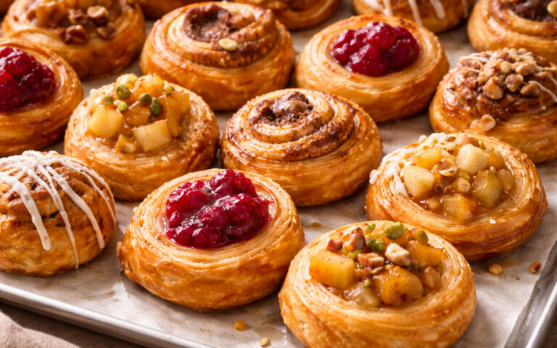
There will be more premium claims, more fillings, more seasonal versions and more café-style packs. Some will work. Many will be dressed-up versions of average pastry.
The products that last will be less noisy. They will bake cleanly, hold shape, sell with coffee, keep waste low and give retailers a fresh-baked signal that can be repeated every morning.