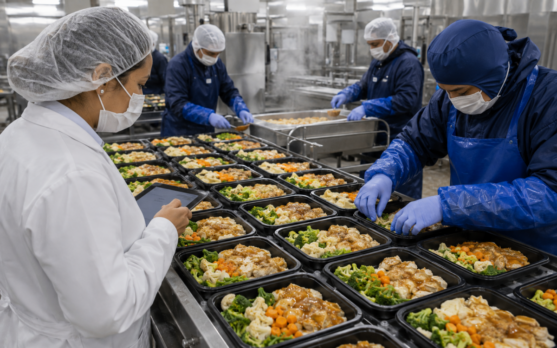
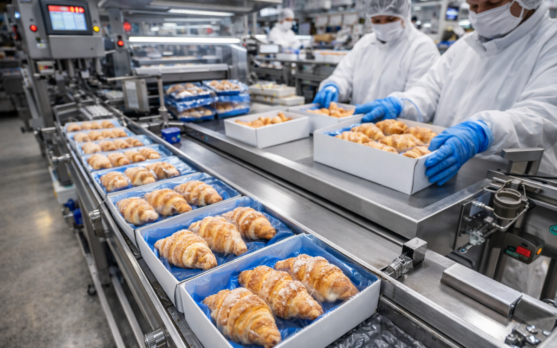
A supermarket does not need a baker in the back to make the bread aisle feel alive. It needs timing, frozen stock that behaves, an oven that staff can trust, and someone who knows when not to bake another tray. That is the less romantic side of fresh bakery today. The smell may come from the shop floor, but much of the real work has already happened somewhere else, under colder, tighter, more industrial control.

The bakery counter has become a schedule
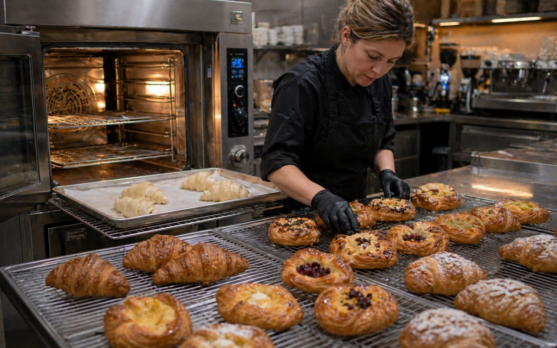
At opening time, bakery is theatre. Not the loud kind. Just enough movement to make a store feel awake: a rack of rolls pulled from the oven, croissants cooling too close to the coffee machine, a member of staff moving quickly because the first customers have already arrived.
The awkward truth is that many of those products were not really made there. They were finished there.
That distinction matters less to the shopper than people in the trade sometimes think. A customer does not inspect the supply chain before buying a baguette. They read the visible evidence. Is it warm? Does it smell right? Is the crust lively? Does the pastry look like it has just arrived at the counter rather than survived the morning?
Fresh on demand is built around that reading. It lets a retailer, hotel, café or service station create fresh cues when traffic makes them useful. Not all at dawn. Not all from scratch. Not by guessing the whole day before the first customer walks in.
The old bakery rhythm was heavy: produce, fill, hope, discount later. Frozen dough and par-baked formats give the operator a lighter hand. They do not remove risk, but they allow the risk to be delayed until there is better information. A slow morning, a stronger lunch, rain, school holidays, a local event, a dead Tuesday. The freezer gives the bakery counter a pause button.
Par-baked bread is not a compromise if the finish is good
Par-baked bread still carries a strange reputation in parts of the market. Some people hear it and think shortcut. In weaker programs, it can be exactly that. Pale crust, poor aroma, bread that looks alive for five minutes and then turns dull.
But a good par-baked system is something else. It is a way of concentrating the difficult work where it can be controlled: dough mixing, fermentation, shaping, first bake, cooling, freezing, logistics. The store then takes responsibility for the final part, the part customers actually meet.
That final part is not minor. It is where the product earns or loses its right to use the word fresh.
A store can destroy a good frozen bread program with bad timing and lazy finishing. Underbake it, and the loaf looks unfinished. Overbake it, and the crust sells once but eats dry. Hold it too long, and the whole counter starts to feel tired. Put too much out at once, and the display looks abundant for an hour, then expensive for the rest of the day.
Panera’s move in the United States toward a par-baked model is useful here because it shows the tension clearly. The operational case is easy to understand: availability, standardisation, fewer local production headaches, more room to expand. The emotional case is more difficult. Bread brands live partly on trust. Customers may accept finished-in-store bread, but they do not like feeling that a craft story has been stretched too far.
So the format itself is not the issue. The issue is whether the bakery promise survives the change in process.
Labour is the quiet driver nobody wants to romanticise
There is a reason frozen bakery fits so many modern operations. It does not depend on finding a skilled baker for every location, every shift, every weekend, every absence. That matters.
Hotels want warm rolls at breakfast without turning the kitchen into a bakery. Coffee shops want croissants that look good beside espresso, even when the team is built around drinks. Convenience stores want bakery margin but cannot run complex production. Supermarkets want the smell of fresh bread, but not the chaos of scratch baking across a full estate.
Frozen formats make that possible by moving skill upstream. The local team still has work to do, but it is a different kind of work. Load the oven properly. Watch colour. Replenish in smaller waves. Keep the display honest. Do not bake a full rack just because the freezer has stock.
This is where many programs fail. They treat bake-off as plug-and-play. It is not. It is simpler than scratch baking, but it still needs judgement.
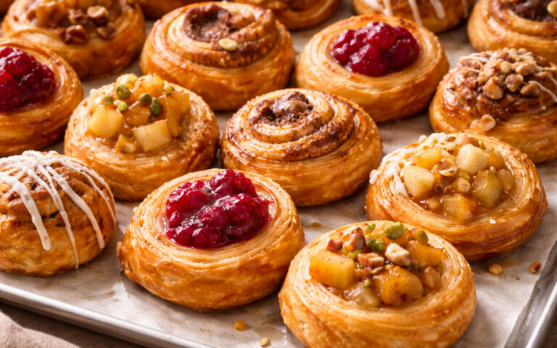
A croissant line can look strong in a supplier tasting and weak in a petrol station at 11:40. A roll can perform well in a controlled demo and disappoint on a buffet because it was baked too early. A thaw-and-serve product can solve oven pressure but flatten the whole bakery offer if it gives no aroma, no heat, no sense of occasion.
Fresh on demand is not a product category. It is a staff routine with food attached.
Waste is often baked too early
Bakery waste is a familiar kind of waste because it is visible. Bread left at closing. Pastries marked down. Morning products still sitting there in the afternoon with no story left to tell.
Retailers hate empty bakery shelves, and rightly so. An empty bread basket makes a store look badly run. But full shelves at the wrong hour are not success. They are frozen margin thawed too soon.
The best use of frozen dough and par-baked stock is not to make the counter permanently full. It is to make the counter responsive. Smaller bakes. More accurate replenishment. Less commitment before demand is real. A freezer can carry uncertainty more cheaply than a display can.
That does not make waste disappear. It moves the burden to planning. If the team has no bake schedule, no traffic sense and no discipline at the end of the day, frozen formats only delay the mistake. A case in the freezer is flexibility. A tray baked at the wrong hour is waste with a crust.
In foodservice, the same rule applies. A hotel buffet does not need to look heroic at 7 a.m. and exhausted at 9 a.m. It needs rhythm. A smaller tray refreshed twice will usually say more about quality than a mountain of bread going stale in public.
The final oven has become part of the brand
There is a moment in every fresh-on-demand program when the factory has done all it can. The product is in the site. The oven is on. Staff have to decide how many, how long, how dark, how often.
That moment is where brand reputation becomes very practical.
A frozen bakery supplier can design a beautiful par-baked loaf, but the customer will never meet the design document. They meet the crust. They meet the temperature. They meet the smell near the counter. They meet the disappointment if the bread looks fresh and eats old.
For suppliers, the product brief should include the messy details: what happens if the oven runs slightly hot, how long the item holds, whether the crust survives a display case, what colour staff should aim for, how many pieces should be baked for a low-traffic hour, when product should be pulled rather than saved.
That is less glamorous than a new flavour launch. It is also where many listings are won.
The stronger frozen bakery programs will look more like service systems. Product, oven guidance, bake charts, waste targets, replenishment logic, staff training, perhaps even data from the retailer’s own traffic. Not because bakery needs more management language, but because freshness is now being assembled across several places.
The factory starts it. The freezer holds it. The last oven decides whether anyone believes it.