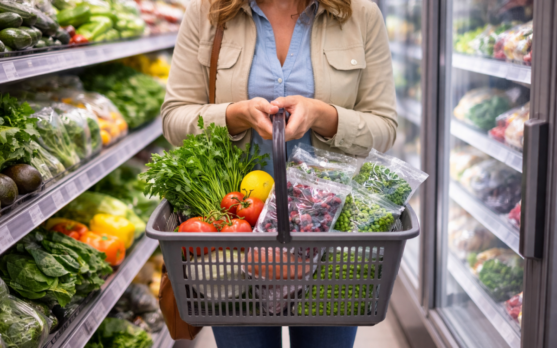
The shopper standing in front of the freezer door is no longer asking whether frozen food belongs in the weekly basket. It already does. The harder question comes a few seconds later, usually without being spoken: will this taste flat, cook wet, look worse than the pack, feel too processed, or sit in the freezer for three months because nobody quite believes it will deliver?

Frozen has become useful before it became fully trusted
The old argument around frozen food was almost too simple. Frozen was convenient. Fresh was better. One was a back-up, the other was the standard. That line has weakened in real households, even if it has not disappeared from the shopper’s head.
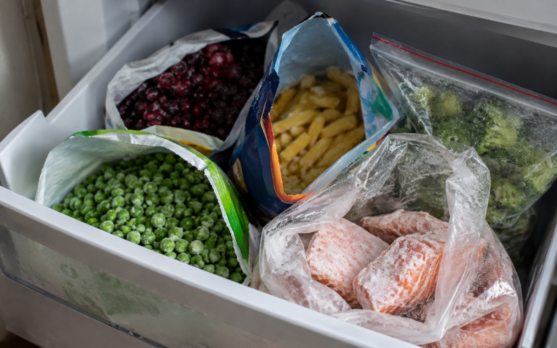
Frozen vegetables go into a stir-fry with fresh chicken. Frozen berries go into breakfast. Frozen fries sit beside a fresh protein. Dumplings become a weeknight dinner with a salad. Pizza gets topped up at home. A bag of peas, a pack of prawns, a skillet meal, a high-protein bowl, a snack for the air fryer. The freezer is no longer only a place for emergencies. It is part of how people patch meals together.
The numbers tell that story. More shoppers are using frozen every few days or daily. More are buying it with a specific meal or day in mind. Many now see it as a way to reduce waste. That is a serious change from the older frozen aisle, where products waited in the back of the basket as insurance against an empty fridge.
Still, the confidence gap is visible. A shopper may accept frozen for value, time and planning, then hesitate on taste, texture, freshness and processing. That tension matters for the industry because the category has moved from permission to scrutiny. Frozen is in the basket. Now it has to justify the space.
The myth did not disappear. It changed shape.
The idea that frozen food is automatically lower quality has been weakened by years of better products, better freezing, better packaging and better meal formats. It has not been killed.
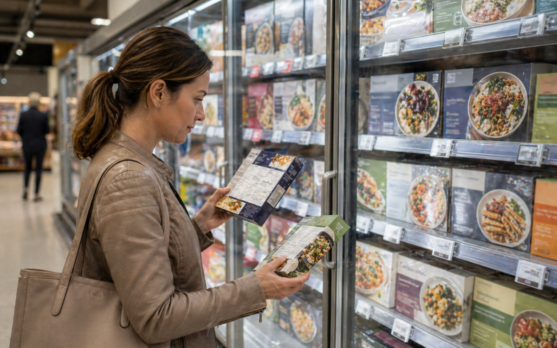
For frozen fruit and vegetables, the nutrition argument is strong. Produce frozen close to harvest can compare well with fresh produce that has spent days in transport, retail and the home refrigerator. The science has been available for years. Yet the shopper does not stand in the aisle thinking about vitamin retention curves. The shopper looks through a misted freezer door and judges what they can see.
If the pack has frost damage, the myth returns. If vegetables cook watery, the myth returns. If chicken has a tired texture, if rice clumps, if a sauce breaks, if pizza crust eats like cardboard, if the photograph promises more than the tray can deliver, the old suspicion gets another witness.
That is the uncomfortable part. Frozen quality is not defended by the category as a whole. It is defended one product at a time.
A bag of broccoli does not carry the same baggage as a heavily sauced ready meal. A premium frozen dessert is judged differently from a value pizza. A global cuisine bowl has to prove aroma and texture. A children’s product has to prove trust. One weak product can make a household colder toward the aisle, even if the technology behind the category is sound.
Texture is the trial most products cannot talk their way out of
Manufacturers like to talk about nutrition, speed and convenience. Retailers like to talk about range, price and meal solutions. The consumer talks less, then decides with the fork.
Texture is where frozen food still loses too many arguments. It is also where many of the category’s quality problems become visible. A coating that fails after oven or air fryer cooking. Vegetables that release too much water. Rice that has lost separation. Noodles that turn soft. A sauce that looks dull after heating. Meat pieces that feel smaller or drier than expected.
This is not a messaging issue. It is formulation, process, temperature control, packaging, cooking instruction and honest photography. The product developer, the freezing operator, the cold-store manager, the retailer and the consumer’s appliance all meet on the plate. No one sees that chain when the meal works. Everyone feels it when it fails.
Air fryers have raised the stakes. They have given frozen snacks, coated proteins, fries and appetizers a stronger route to quality at home. They have also made poor products easier to expose. A pack that claims crispness now has fewer excuses. Consumers are cooking with more confidence, and some of them have better equipment than the frozen aisle used to assume.
Microwave-only products have a harder job. They can still work, especially for bowls, soups, sauces and some ready meals, but the margin for disappointment is narrower. A microwave meal that eats wet, flat or unevenly heated does more damage than its price point suggests.
Processing is the new shadow over frozen quality
For years, frozen food fought the “fresh is better” reflex. Now it also has to deal with a more complicated concern: processing.
Consumers are hearing more about ultra-processed foods. They may not always define the term precisely, but they notice long ingredient lists, gums, stabilizers, flavourings, sodium, saturated fat and claims that feel too engineered. That creates a problem for frozen because the aisle contains very different products under one cold roof.
Plain frozen peas and a heavily formulated ready meal should not be judged in the same way. Yet shoppers often carry a broad feeling rather than a technical classification. The freezer door does not give them time for nuance.
That means ingredient clarity will become part of quality perception, even where the eating quality is good. Protein claims will help some products. Fibre, vegetables, lower sodium and recognizable ingredients will matter. So will restraint. A pack covered in claims can start to look nervous.
There is a commercial risk in trying to defend all frozen products with one argument. The industry should not pretend that every frozen meal is nutritionally equal to frozen vegetables or fruit. That sounds evasive. Better to be more specific: some frozen products are minimally processed staples; some are indulgent restaurant-at-home items; some are balanced meals; some are snacks. Shoppers understand trade-offs when the product is honest about them.
Retailers can help, or they can make quality harder to believe
The freezer aisle is not always kind to the products inside it. Doors mist up. Cabinets are overcrowded. Packs fall forward. Frost gathers. Lighting is cold in the wrong way. A good product can look neglected before the shopper has picked it up.
Retail execution shapes quality perception more than the industry likes to admit. A clean, well-managed freezer with visible product blocks, clear meal occasions and strong rotation tells the shopper that the category is alive. A chaotic cabinet says the opposite. It does not matter that the product was well made at the factory.
Online grocery changes the problem. The freezer door disappears, and the product record becomes the shelf. That makes images, descriptions, cooking methods, claims and filters more important. High protein, air fryer, family size, one-person meal, low sodium, gluten-free, plant-based, fruit, vegetables, meal starter, snack. These are not just search labels. They are trust signals.
Pack size is part of the discussion too. Many shoppers say freezer space at home limits how much frozen they buy. That is easy to underestimate. A product can be attractive and still lose because it asks for too much space in a small apartment freezer. Smaller packs, flatter formats, resealable bags and clearer portioning can all make frozen feel easier to live with.
Fresh is no longer the only benchmark
The category should stop behaving as if fresh is always the opponent. In many homes, fresh and frozen are already working together. The meal is built from both. The old rivalry is still useful for headlines, less useful for product strategy.
The sharper competitive set is wider now. Frozen competes with delivery, chilled prepared meals, meal kits, supermarket food-to-go, leftovers, snacks, restaurant cravings and the decision to skip cooking altogether. Quality is judged against all of those, not only against a fresh ingredient.
A frozen pizza is judged against takeaway and price. A frozen bowl is judged against a work lunch. Frozen vegetables are judged against waste in the fridge. A frozen appetizer is judged against what the consumer remembers from a restaurant. A frozen high-protein breakfast is judged against speed and satiety. Each product has a different trial to pass.
That is why the next phase of frozen quality will be less about broad category defence and more about precision. Which product? Which occasion? Which appliance? Which shopper doubt? Which failure point?
The freezer aisle has more permission than it used to have. It also has less room for lazy products. The shopper is buying. The shopper is also watching.