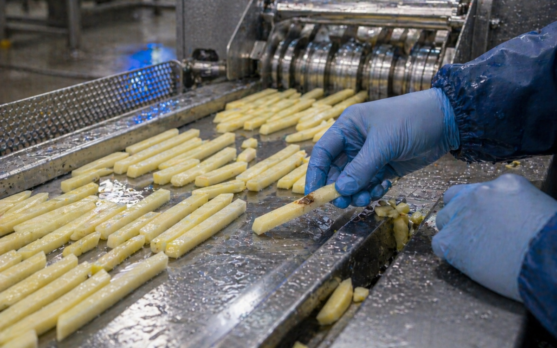
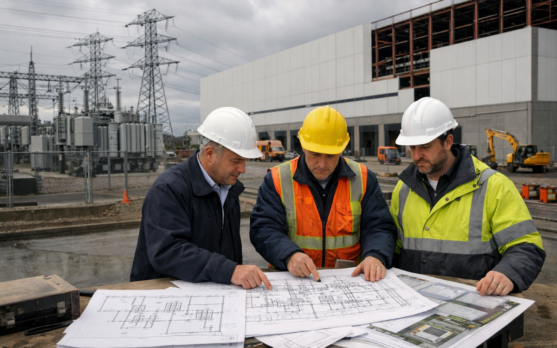
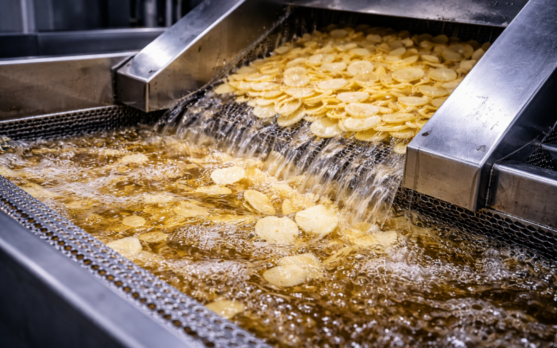
In Hauts-de-France, the frozen fry boom no longer lives only in investment announcements. It is visible in fields shifting toward processing potatoes, trucks moving between farms and factories, old food-industry sites being revived, and growers asking whether the next contract will still make sense if Europe plants too much. France’s Chip Valley is becoming one of the most interesting potato stories in Europe because it carries both sides of the industry’s mood: the confidence to build, and the fear of building too much, too fast.

The fry boom has reached the fields
A factory ribbon-cutting is easy to film. The field behind it is harder to manage. That is the part of the Chip Valley story that now matters most. Northern France has attracted processors because it has land, growers, logistics, industrial heritage and proximity to the Belgian and Dutch fry machine. But a frozen potato plant does not run on regional enthusiasm. It runs on potatoes that meet a processing specification, week after week, season after season.
Hauts-de-France already dominates French ware potato acreage. In 2025, French ware and storage potato area was estimated to rise strongly, with the largest increase in Hauts-de-France and a clear share coming from new producers entering the crop. That last detail deserves attention. When new growers move into potatoes, the system gains volume, but it also gains learning curves: storage, disease pressure, rotation, irrigation, contract discipline, and the difference between growing a potato and growing a potato that a fry plant actually wants.
That is why Chip Valley should not be treated as a cute regional nickname. It is a test of industrial agriculture. More factories mean more demand for tubers with the right size, dry matter, defects, storage behaviour and fry colour. More acreage is only useful if it can become dependable raw material.
Belgian processors are building on French ground
The Belgian push into northern France is not accidental. Belgium has scale, know-how and export muscle, but it is tight on space and increasingly reliant on potato flows from across the border. Hauts-de-France offers proximity without forcing processors too far from the existing European fry belt.
Clarebout’s Bourbourg site near Dunkirk gave the region one of its clearest signals, with large-scale frozen fry production already in place. The operation also sits within a wider strategic shift after Simplot completed the acquisition of Clarebout in 2025. That deal pulled a major European private-label frozen potato operator into a larger global network. Chip Valley is no longer just a Franco-Belgian border story. It is part of the global frozen fry supply map.
Agristo adds another layer. Its Escaudoeuvres project, on the former Tereos sugar site, is one of the strongest symbols of the shift. A plant that once belonged to another agricultural economy is being turned toward frozen potato products, with plans for substantial finished-product capacity and industrial start-up targeted for the second half of 2027. The message is blunt: the region is being rewired around fries, specialties and exportable frozen products.
Ecofrost’s Peronne project matters too. It brings another Belgian processor into a town with its own food-industry memory, including the former Flodor site. These projects are not landing on empty ground. They are landing in places that know agro-industry, but that must now absorb a new scale of potato demand.
McCain gives the region an older backbone
The Belgian arrivals make the story look new. McCain makes it look deeper. The Canadian group has been rooted in Hauts-de-France for more than four decades, with long relationships with French farmers and established sites that already anchor the region’s frozen fry economy.
That matters because new capacity is always easier to announce than to integrate. McCain’s model in France shows the slower work behind a serious processing base: grower networks, long supply relationships, factory knowledge, and a short-chain logic that ties farm and plant more closely than a spot market ever can.
McCain has also been investing heavily in its French operations, including Harnes, Bethune and Matougues. The company’s role is different from that of new entrants expanding into the region. It is not only adding capacity. It is defending and modernising an existing industrial position.
For Hauts-de-France, that mix is important. New Belgian investment brings momentum. McCain brings installed credibility. Together, they make the region more powerful. They also increase the pressure on farmers, roads, labour, storage, water and contract structures.
The agricultural question is getting harder
The weakest reading of Chip Valley is that more plants simply need more potatoes. The harder reading is that more plants need better-organised potato agriculture.
Potatoes are demanding. They put pressure on rotation. They need storage. They carry disease risk. They require equipment and knowledge. They expose growers to harvest timing, weather, quality penalties and contract terms that are more technical than cereal markets. When acreage expands quickly, the system can stretch before it breaks.
That is already the uncomfortable question in northern France. If production grows because new farmers enter the crop, who supports them through the first hard season? Who pays for storage? Who carries the risk if processing prices weaken? How much water can be used? How far can trucks move potatoes before the logistics case begins to thin?
The answer cannot be only “factories will buy.” Processors need a raw material base that does not collapse under poor quality, disease or contract mistrust. Growers need a contract system that gives enough visibility to invest. Communities need jobs, but they also need roads, water management and confidence that the boom will not become a short-cycle rush.
2026 has made the boom less comfortable
The timing is awkward. Chip Valley is scaling just as north-western Europe is being reminded that oversupply is not a theoretical risk. The 2025/26 season has been marked by too much potato, weak free-buy pricing and warnings from growers’ groups that acreage decisions need to restore balance.
In Belgium, Clarebout and Lutosa adjusted operations in March 2026 as the frozen fries market faced oversupply pressure. Production at Clarebout’s French facilities was not reported as halted, but the signal still matters. The European fry industry can be world-class and overexposed at the same time.
That changes the tone around northern France. A few years ago, the dominant question was whether the region could attract enough processing investment. Now the question is whether the new capacity can be absorbed profitably. Export markets are not infinite. QSR demand is strong, but not always generous. Energy remains a cost. Competition from Asia is becoming more visible in price-sensitive markets.
For growers, this is where enthusiasm becomes negotiation. A processing contract is attractive when the plant is hungry for potatoes and the market is tight. It feels different when acreage expands, finished-product demand softens, or processors become more selective. Chip Valley will need careful contracting, not just ambition.
Chip Valley will be judged by balance
The region has real advantages. It is close to Belgium, the Netherlands and major export channels. It has agricultural depth. It has industrial sites that can be repurposed. It has processors with capital, technical knowledge and access to customers. It has the makings of a serious frozen potato cluster.
But clusters are judged by balance, not by press releases. Too little raw material and factories struggle. Too much raw material and growers suffer. Too little capacity and France remains a supplier of potatoes to factories elsewhere. Too much capacity and the region adds to Europe’s pressure. The line is thin.
The better future for Chip Valley is not the largest possible boom. It is a disciplined one: processors working with growers on variety, storage, soil, water and quality; plants designed around energy and side-stream recovery; contracts that do not push risk too far down the chain; export strategies that avoid flooding weak markets.
Northern France can become a stronger frozen potato platform. It probably already is. The next test is more difficult: proving that a region can add industrial capacity without treating acreage, farmers and local infrastructure as unlimited.