Reusable packaging is one of those ideas that sounds better before anyone has to run it. In frozen food, the easy version rarely survives the first operational meeting. A returnable box has to come back. It has to come back clean. It has to hold temperature again, not just once in a pilot but hundreds or thousands of times across routes, depots, stores, kitchens and delivery vans. It has to avoid getting lost, damaged, contaminated or stranded in the wrong part of the network. Reuse can work in frozen food, but not as a lifestyle message. It works as a cold-chain system.
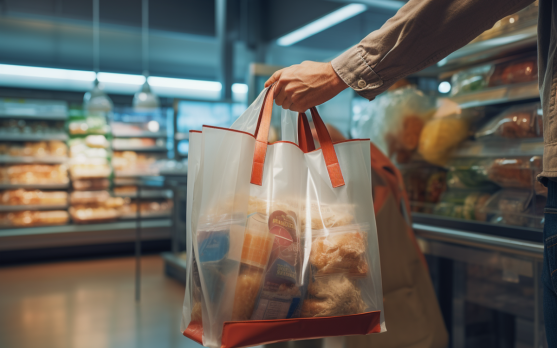
Frozen food does not need another refill fantasy
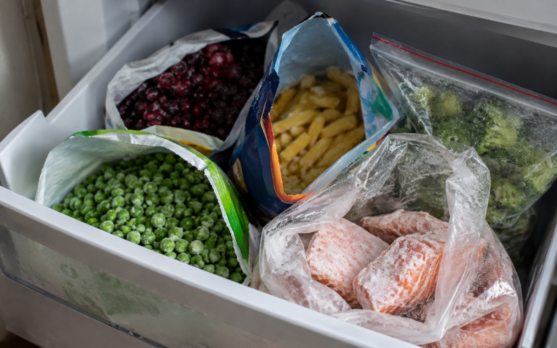
Reusable packaging in frozen food is often discussed too broadly. The consumer refill model, useful in some ambient categories, is a poor starting point here. A shopper may refill detergent or return a beverage bottle. Asking the same person to manage a frozen primary pack for vegetables, seafood, pizza or ready meals is a different proposition. Freezer space is limited. Condensation is messy. Food residues, smells, hygiene and return incentives all get in the way.
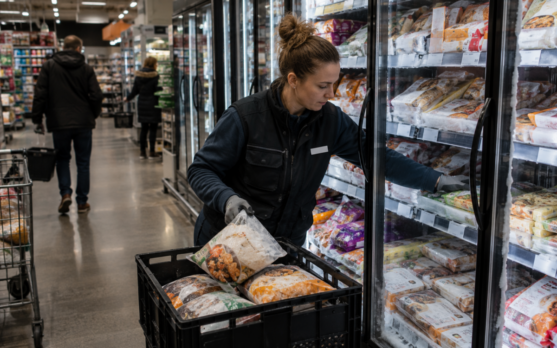
The more serious opportunity sits behind the shelf. Crates, totes, pallets, pallet boxes, insulated containers, thermal inserts, back-of-store assets, foodservice loops and e-grocery delivery systems. These are not glamorous. They are exactly where reuse has a chance.
Frozen food already runs through disciplined logistics. Distribution centres, cold stores, dark stores, retail back rooms, foodservice depots and institutional kitchens repeat the same movements every day. That repetition is the opening. A reusable asset needs repetition more than it needs goodwill.
The strongest case is not “consumers want less waste.” The stronger case is that a controlled loop can remove disposable transport packaging, improve handling, reduce damage and give operators better control over temperature-sensitive flows.
The loop is the product
A reusable crate or insulated box is not the system. The system is everything around it: return route, cleaning, inspection, tracking, storage, loading discipline, loss control and enough trips to justify the asset.
That is where many reuse pilots become uncomfortable. The packaging looks good in a demonstration. The cost per trip looks good on paper. Then the empties pile up in the wrong depot. A customer keeps the insulated box. A foodservice route brings back wet, damaged containers. A warehouse has no space for returns. A driver has no time to separate assets. Someone has to wash and dry everything before the next trip.
Frozen food adds the thermal layer. A reusable box may be durable and still fail if it cannot repeat the same temperature performance cycle after cycle. Frozen, chilled and ambient-sensitive products do not tolerate vague confidence. A pack-out needs a temperature class, route length, coolant plan, handling rules and seasonal profile. Summer lanes are different from winter lanes. A two-hour urban route is not a 48-hour parcel journey.
In practice, the loop must become boring. Same route. Same return point. Same cleaning process. Same asset pool. Same pack-out discipline. The more improvisation a reusable system needs, the weaker its environmental and commercial case becomes.
Sanitation is not an afterthought
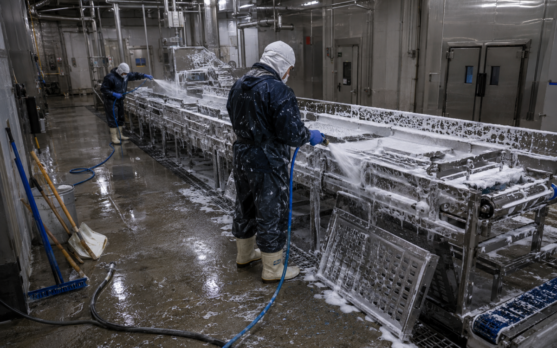
Reusable packaging for frozen food has to be washed, inspected and returned to service under control. Cold does not remove the hygiene problem. It only changes its shape.
Frozen logistics handles meat, seafood, vegetables, bakery, ice cream, ready meals and mixed loads. Containers can come back with water, frost, damaged cartons, broken gel packs, odours, cardboard dust, labels, tape, dry ice residue or residues from secondary packaging. Foodservice loops can be even more variable. A box that returns from a restaurant kitchen is not the same as a box moving between two retail distribution centres.
This is why reusable packaging in food works best when the pool operator treats cleaning and inspection as part of the product. The IFCO model in fresh food is a useful reference, not because frozen food is identical to fresh produce, but because the principle is right: reusable containers need a professional loop, with washing, sanitation, inspection and asset management built in.
Frozen food companies should be cautious with any reuse proposal that treats washing as a footnote. Cleaning is cost. Drying is cost. Inspection is cost. Space is cost. The system may still work, but those costs need to be visible before the sustainability claim is approved.
E-grocery is promising, but only in dense routes
E-grocery gives reusable frozen packaging one of its better openings. The delivery route already touches the customer. The vehicle often returns to a depot. The operator can collect boxes, inspect assets, restock coolants and standardise pack-outs. In urban areas with high order density, the logic improves.
Reusable insulated boxes and thermal inserts can be useful here, especially when they support chilled, frozen and mixed-temperature delivery without relying on a fully refrigerated vehicle for every route. Tempack’s reusable temperature-controlled formats and similar systems point to the kind of solution operators are testing: insulation, coolant pockets, dividers, washable components and temperature classes built into a repeatable delivery model.
The limits are just as clear. Parcel networks are harder. If a frozen order is shipped through a carrier and the reusable box depends on the consumer to return it, asset loss becomes a serious risk. Deposits help, but they add friction. Pickup returns help, but they add miles. For low-value frozen products, the numbers can turn against reuse quickly.
McKinsey’s work on reusable e-commerce packaging made one point the frozen sector should not ignore: transport can dominate both cost and emissions in reusable models, even after many rotations. For frozen delivery, that warning carries extra weight. An insulated box is often bulkier and more expensive than a mailer. It has to justify every return trip.
B2B will move faster than the consumer pack
The most likely growth is in B2B and semi-closed systems. Foodservice distributors delivering to restaurants. Retailers moving product between DCs and stores. Dark stores serving repeat e-grocery routes. Institutional catering. Central kitchens. Frozen suppliers shipping to known customers on regular schedules.
These settings offer what reuse needs: predictable partners, repeated routes, professional handling and lower loss rates. Reusable crates, foldable boxes, pallet boxes and insulated containers can be managed as assets. They can be scanned, cleaned, repaired and redeployed. They can be designed for stacking, nesting and cold-room handling. They can be measured by cost per trip rather than unit price.
Transport packaging is also where regulation is likely to apply more pressure. Europe’s PPWR is pushing recyclability, reuse and waste reduction, with transport packaging in the spotlight. The direction is clear enough for frozen food companies to start mapping which flows can realistically move into reusable assets and which cannot.
Primary consumer packaging will be slower. A frozen pouch still needs to be cheap, light, safe, compact and simple. A ready meal tray has to work at retail and in the kitchen. Reuse may touch the outer logistics around these packs long before it changes the pack the shopper takes home.
The economics belong to the asset pool
The old comparison, reusable box versus single-use box, is too narrow. A reusable system has to be measured by rotations, loss rate, cleaning cost, repair, storage, return transport, handling time and impact on load efficiency.
A foldable or nestable asset can improve the return calculation. A rigid insulated container that travels back empty over a long distance can destroy it. Tracking can reduce loss, but tracking also adds hardware, software and process discipline. A pooled system can spread assets across users, but only if the network is dense enough and partners trust the rules.
RFID, QR, IoT and temperature sensors have a role here. Not as decoration. As asset control. Operators need to know where the box is, how long it has been sitting, whether it returned, whether it was cleaned, how many trips it has made and whether it is still fit for frozen use. In reusable cold-chain packaging, the box becomes part of the logistics balance sheet.
Over the next few years, reuse in frozen food will grow where the route already wants it: e-grocery with returns, foodservice distribution, retail logistics and cold-chain B2B. By the early 2030s, pressure from EPR and packaging regulation should push more companies to standardise crates, boxes and reusable thermal assets. The consumer-facing frozen pack will remain a harder target.
Longer term, the most realistic model is layered. Recyclable or recycle-ready primary packaging. Reusable secondary and tertiary packaging where loops exist. Insulated reusable assets for delivery routes that return. Single-use packaging retained where reuse would add cost, miles or product risk.
That may sound less exciting than a full reusable revolution. It is also how frozen food tends to change: through systems that operators can run every day without heroic behaviour.