A plate of loaded fries can now travel faster than a product brief. One short video, a close-up of sauce, cheese, heat and crunch, and a familiar potato side suddenly behaves like a menu idea, a retail opportunity and a factory question at the same time. The hard part for processors is not spotting the clip. It is deciding whether that visual appetite can become a coated fry, a specialty cut, a seasoning platform, a foodservice LTO or a retail freezer SKU without turning the plant into a chase after yesterday’s trend.

The potato became content because it was already familiar
Potatoes did not need social media to become important. They were already one of the most reliable carriers of comfort, value and menu flexibility in foodservice. What short-video culture has changed is the speed at which a potato format can become visible.
That matters because the potato is unusually good at taking change without frightening the consumer. A chicken format, a plant-based format or a new protein can ask for trust. A potato asks for permission to be crispier, saucier, spicier, bigger, smaller, loaded, dipped, smashed, spiralled or air-fried. The base is safe. The variation does the work.
That is why fries, wedges, tots, waffle cuts, crinkle cuts, spirals, hash browns, mash bites and loaded potato bowls sit so comfortably in the visual economy of food content. They are easy to understand in seconds. Crunch reads on camera. Cheese stretches. Sauce travels. A topped fry becomes a small stage for global flavours, heat, nostalgia or indulgence.
For processors, the point is not that potatoes are now “social.” The point is that social platforms are exposing demand around formats before traditional category systems fully absorb it. A clip may look like entertainment. Underneath, it may be an early signal about cut geometry, holding performance, flavour direction, portion size, preparation method or the next retail pack that buyers will ask about.
Loaded fries are no longer just a topping story
Loaded fries look simple from the table. They are not simple from the processor’s side.
The base fry has to carry sauce without collapsing. The cut has to hold visual volume. The coating has to protect texture. The portion has to work for dine-in, delivery, sharing or an individual meal. The operator needs speed, not a dish that slows the pass. The product has to remain recognisably potato after the toppings arrive.
That is why loaded fries are becoming more than a menu flourish. They are a test of whether potato processors can support operators as sides move closer to the centre of the plate. Zaxby’s turning Chicken Bacon Ranch Loaded Fries from a limited-time offer into a permanent menu item is one practical signal. It shows how a side can become a traffic tool, not just an attachment to the main dish.
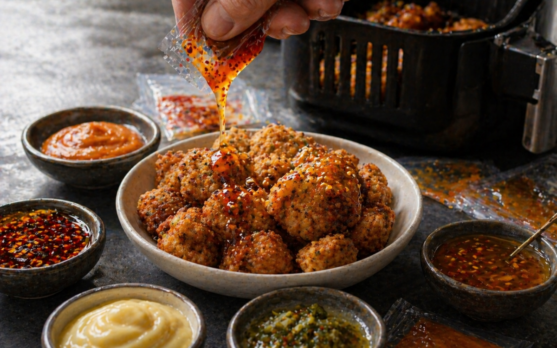
The same logic travels into retail. A frozen loaded-fries concept for home use is not just a bag of fries with an attractive serving suggestion. It may need seasoning sachets, topping logic, air-fryer instructions, portion control, packaging clarity and a promise that can be delivered in an ordinary kitchen. The shopper may have seen the format online, but the repeat purchase depends on whether it works on a Tuesday night.
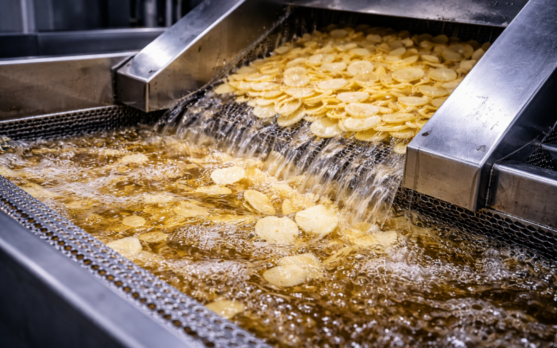
Here is the difficult part: a viral format often shows the final plate, not the industrial route. It does not show par-frying, freezing, coating pick-up, line changeover, seasoning distribution, pack fill, cold storage or delivery performance. The video sells the moment. The processor has to build the system behind it.
Coatings are where the social promise meets the line
Crispness has become a commercial language. It is not only sensory. It is operational.
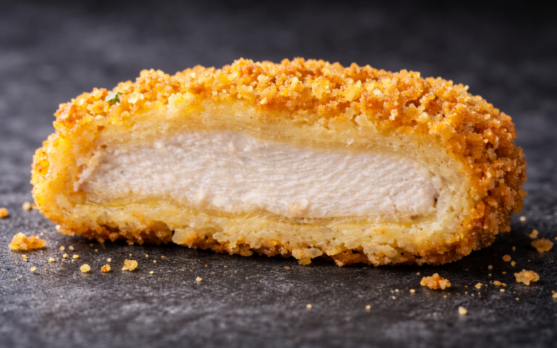
Social video loves texture, but QSR and delivery have made texture a harder technical target. A fry that looks good at the fryer may fail in a bag, under sauce, beneath cheese, inside a delivery window or after reheating at home. Coatings, clear batters and starch-based systems are one reason the category can respond to more demanding formats.
Lamb Weston’s Stealth Fries, McCain SureCrisp and Simplot Conquest Delivery+ all point to the same pressure from different angles: operators want fries that hold crispness longer, tolerate off-premise service better and still look like fries rather than engineered products. These products should not be read as trend stories. They are infrastructure for trend speed.
When a loaded fry format spreads online, the processor has to ask a technical question before a marketing one. Can the base carry moisture? Can it stay crisp under heat lamps? Can it handle delivery? Can it perform in an air fryer? Does the coating work across cuts? Does it create flavour masking? Does it change oil behaviour? Does it hold up when the operator adds too much sauce because the photograph looks better that way?
The coating is invisible in many cases. Its commercial value is not. It decides whether the social promise survives the distance between post, menu, delivery box and plate.
Flavour systems need speed without chaos
Potato formats are becoming a useful stage for flavour movement because the base is familiar. That is why global sauces, sweet heat, dry rubs, barbecue styles, cheese systems, garlic, sriracha, za’atar, chimichurri, Nashville hot, hot honey and ranch-led formats all find their way onto fries and wedges.
The processor’s problem is how to respond without multiplying complexity too quickly. A flavour that works as a QSR LTO may not deserve a full retail launch. A sauce that looks beautiful on camera may not freeze well, separate properly, reheat cleanly or remain affordable at scale. A seasoning that performs on a fresh fry may behave differently on a frozen coated product.
Speed is useful only if the platform is ready. That means base products designed for variation, seasoning systems that can be changed without excessive downtime, packaging that can carry different usage cues, and R&D teams that know which social signals deserve a plant trial.
The temptation is to chase every flavour wave. That is how SKU lists get messy and factories get irritated. Better processors will separate behaviour from noise. Is the consumer asking for heat, sauce load, shareability, air-fryer convenience, global flavour or snack size? The answer may not require a new product every time. Sometimes it requires a better platform.
The QSR-retail feedback loop is getting faster
Potato innovation has always moved between restaurant and retail. What has changed is the loop speed.
A QSR can test a loaded fry, season a crinkle cut, run a dry-rub promotion or turn fries into a shareable dish. Social content then shows whether people understand the format, whether they photograph it, whether they complain about sogginess, whether they ask for a retail version and whether the idea has life beyond a first wave. Retail teams watch that. So do processors.
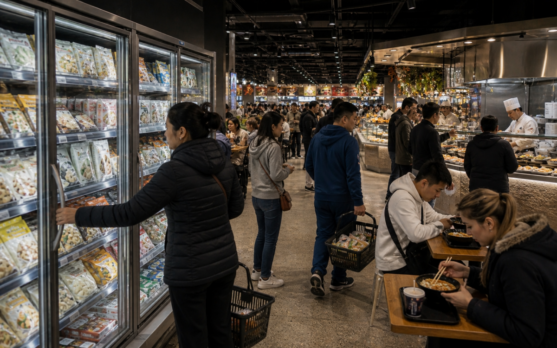
Retail frozen potato packs are also borrowing more from foodservice: air-fryer cues, bolder cuts, loaded serving suggestions, snackable occasions, family sharing and restaurant-at-home language. The home freezer is not the restaurant pass, but the shopper has started to judge texture and convenience with restaurant expectations in mind.
Private label will move here too. Retailers can see when a potato format has become safe enough for a wider audience. A branded processor may create the first excitement, but a retailer can translate the idea into a sharper price point, larger pack or seasonal activation. That shortens the advantage window.
The processor that understands both channels will have the stronger position. Foodservice teaches texture, holding time and operational pressure. Retail teaches pack clarity, repeat purchase and price resistance. Social media sits between them, noisy but useful, showing which formats people want to copy, photograph and eat again.
Format platforms will beat trend chasing
The next few years will not reward potato processors that simply react to every viral fry. There will be too many. Some will be flavour noise. Some will be restaurant tricks that do not freeze well. Some will work in one market and fail in another. Some will disappear before packaging artwork is approved.
The stronger strategy is platform thinking. A processor can build a coated fry platform for loaded applications. A specialty cut platform for visual menu impact. A seasoning platform for regional flavour speed. A retail platform built around air fryer performance. A foodservice platform designed for delivery and hold time. Each platform can carry multiple ideas without forcing the factory to start again.
Short term, more loaded fries, coated formats, bold seasonings and air-fryer-led retail packs will appear. Medium term, social listening will sit closer to R&D, QSR account planning and retail category conversations. Longer term, the difference will come down to industrial translation: who can turn a visual behaviour into a scalable product with the least operational stress.
The potato has become content. That does not make content the strategy. The strategy is knowing which piece of the content belongs on the line.