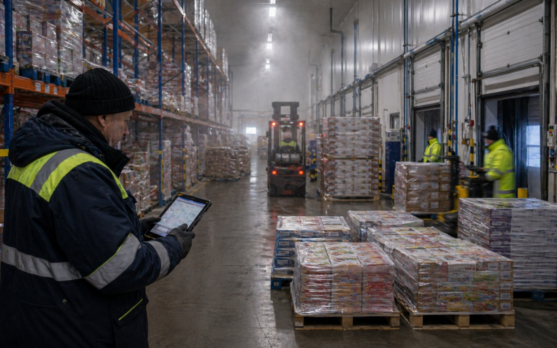
A tray of berries can arrive at a distribution centre looking acceptable and still be commercially damaged. The pallet is cold, the paperwork is clean, the buyer has a slot for it. Yet ten hours lost after harvest, a warm holding room, poor airflow or a slow pre-cooler may already have spent the shelf life that retail thinks it is buying.

The cold chain starts before the cold store
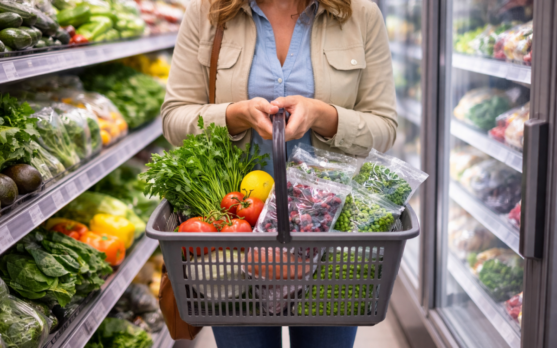
Fresh produce waste often looks like a retail problem because that is where it becomes visible. Soft berries in a display tray. Condensation inside a bag of greens. Tomatoes losing firmness before the promotion ends. A case rejected at the back door because the quality has slipped just enough to make the buyer nervous. By then, the expensive part of the journey has already happened.
The more useful place to look is earlier. Field heat removed too slowly. Pallets held near a dock for too long. A truck loaded with poor airflow. A product placed in the wrong temperature band because “cold” was treated as one condition rather than a set of crop-specific tolerances. These are not small technical details. They decide whether the product reaches the shelf with time left to sell.
Fresh produce is alive after harvest. It respires, loses water, reacts to ethylene and continues to deteriorate. Temperature discipline slows that process. It does not stop it. That distinction matters for every company handling fresh, chilled or frozen produce. A freezer can lock in quality, but it cannot give back quality already lost through weak handling.
In frozen food, this lesson is sometimes hidden by the final product. A bag of peas, spinach, blueberries or mixed vegetables looks stable in the retail freezer. The shopper sees convenience. The buyer sees a long code life. The manufacturer sees a product that can travel and wait. But the commercial value was largely decided before freezing, when the crop was harvested, cooled, sorted and moved into processing fast enough to remain worth preserving.
Shelf life is an operating budget
One of the mistakes in the old shelf-life conversation is treating time as a fixed allowance printed on a label. In practice, shelf life is spent. It is spent in the field, in bins, in pre-cooling, during loading, in warehouse dwell time, in retail display and, later, in the consumer’s refrigerator or freezer.
Post-harvest science has said for years that temperature is the dominant factor in produce deterioration. A rise of 10°C can accelerate deterioration dramatically for many perishable horticultural products. That is not an academic footnote. It is a margin issue. A few warm hours early in the chain can show up later as markdowns, rejections, shorter retail life or a quieter form of waste: product sold, then disappointing the customer at home.
Blueberries offer a clean example because they are valuable, fragile and unforgiving. Research on blueberry cold-chain scenarios has shown how farm storage temperature and delayed pre-cooling can become critical points for later quality. In the real world, that means a retail buyer may be judging a berry by what happened long before the tray reached the store.
The same rhythm applies across vegetables and fruit intended for freezing. Peas and sweetcorn are not helped by romantic language about harvest freshness if the time between field and factory stretches. Spinach and green beans need speed, not slogans. Berries that miss the fresh premium window may still have value for IQF, puree, bakery inclusions or foodservice applications, but only if the handling history leaves enough quality to work with.
Controlled atmosphere is useful, but it is not a miracle room
Controlled atmosphere storage deserves a place in this article, but not as a magic answer. Apples can sit in controlled atmosphere storage for months, sometimes close to a year depending on cultivar and storage conditions. Pears, kiwifruit and pomegranates can also benefit from careful gas, temperature and humidity management. That is a very different reality from tomatoes, cucumbers or other chilling-sensitive products that can be damaged by the wrong kind of cold.
This is where storage discipline becomes commercial judgement. A technology that helps one crop can punish another. Low temperature may protect a temperate apple and damage a tomato. High humidity may slow water loss in one product and encourage decay in another if the handling is poor. Ethylene control may be crucial for some mixed loads and irrelevant for others.
That is also why the phrase “extend shelf life” can become lazy. Extend which shelf life? At what maturity? For which market? Fresh retail, foodservice prep, frozen ingredient, puree, juice, dried product or secondary processing? The same crop may have several possible commercial futures, but the choice has to be made while the product still has enough quality left to move.
In better supply chains, storage is not a waiting room. It is an active decision point. The operator knows what the product is, where it has been, what temperature history it has carried, how much life remains and whether the next move should be retail, processing, freezing, donation, markdown or withdrawal. Too many chains still treat storage as a pause between commercial decisions. Perishable products do not pause with them.
The freezer preserves value, not excuses
Frozen food has a strong case in the food-waste debate because it converts a short fresh window into a longer commercial life. Frozen vegetables, berries, potatoes and prepared produce can absorb harvest peaks, reduce seasonal volatility and give retailers more time than fresh can offer. That strength should be used more confidently.
But frozen has its own discipline. The old article’s reference to freezing below 32°F was too loose for a frozen food publication. Industrial and food-safety practice works around 0°F, or -18°C, and below. The difference matters. Ice forming is one thing. Stable frozen storage is another.
A poorly handled product does not become premium because it enters a freezer tunnel. Freezing can slow deterioration and protect convenience, but it cannot reverse bruising, dehydration, microbial load, enzymatic damage or poor maturity choice. In a factory, this shows up in yield, sorting losses, texture complaints, colour variation and rework. In retail, it shows up later as product that technically remains frozen but no longer delivers what the brand promised.
The best frozen processors understand this without needing a sustainability lecture. Their waste prevention starts with raw material contracts, harvest timing, intake inspection, blanching control, freezing speed, packaging integrity and temperature discipline after production. The freezer aisle may sell stability. The plant has to manufacture it.
Retail display is where weak discipline becomes expensive
Fresh produce retail is a theatre of abundance, and abundance is often waste wearing good lighting. A display must look full. The consumer must see choice. The category manager wants availability without looking careless. That is a difficult balance when product life is shrinking by the hour.
Temperature abuse at retail is rarely dramatic. Doors left open. Overfilled displays. Warm stock waiting for replenishment. Product stacked in a way that blocks airflow. Staff rotating by date without understanding condition. These small failures turn into shrink. The same pattern exists in frozen, only the signs are different: frost, damaged cases, temperature fluctuation, freezer burn, crushed packaging, slow-moving SKUs sitting through too many openings and closings.
Retailers like to talk about reducing waste, but the shelf still rewards appearance and availability. A processor may do everything correctly and still see product mishandled in the final metres. A grower may deliver good quality and watch it lose value because store-level execution is inconsistent. Waste is often shared across the chain, even when the invoice makes it look like one party’s problem.
That is why better storage and shelf-life management should be treated as a commercial conversation, not a technical appendix. The buyer, the supplier, the logistics provider and the store operations team all touch the clock. If none of them owns the clock, the product pays for it.
Dynamic shelf life is where the argument is heading
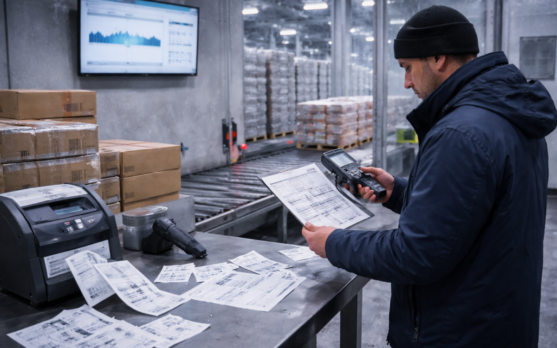
The industry is slowly moving away from the fiction that a printed date tells the whole story. Temperature sensors, pallet-level monitoring, warehouse data and better analytics make it possible to understand remaining shelf life more precisely. The useful question inside a supply chain becomes practical: what happened to this product, and what should we do with it now?
That can change behaviour. A lot with a clean temperature history may deserve a longer commercial route. Another lot may need faster retail movement, processing, freezing or donation. A retailer can markdown earlier, rather than too late. A processor can decide whether a crop still fits a premium frozen specification or should move into a different format. A foodservice distributor can avoid sending vulnerable product into a slow account.
There will be resistance. More data creates more accountability. A shipper may not want temperature history exposed. A retailer may not want to admit that display handling, rather than supplier quality, caused shrink. A manufacturer may find that its own yard dwell time is more damaging than it assumed. Useful data tends to be rude before it becomes profitable.
Still, the direction is clear enough. Shelf life will be managed less as a static promise and more as a live asset. Fresh and frozen will sit closer together in that system. When fresh demand is strong and quality is high, the product moves through the fresh channel. When the clock starts running against it, freezing, processing or alternative outlets become value-protection tools, not afterthoughts.
The companies that take this seriously will not talk about storage as a housekeeping issue. They will treat it as part of margin protection, quality assurance and waste reduction. The weakest companies will keep discovering food waste at the point where all the good options have already disappeared.