The old post-pandemic question was how food companies would get back to normal. Frozen food has a harder question now: how do you keep product cold, available, traceable and profitable when routes shift, energy moves, retailers tighten service expectations and the safety stock sitting in a freezer starts looking less like protection and more like trapped cash?
The disruption is no longer post-pandemic
The phrase has outlived its usefulness. Post-pandemic supply chain disruption sounds like something with a beginning, a peak and a gradual return to order. That is not what many frozen suppliers are dealing with now.
The shocks are less tidy. Red Sea disruption changes sailing times. Tariffs creep into buying plans. Energy costs move through freezing, storage and transport. A late vessel hits seafood availability. A packaging delay holds back finished goods that are otherwise ready to ship. A retailer asks for more promotional volume at the same time a cold store is already tight. None of these problems needs to be catastrophic on its own. Together, they make the frozen chain harder to run with old assumptions.
Frozen food has always carried a certain promise of resilience. Longer shelf life. Lower waste. Better planning than fresh. That promise still has value. But shelf life is not the same as supply-chain strength.
A pallet at minus 18 degrees Celsius can still be in the wrong place, tied to the wrong customer, moving through the wrong route, burning too much energy or sitting on expiry pressure that will eventually cost someone money. Cold does not make a weak network strong. It just gives the business a little more time to discover where the weakness is.
Frozen stock is useful. It is also expensive.
After the pandemic, many companies became more comfortable with inventory. The logic was easy to understand. If disruption is likely, hold more stock. In frozen food, the idea can sound especially attractive because the product can last.
But frozen stock is never neutral. It sits in expensive space. It consumes energy. It ties up capital. It needs rotation, monitoring, handling and room in a warehouse that may already be full. It can protect a listing, or it can quietly become a margin problem with frost on it.
There is a real difference between buffer stock and nervous stock. Buffer stock is planned around demand, lead time, expiry, customer priority and capacity. Nervous stock is what happens when a business loses confidence in its own network and starts parking product wherever it can. It feels safe for a while. Then the invoices arrive. Then the expiry profile starts to look ugly. Then sales needs support to clear product that should never have been sitting there that long.
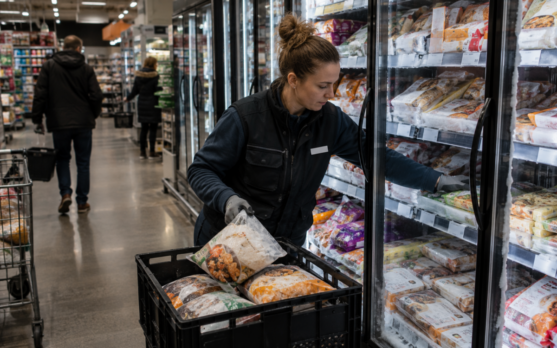
Retail buyers rarely see that internal mess. They see the result: gaps in the freezer during the wrong week, pressure for price increases, substitutions, late updates, service levels that slip just enough to make a category manager nervous.
Resilience in frozen food is not simply having more inventory. It is knowing which inventory deserves to exist, where it should sit, how quickly it can move and which customer it is protecting.
Cold storage has become a strategic constraint
Cold storage used to be treated too often as background infrastructure. Necessary, costly, technical, but not always central to commercial strategy. That view is becoming harder to defend.
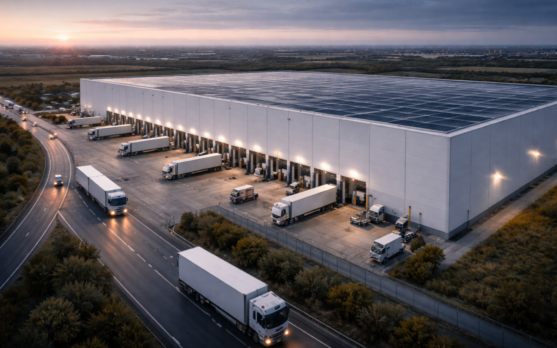
When demand for refrigerated and frozen foods rises, the pressure does not land only on factories. It lands on freezer capacity, dock scheduling, labour in cold environments, transport availability, pallet flows and systems that need to know exactly what is where. A manufacturer may have the product. If the storage, route and delivery slot do not align, the product is still not available in any useful commercial sense.
This is where the role of 3PL providers is changing. The better cold-chain partners are no longer just selling square metres of frozen space. They are selling flexibility, location, visibility, consolidation, import support, data, routing intelligence and the ability to absorb peaks without turning every exception into a crisis.
For a frozen meal producer, that might mean having the right finished stock close enough to a retailer's distribution network before a promotion breaks. For a seafood importer, it may mean cold storage that can handle irregular vessel arrivals without losing traceability. For a private-label supplier, it may mean being able to prove service stability before the buyer starts asking whether another supplier can handle the range better.
Cold storage has become one of the places where commercial promises either become real or quietly fail.
Global routes now reach the freezer cabinet
It is tempting to think of maritime disruption as a shipping story. In frozen food, it quickly becomes a product story.
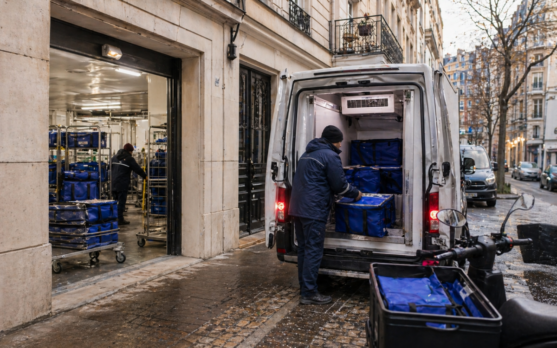
A delay through the Red Sea or around the Cape does not stay on a transport manager's screen. It reaches seafood lead times, imported ingredients, cartons, films, equipment parts, foodservice deliveries and retail promotional windows. Longer routes also create more uncertainty around handovers. In frozen categories, uncertainty has a temperature, a storage cost and a customer attached to it.
The same applies to inputs. Fertiliser, energy, oils, grains, proteins and packaging move through food manufacturing in uneven ways. A frozen potato product can be exposed to agricultural input costs, storage conditions, processing energy and retail price resistance at the same time. A frozen ready meal can carry risk from vegetables, meat, dairy, cereals, sauces, packaging and refrigerated distribution before it ever reaches a cabinet.
That is why the old language of supplier diversification is not enough. Diversification matters, but only if the alternative source is approved, tested, documented, costed and logistically usable. A second supplier that cannot meet the specification, provide data or fit the cold-chain route is not resilience. It is a name in a file.
Global trade will remain essential to frozen food. The smarter companies will not pretend otherwise. But they will be more careful about single-route exposure, distant dependency, port concentration and ingredients that look small in the formulation but carry large disruption risk.
Visibility is not a dashboard. It is a decision under pressure.
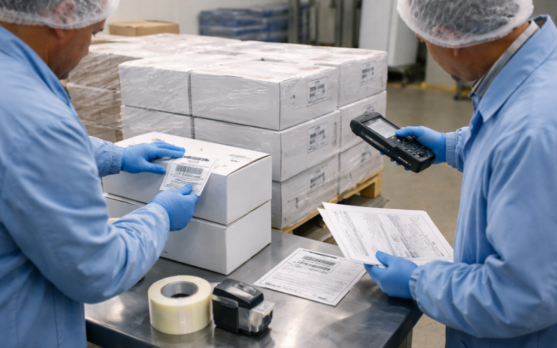
Supply-chain visibility has become one of those phrases that can mean almost anything. In a frozen business, it should mean something practical. Where is the lot? What is its expiry profile? Which customer is it allocated to? Which depot has space? What product is at risk if the vessel is late? Which order gets protected if capacity tightens?
Those questions do not wait politely for a monthly review.
A retail promotion can pull stock faster than forecast. A foodservice customer can change order pattern after a menu shift. A cold store can run tight at the same time inbound loads arrive late. A recall can turn a normal Tuesday into a search for batch, customer, route and remaining stock. If the answers are buried in disconnected systems, the business is not visible. It is just well reported after the damage.
Data and AI have a role, but the role is not magic. Forecasting can improve replenishment, but only if promotional history, customer behaviour and stock records are clean. Route optimisation can reduce waste, but only if transport data is timely. Warehouse analytics can support better allocation, but only if the physical pallet and the system pallet agree with each other.
Frozen supply chains punish pretend visibility. The pallet either exists where the system says it exists, or it does not. The truck either makes the delivery window, or it does not. The freezer cabinet either has stock, or the shopper walks past.
The buyer will remember who made volatility quiet
In a more volatile market, retailers and foodservice operators will not reward suppliers only for having product. They will reward suppliers who can absorb disruption without creating noise.
That means earlier warning when availability is at risk. More honest allocation. Better expiry control. Faster answers on lots and locations. Clearer options when a route fails or a raw material tightens. It also means not pushing every internal problem into the buyer's lap as an urgent exception.
Private label will feel this pressure first. The retailer owns the brand in the shopper's mind. If a frozen cabinet is empty during a campaign, if a withdrawal is slow, if a substitute product feels weaker or if a supplier keeps arriving with explanations instead of options, trust erodes. Price still matters, but predictability has become part of the offer.
The same is true in foodservice, where frozen products often sit behind menu consistency. A chain does not want to redesign operations because a supplier failed to see a logistics problem early enough. It wants continuity. If continuity is impossible, it wants notice, options and clean information.
Resilience is becoming a commercial service. Not a slogan, not a crisis plan in a folder, and not just a higher stock position. It is the ability to keep the customer out of the chaos as much as possible.
The next supply chain will be designed for shock
The frozen sector does not need to abandon global sourcing or fill every region with duplicate capacity. That would be too neat and too expensive. It does need a harder view of where the chain is brittle.
Some products need more regional sourcing. Some need better 3PL partnerships. Some need fewer SKUs. Some need stock closer to the customer. Some need alternative ports, better forecast discipline or more realistic service promises. Some need reformulation options agreed before the shortage arrives. Many need cleaner data before any serious resilience plan can be trusted.
The old operating model assumed disruption as an exception. The newer one treats disruption as something that will return in different clothes: weather, freight, labour, energy, regulation, geopolitics, packaging, cyber risk, disease, port congestion, buyer behaviour.
Frozen food is well placed in that world, but only if the industry stops confusing product shelf life with supply-chain resilience. A long-life product still needs a short, accurate answer when the buyer asks what happens next.