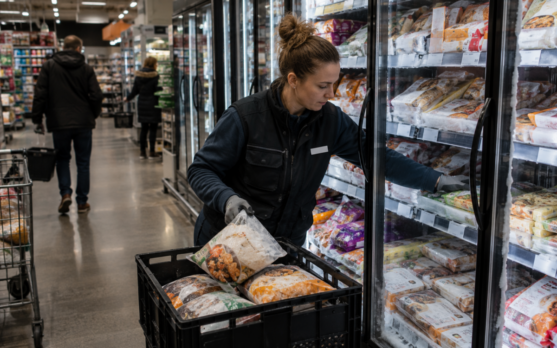
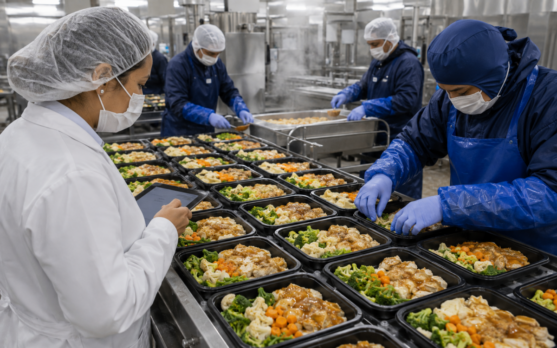
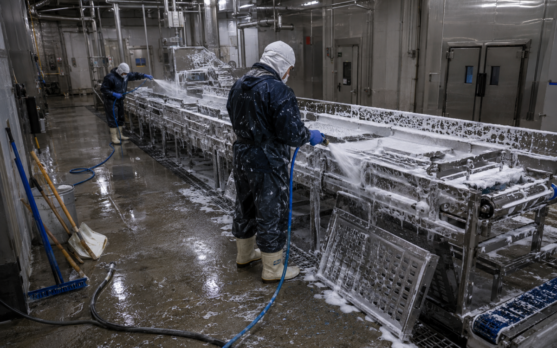
Agricultural waste is an easy material to like from a distance. Rice husks, bagasse, wheat straw, bamboo, agave fibre and other residues carry the kind of story packaging teams want: less fossil plastic, more circular use of farm byproducts, a link between food production and food packaging that looks almost too neat. Frozen food has a habit of making neat stories untidy. A tray made from plant residue still has to resist moisture, seal properly, survive freezer handling, keep sauces and fats under control, pass food-contact checks and leave behind a disposal route that retailers can explain without embarrassment.

The farm residue story is only the first page
Agricultural-waste packaging sounds obvious. Farms and food processors generate residues. Packaging needs lower-impact materials. Put the two together and the answer seems almost moral. Why make more fossil plastic when plant leftovers can be turned into trays, bowls, clamshells, inserts or paper-based structures?
That story has commercial weight. Bagasse, rice straw, wheat straw, bamboo and other non-wood fibres are already visible in foodservice and molded-fibre packaging. They have moved beyond the novelty stage. A takeaway bowl made from sugarcane fibre no longer surprises anyone. A paperboard-style tray made partly from non-wood fibre is no longer a laboratory curiosity.
Frozen food, though, gives the material a different exam. It does not ask whether the feedstock sounds responsible. It asks whether the pack can carry a product through freezing, storage, transport, retail handling and reheating without sagging, leaking, absorbing, cracking or confusing the consumer at disposal. That is a much less romantic conversation.
Origin matters. It does not settle the case.
Waste becomes feedstock only when the supply chain behaves
The word waste can be misleading. Once a rice husk or bagasse stream enters industrial packaging, it is no longer waste in the casual sense. It is raw material. It needs volume, cleanliness, consistency, location, price stability and processability. If the fibre arrives with too much moisture, variable length, contamination, odour or seasonal inconsistency, the sustainability story starts to look thin on the production floor.
A packaging converter does not buy a nice idea. It buys input that can be pulped, formed, dried, pressed, coated and shipped at scale. A food manufacturer buys something even stricter: a pack that behaves the same way on Monday morning and during a late Thursday run when the line is already under pressure.
There is also the question of competing uses. Some residues are not free leftovers waiting for a noble purpose. They may already be used for animal feed, soil amendment, energy, compost or other industries. Moving them into packaging can be sensible, but it still creates a supply chain. It brings transport, storage, preprocessing and procurement risk.
The more mature suppliers understand this. The stronger argument for agricultural residue is not sentiment. It is regional availability, lower pressure on wood fibre, potential cost competitiveness and the ability to build packaging near the feedstock and the converting base. That is where the material starts to become industrially interesting.
Frozen food wants trays before it wants miracles
The most believable frozen applications are rigid or semi-rigid. Trays for frozen bowls. Ready-meal bases. Inserts. Dividers. Secondary packaging. Certain bakery formats. Foodservice portions. Products where a fibre-based structure can be combined with a lidding film, barrier layer or coating that carries the technical burden.
Footprint’s plant-based fibre packaging for frozen products is a useful example because it speaks the language of the category: moisture and oil resistance, freezer-to-microwave use, freezer-to-oven options and film sealability. That is the kind of specification frozen food needs. It is not enough to say plant-based. The pack has to hold a sauce, resist oil, seal cleanly and survive the consumer’s cooking routine.
That does not mean every agricultural-waste material belongs in the freezer aisle. Flexible bags for vegetables, potato products, seafood or large family packs remain a different challenge. They need low cost, moisture control, puncture resistance, printability, efficiency on high-speed lines and compact logistics. Molded fibre is not a natural replacement for every pouch. It solves another set of problems.
Retailers know the difference. A frozen bowl in a plant-fibre tray can carry a stronger sustainability story if the pack performs. A value bag of mixed vegetables cannot absorb a material experiment that adds cost and weakens shelf life. Frozen food is full of these quiet commercial lines. Cross them, and the buyer stops listening.
The coating is where the claim gets tested
Agricultural fibre alone rarely does the whole job. Food packaging needs resistance to water, oil, grease, sauces, salt, acidity and sometimes heat. Frozen food adds condensation, ice crystals, long storage and temperature movement. The tray or bowl may be made from plant residue, but the pack’s credibility often depends on what is placed on top of the fibre.
That is where the story becomes more delicate. A coating can make a fibre tray usable. It can also make recycling or composting harder to explain. A barrier can protect the food. It can complicate the end-of-life claim. A grease-resistant treatment may solve a ready-meal problem and raise chemistry questions at the same time.
The PFAS issue has made this impossible to ignore. Fibre-based food packaging has historically used fluorinated chemistry in some grease and moisture applications. The market is now moving away from that, pushed by regulation, retailer demands and public pressure. That shift is necessary, but it leaves suppliers with a difficult task: replace the chemistry without losing the performance that made fibre food packaging usable.
This is the sentence many brands would rather not hear: agricultural-waste packaging will be judged less by what it comes from than by what had to be added to make it work.
Plant-based, plastic-free and compostable are not the same promise
The category is crowded with attractive language. Plant-based. Fibre-based. Plastic-free. Compostable. Biodegradable. Renewable. Non-fossil. These words can point in the same direction, but they do not mean the same thing.
A molded-fibre tray may be plant-based and recyclable in some systems. Another may be compostable but not widely collected. A coated paper structure may be technically recyclable but only if sorting and pulping systems accept it. A residue-based resin may be home compostable in certain conditions, while another material may need industrial composting. If the consumer sees one instruction and the waste system requires another, the claim loses force.
Traceless is interesting here because it positions its material as made from agricultural residues, plastic-free, biobased and home compostable, with potential uses in coatings and formed products. PlantSwitch takes a different route, using agricultural residues such as rice hulls to make compostable resin for foodservice and single-use formats. PulPac’s dry molded fibre work points toward faster and potentially more scalable fibre-forming technologies. None of these examples should be dragged carelessly into frozen packaging as proof. They show direction, not universal readiness.
Frozen food companies have to be especially careful because the package may combine tray, film, sleeve, label, coating and sometimes absorbent or functional elements. The end-of-life instruction has to cover the system, not the nicest component.
Regulation is making the origin story smaller
Europe’s PPWR changes the mood around packaging. It pushes the market toward recyclability, waste reduction, clearer labelling and closer control over materials of concern. A package made from farm residue does not get a free pass because the feedstock sounds better than fossil plastic.
That will matter in buyer meetings. A retailer may like the sound of bagasse, bamboo or rice straw. The technical team will ask about migration, coating, sorting, composting, sealability and whether the pack can be supported under future rules. The sustainability team will ask whether the claim can survive consumer use and waste-system reality. Procurement will ask whether the price premium holds when volume grows.
For frozen food, the best agricultural-waste formats will probably look less heroic than the early marketing suggests. They will be carefully engineered trays, bowls, inserts and secondary structures. They will sit in specific categories first: frozen ready meals, premium bowls, bakery, foodservice and products where a rigid fibre format already fits the pack architecture.
In the next few years, growth will remain stronger in foodservice and general molded fibre than in mainstream frozen primary packaging. By the early 2030s, better coatings, dry molded fibre capacity and regional feedstock systems could bring more fibre-based formats into chilled and frozen food. Long term, agricultural residues may become part of the normal material mix. Not as a miracle replacement, but as one more feedstock in a packaging market that is becoming more regional, more regulated and less patient with vague claims.
The freezer will accept agricultural-waste packaging when the system is boringly good: stable feedstock, reliable forming, clean barriers, honest disposal, strong food-contact files and product protection that survives the cold. The story can open the door. Performance has to keep it open.