The frozen food sector has spent years defending itself with one strong argument: longer shelf life protects value. That argument still holds, but it is no longer enough. A pallet sitting too long in a cold store, a promotion forecast that loads the wrong freezer cabinet, a delivery delayed on a warm dock, a store team finding damaged cases after the weekend rush - these are not abstract sustainability failures. They are expensive signals that someone, somewhere, made a late decision with incomplete information.

Food waste is starting to look less like loss and more like evidence
Food waste used to sit at the edge of the commercial conversation. It appeared in sustainability reports, donation programs, packaging claims and the occasional retailer campaign. Inside the business, however, it was often treated as leakage. Unpleasant, measurable in pieces, sometimes embarrassing, but rarely central to the planning conversation.
That position is weakening. Globally, more than one billion tonnes of food are wasted each year at retail, foodservice and household level. FAO also points to substantial losses before retail. The climate argument is already established, but the commercial argument is becoming harder to ignore. Waste is capital that has already paid for ingredients, labor, freezing, storage, packaging, transport and shelf space. By the time a frozen product is written off, the company has paid for almost everything except the sale.
This is where AI becomes more interesting than the usual technology story. The useful version is not a shiny dashboard promising a smarter supply chain. It is a harsher instrument. It exposes where planning is weak, where store execution is late, where inventory is aging quietly and where cold chain exceptions are treated as paperwork rather than risk.
In frozen food, waste rarely announces itself dramatically. It can look like slow-moving private label vegetables stranded after a promotion, battered pizza cartons no longer fit for display, seafood cases sent to the wrong store cluster, or foodservice inventory held through a demand dip until the economics turn ugly. Frozen shelf life gives the sector more time. It does not remove the cost of getting the decision wrong.
The freezer gives time, but time can hide poor planning
The strongest commercial advantage of frozen food is also its most convenient excuse. A chilled product forces urgency. A frozen product allows a buyer, planner or store manager to believe there is still room to wait. Sometimes there is. Often, the loss is simply moving from visible spoilage into blocked working capital, energy cost, margin erosion and emergency discounting.
A frozen warehouse can look disciplined while holding the wrong stock. Rows of pallets, clean racking, stable temperatures, barcode discipline. Yet inside that order, value may already be deteriorating. The product is safe. The numbers may even look acceptable. But a SKU that missed its seasonal window, a limited-edition range that sold well in two regions and badly in six, or a foodservice format stranded after menu changes can become a quiet drain long before it becomes a disposal issue.
AI-based planning is useful here only when it reaches beyond the forecast spreadsheet. Demand sensing can read POS data, promotion history, weather patterns, local events, channel shifts and store-level velocity. That matters. But the larger prize is connecting the forecast to production sequencing, freezer capacity, case age, route planning and retail allocation.
A forecast that says demand will fall next week is not enough. The business needs to know which production run should be delayed, which stock should be pushed to which customer, which depot should stop replenishing automatically, which SKU should be protected for availability and which one should be allowed to sell down. That is a different kind of intelligence. Less glamorous, more valuable.
Production planning is where waste becomes expensive early
Food waste does not begin at the bin. In many frozen categories it begins in the planning meeting, when sales ambition, retailer pressure and factory economics collide.
A plant manager wants efficient runs. Sales wants enough stock for the promotion. Procurement wants to use raw material while it is available. Finance wants inventory under control. The retailer wants service level without excuses. None of these positions is irrational. Together, they can still create waste.
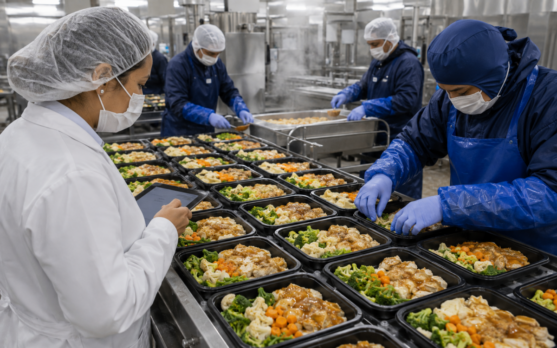
In potato processing, vegetable freezing, bakery, ready meals and protein, the factory cannot respond like a software system. Changeovers take time. Labor has to be scheduled. Raw material quality varies. Freezing capacity is finite. Packaging may be tied to a customer, language group or promotion. QA release is not instant. AI will not remove those constraints, but it can make the trade-offs visible sooner.
The more mature use case is not simply predicting demand. It is deciding whether production should happen at all, whether it should be shifted into another format, whether a batch should be allocated to foodservice rather than retail, or whether a run should be shortened before the warehouse inherits the problem. In a high-volume frozen plant, a small planning error repeated weekly can become more damaging than one obvious write-off.
That is also where many AI projects will disappoint. If data quality is poor, if production systems do not talk to commercial systems, if retailers share sell-out data too late, the algorithm becomes another layer of optimism. Better mathematics cannot repair a planning culture that treats the forecast as a negotiation.
Cold chain data changes the waste conversation
There is a hard physical side to this discussion. FAO has linked hundreds of millions of tonnes of food loss and waste to insufficient refrigeration, poor temperature monitoring and inadequate storage. For frozen food, that should land heavily. Cold chain is not just infrastructure. It is value protection.
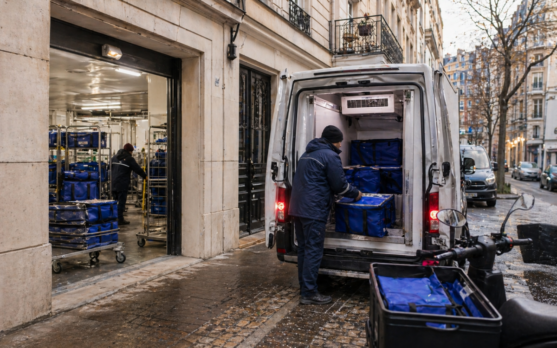
Most companies already know when a serious temperature abuse occurs. The more useful question is what happens in the grey zone. A truck delayed at a dock. A freezer door cycling badly in a busy store. A pallet sitting longer than expected during loading. A cabinet that is technically within tolerance but running unevenly. A store team that notices frost damage only after the product has lost shelf appeal.
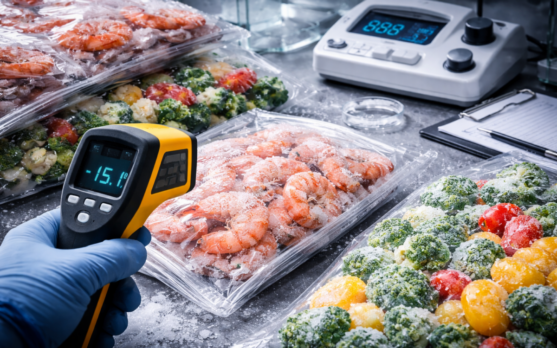
IoT sensors, temperature logs and AI analytics can turn those fragments into risk scoring. A product does not need to be unsafe to lose commercial value. Ice crystals, damaged packaging, texture degradation, label scuffing and consumer distrust all matter. In frozen retail, appearance can decide whether a product sells at full margin, needs discounting or is quietly removed.
The cold chain also creates accountability. When data follows the product, the old argument becomes harder: was the problem caused by the manufacturer, the haulier, the depot, the store or the cabinet? That can make commercial relationships tense. It can also make them cleaner. Waste reduction becomes less about claims and more about evidence.
Retail execution will decide how much AI actually saves
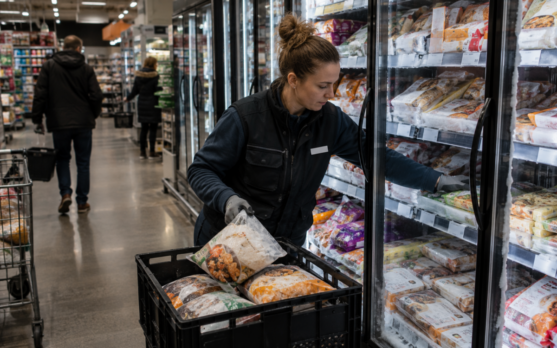
The freezer aisle is where many intelligent plans become ordinary losses. Store labor is tight. Cabinets are crowded. Shoppers move products and leave doors open. Damaged packs are pushed aside. Date checks compete with replenishment, online picking and front-end pressure. A system may recommend action at 9:00 in the morning; the product may still be sitting in the wrong place at 4:00.
That gap matters. AI can recommend smaller orders, different replenishment cycles, better allocation and earlier markdowns. It can highlight aging stock or predict that a promotion will cannibalize a neighboring SKU. But if the store process is weak, the model only describes a loss more accurately.
Retailers are already moving in this direction. Machine-learning forecasting and replenishment tools are being adopted in convenience, grocery and fresh-led formats to reduce spoilage and automate manual ordering. In frozen, the same logic should be used more aggressively, especially where promotional volatility is high. Frozen pizza, ice cream, vegetables, ready meals and seasonal party food all suffer when planning ignores local demand patterns.
Dynamic markdowns will be part of the picture, but they need careful handling. Reducing the price of aging or damaged stock is different from opaque price manipulation. Consumers may accept technology that prevents edible food from being wasted. They are far less tolerant when digital pricing feels like a game played against them. In frozen food, markdown logic has to be tied to product condition, date, store execution and waste prevention, not to cleverness for its own sake.
The ownership question is moving into buyer meetings
The most important shift may not be technical. It may be contractual and commercial.
Retailers want high availability, low shrink and strong margin. Manufacturers want stable orders, fair forecasts and fewer last-minute changes. Logistics providers want realistic time windows and fewer disputes over temperature claims. Everyone says they want less waste. Far fewer companies are ready to decide who owns the signal when the data shows where the waste was created.
Once AI systems connect demand, inventory, temperature and store-level movement, buyer meetings change. A supplier can show that a promotion was over-ordered. A retailer can show that service level failed before store execution had a chance. A logistics partner can show that dwell time, not transport temperature, created the risk. These conversations will not always be comfortable. They will be more useful than another sustainability pledge.
By 2030, especially in Europe, food waste targets and reporting pressure will make this less optional. Waste data will sit closer to margin discussions, category reviews and supplier scorecards. A frozen food manufacturer that can prove it helps retailers reduce shrink will have a stronger commercial argument than one that only talks about long shelf life.
The companies that benefit will not be the ones with the most dramatic AI language. They will be the ones that turn waste into an operating signal early enough to act. A factory schedule changed before overproduction. A depot allocation corrected before stock ages. A store alert handled before the pack is unsellable. A markdown applied while the product still has demand. A donation triggered while the cold chain is intact.
That is not a futuristic vision. It is a more disciplined version of food business. And in frozen food, discipline is where much of the value has always been made.