A frozen croissant can look perfect when it leaves the plant and tired by the time a shopper sees it under retail lights. A white patch on the crust, ice crystals inside the bag, a softened paper sleeve, a seal that has lifted at the corner. None of these failures makes a good sustainability story. They make a rejected pack, a disappointed customer, or a buyer asking why the new material performed worse than the old one.
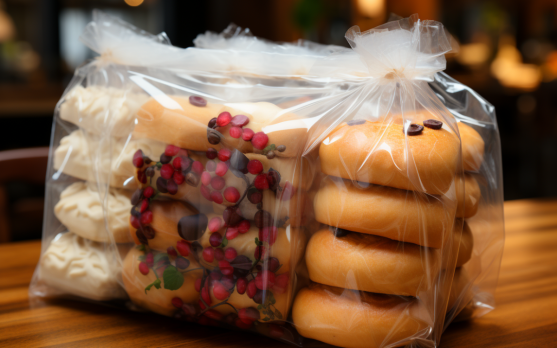
The freezer is the first auditor
Packaging people talk about recyclability. Retail buyers talk about shelf impact. Factory teams talk about sealing windows, film breaks and line speed. In frozen bakery, all three conversations meet in a place that is not forgiving: the freezer.
Bread, buns, laminated pastry, par-baked rolls, pizza bases and ready-to-bake dough do not behave like shelf-stable snacks. They carry moisture, trapped air, delicate crust structures, fats, fillings and surfaces that can punish the wrong pack quietly over several weeks. A pouch that looks responsible in a buyer presentation can still allow too much water vapour loss. A paper-based wrap can feel premium in the hand and still struggle when condensation starts working on the material. A downgauged film can support a carbon claim and still fail if it punctures against a hard frozen edge in secondary handling.
The old article on frozen bakery packaging was written in the language of a greener future. That language has aged badly. The category does not need another speech about plastic reduction. It needs a colder, more practical discussion about what packaging must do before anyone prints a claim on the front.
Freezer burn is a packaging problem before it becomes a consumer complaint
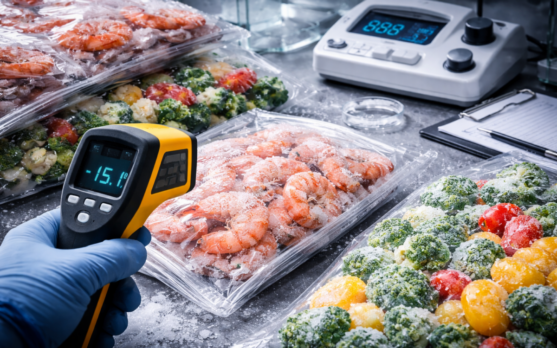
Freezer burn is often treated as a household storage issue. In commercial frozen bakery, it is closer to a quality control warning. When ice crystals evaporate from the surface of a product, moisture leaves the food and the surface dries. The result can be pale, grainy, leathery or simply stale-looking. In a baguette or roll, that may show as dry edges. In a croissant, it can flatten the eating experience before the product even reaches the oven. In a pizza base, it may appear as ice inside the pack and a crust that no longer feels cleanly protected.
The damage is not only visual. Frozen bakery sells an expectation that is unusually hard to defend: fresh-baked quality from a frozen system. A supermarket customer does not care whether moisture moved during storage, whether temperature fluctuated in a cabinet, or whether the packaging was technically recyclable. They see frost in the bag. They feel a dry crust. They decide the product is old.
That is why the useful packaging conversation begins with water vapour transmission, air removal, seal integrity and resistance to cracking at low temperatures. The material has to protect aroma as well. Bakery fats pick up unwanted notes. Printed packs sit beside fish, vegetables, meat, ice cream and ready meals in real freezer aisles, not in clean category renderings. The freezer cabinet is a mixed neighbourhood.
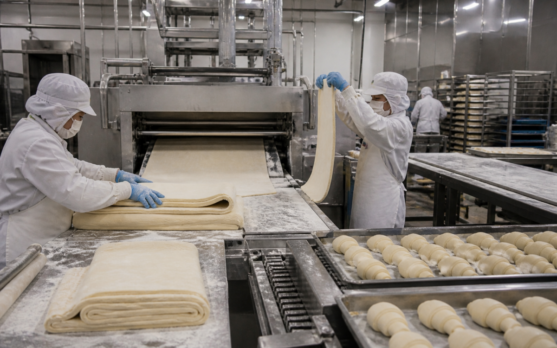
In factories, this shows up in smaller ways. A frozen bakery line running pillow packs or flow wraps needs film that seals through normal variation, handles speed and survives transit. A pack for delicate pastry may need mechanical protection as much as barrier. A bulk foodservice case needs a different answer from a retail pouch with a window. Treating "frozen bakery packaging" as one problem is convenient. It is also wrong.
Paper has earned attention, not a free pass
Paper and fibre-based formats have a role in frozen bakery, especially where brand owners want a warmer, more bakery-like appearance. They can also reduce plastic use in certain applications when coatings, barriers and sealing systems are engineered correctly. The serious suppliers are not selling ordinary paper as a miracle. They are selling barrier paper, with specific claims around moisture, grease, oxygen, aroma, heat sealing or cold sealing.
That distinction matters. A frozen bread bag, a pastry wrap and a secondary carton are not the same technical object. Ordinary paper will not protect frozen food for long storage. Barrier paper may. Even then, the buyer needs to ask uncomfortable questions. What happens after temperature cycling? How does the pack perform when products are loaded slightly warm? Does the seal hold after storage? Can the material be repulped in the markets where the product is sold? Is the coating compatible with paper recycling, or is the pack only attractive until waste management enters the room?
Delfort's frozen bread and bakery paper offer is one useful signal because it talks directly about moisture, flavour, freezer burn, FFS runnability and shelf life. Mondi's FunctionalBarrier Paper range is another, positioned for frozen food among other applications, with barriers against grease and water vapour and a design-for-recycling angle. These are not proof that fibre will replace plastic across the frozen bakery aisle. They show where the serious work is happening: not in "paper look" packaging, but in engineered fibre structures that must survive cold, machinery and recycling scrutiny at the same time.
The risk is a familiar one. A retailer asks for less plastic. A brand switches material. The pack looks better in a sustainability slide and worse in a freezer. If that leads to more product damage, more rejected cases or more consumer disappointment, the environmental story collapses under its own packaging dust.
Mono-material films may be the less glamorous answer
Many frozen bakery SKUs will still need flexible plastic. That will not be popular with every marketing team, but it is likely to remain true. The more credible shift is away from difficult multi-material laminates and toward recyclable mono-material structures, usually based on PE or PP, including MDO-PE combinations where stiffness, clarity and downgauging are needed.
There is nothing romantic about a better PE film. That is part of its strength. A high-performing mono-material structure can be transparent enough for merchandising, tough enough for frozen distribution, sealable on existing lines and easier to place within a recycling design framework. Walki's MDO-PE and MDO-Barrier PE materials, for example, point toward the kind of structure frozen and chilled food suppliers are likely to evaluate more closely as PPWR pressure builds. Amcor's 2026 investment in high-barrier recycle-ready films in Italy says something similar at converter scale: the market is preparing for recyclable high-performance packaging, not packaging that merely sounds green.
Still, mono-material does not mean automatically solved. Printing coverage, inks, adhesives, barrier layers, labels, windows and closures can all affect recyclability. So can local collection and sorting. A pack can be technically improved and still commercially fragile if it reduces line efficiency, increases scrap, curls badly, loses stiffness in handling or fails to communicate quality in a freezer cabinet.
Frozen bakery brands should be careful with the word recyclable. By 2030, that word will have to survive more than a marketing review in Europe. It will be measured against design rules, recycling grades and practical waste infrastructure. A claim printed too early can become a liability later.
Merchandising is part of the material choice
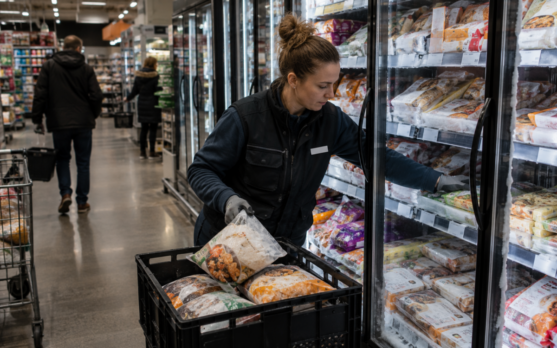
In a retail freezer, packaging has seconds to work. Not minutes. Frozen bakery rarely gets the smell advantage of fresh bakery. It cannot rely on the sound of crust or the look of steam. The pack has to carry the product's promise through photography, visibility, shape, colour, tactile cues and the absence of defects.
That explains why windows remain tempting. Shoppers want to see the croissant, the seeded roll, the pizza crust, the swirl of a pastry. But every window, label, coating or mixed component can complicate recycling. The same tension sits around resealable formats. They make sense for multi-serve rolls or breakfast bakery, especially in households that do not use the whole pack at once. Yet they add material, cost and complexity.
There is also the foodservice side, often less visible but commercially important. Cafes, hotels, convenience bakery counters and quick-service kitchens do not need the same shelf theatre as retail. They need packs that open easily in cold rooms, stack well, protect fragile products and help staff avoid waste during rush periods. A beautiful retail pack can be irrelevant in a back-of-house freezer where gloves, speed and space decide whether packaging is liked or cursed.
The smartest packaging briefs now separate these jobs instead of forcing one sustainability answer across every channel. A premium retail pastry may justify a paper-based outer with careful product protection. A high-volume par-baked roll may be better served by a recyclable PE structure. A pizza base may need stiffness and protection against puncture. A foodservice case may need simple, robust materials and clearer portion handling. Good packaging strategy is often less elegant than a brand platform. It is SKU by SKU, cabinet by cabinet, line by line.
PPWR will make vague packaging claims harder to defend
The European Packaging and Packaging Waste Regulation changes the backdrop. It applies from August 2026 and pushes the market toward recyclable packaging by 2030, with recycled content and recyclability grading becoming part of the commercial landscape. For frozen bakery suppliers selling into European retail and private label, this is not distant policy noise. It is becoming part of packaging approval, tender documentation and category risk.
Buyers will ask different questions. Not only "does it look sustainable?" but "can you prove the structure?" "Which stream is it designed for?" "What happens to the barrier?" "Can our markets collect and sort it?" "What evidence sits behind the claim?" These questions will travel upstream to converters and material suppliers. They will also travel downstream to retailers, who do not want freezer cabinets full of packs that look progressive and fail compliance review two years later.
Short term, expect more controlled trials rather than sweeping conversions. Private label and larger bakery groups will test barrier papers on suitable formats, mono-material films on higher-volume flexible packs, and lighter or redesigned cartons where secondary packaging is overbuilt. Medium term, the weak formats will come under pressure: unrecyclable laminates, decorative choices that interfere with sorting, oversized cartons, and packaging where the sustainability claim is bigger than the technical proof.
Longer term, the frozen bakery aisle will probably not become plastic-free. It will become more selective. Plastic where performance and recyclability can be defended. Fibre where the barrier and end-of-life story are credible. Less material where less material does not damage the product. More documentation everywhere.
The better brief starts with the product, not the claim
The strongest packaging brief for frozen bakery is brutally practical. What is the product? How long is the storage window? How fragile is it when frozen? How much moisture can it lose before quality drops? Does it go from freezer to oven, freezer to thaw, or freezer to proofing? Is it sold through retail, foodservice or both? What does the pack face in pallets, cold stores, night replenishment, discount freezers and home storage?
Only after that should the material conversation begin. A greener pack that lets the product dry out is not progress. A recyclable film that cannot run properly on the line will not last. A paper solution that looks good in a mock-up but loses integrity around condensation will not survive commercial roll-out. The freezer is not sentimental. It accepts engineering and exposes theatre.
Frozen bakery has a real opportunity here. Packaging can reduce waste, sharpen shelf appeal, support compliance and protect the eating quality that justifies the category. But the useful future will be quieter than the old slogans. Fewer grand claims. More barrier data. Fewer generic sustainability promises. More packs that still look right after weeks in the cold.