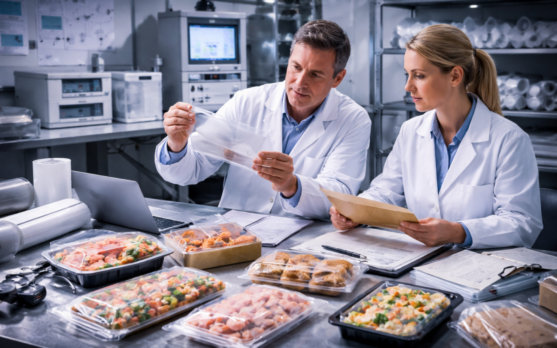
The burger box is a nasty little proving ground. It gets hot fat, sauce, steam, delivery bags, rushed hands, five minutes under a heat lamp and another ten in the back of a scooter. Then it lands in a bin system that may be more confused than circular. Seaweed-coated boxes and mycelium packaging belong in this discussion, but not as the same solution wearing different green clothes. Seaweed is already closer to the foodservice box. Mycelium is better placed around the pack, where foam and protective inserts still do a lot of unnoticed work.

The box has to survive lunch first
A burger box is not a sustainability claim. It is a piece of working kit. Staff want it to open quickly, close properly, stack without sliding and stay firm when the filling is wet. The customer wants the bun intact and the fries not tasting of cardboard. The operator wants fewer complaints, less mess on the counter and a packaging bill that does not ruin the margin on a meal deal.
That is where seaweed-coated board becomes interesting. Not because seaweed sounds better than plastic, although it does. Because the coating is aimed at a very specific job: keeping grease and moisture from turning fibre packaging into a weak, stained container.
Notpla’s burger box is a useful example. It keeps the familiar board format, but uses a seaweed-based coating instead of a conventional plastic lining or PFAS-treated grease barrier. The product is positioned as PFAS-free, recyclable and home compostable, with the company claiming home composting in about six weeks. Operators do not need a new serving ritual. They need the same box to behave better at the end of life.
The timing is not accidental. Food-contact packaging is being pushed away from PFAS, and Europe’s new packaging framework will make casual claims harder to defend. From August 2026, food-contact packaging in the EU faces specific PFAS restrictions above defined thresholds. That will not make every seaweed-coated box a winner, but it gives serious barrier alternatives a reason to be heard.
Lunch service remains the harsher authority. If the box leaks at 12:40 on a Friday, the buyer’s sustainability slide will not save it.
Seaweed has the cleaner foodservice route
Seaweed works in this conversation because it can do one job inside an existing format. The board gives the box its shape. The coating gives it resistance. Nobody behind the counter needs to explain a new material system while the queue is growing.
That matters. Foodservice is not generous with fragile innovation. A material that asks for too much behaviour change usually stays in pilot mode. A better barrier on a familiar box has a better chance.
The strongest use cases are not abstract. QSR chains, stadium concessions, workplace canteens, universities, events, food halls and institutional kitchens all use high volumes of short-life packaging. Some can control waste better than mainstream retail. Some can measure what happens to the box after use. Some simply need a plastic-free, PFAS-free answer that does not fail under sauce.
There is still no magic bin. Home compostable, recyclable and compostable do not mean the same thing in practice. A box can be well designed and still end up in residual waste if the operator, contractor or local infrastructure cannot process it. That is the part of the story brands like to smooth over. It should stay visible.
Seaweed’s commercial case is strongest when it replaces a known weak point: a plastic lining, a PFAS-treated barrier, a non-recyclable laminate or a fibre box that cannot handle greasy food. The origin story opens the door. Grease performance gets the reorder.
Mycelium should not be pushed into the burger box
Mycelium packaging has been made to carry too many expectations. The word “mushroom” does a lot of public-relations work, sometimes too much. In practice, the better commercial use is more prosaic: moulded protection, corners, inserts, cushioning and insulation.
Ecovative’s Mushroom Packaging is made from agricultural waste and mycelium and is positioned as a replacement for petroleum-based protective foams. The company says the material grows to shape in about seven days and composts in about 45 days under suitable conditions. Mushroom Packaging, Grown.bio and Magical Mushroom Company all place the material in the foam-replacement lane: protective packaging, insulating parts, corners, inserts, coolers, shaped support.
That is useful work. It is not a food-contact burger box.
Grown.bio states that its mycelium material is not certified for direct food contact and is better suited to pre-packed food or protective applications. It also notes that the material is water permeable and not suitable for uses such as disposable cups. Good. A material with boundaries is easier to trust than one sold as a solution to everything.
For frozen food companies, that puts mycelium in the surrounding system. Sample shippers. Foam-free inserts. Protective corners. Insulated boxes for pre-packed products. Packaging for temperature loggers, sensors and cold-chain equipment. A mycelium component may never appear in the freezer aisle and still remove a piece of foam from the chain.
A frozen sample going to a buyer does not need a mushroom burger box. It may need a better way to hold the tray, the gel pack and the temperature logger in place.
The frozen link sits between kitchen, courier and buyer
The connection with frozen food is not direct retail replacement. It is messier than that, and more realistic.
A frozen burger patty may move through a conventional cold chain and end up served in a seaweed-coated foodservice box. A plant-based frozen product may be trialled in a QSR system that wants compostable serveware. A frozen dessert producer may send samples to a category buyer in a shipper with mycelium protection instead of foam. A foodservice supplier may use these materials in the same commercial conversation, but in very different parts of the chain.
That distinction is worth keeping. Seaweed coatings sit closer to the served product. Mycelium sits closer to protection and transit. Blurring the two makes the story simpler and less useful.
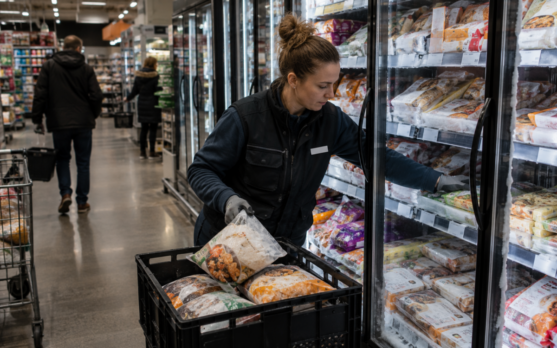
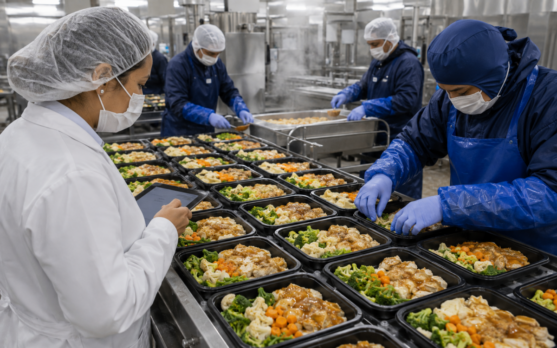
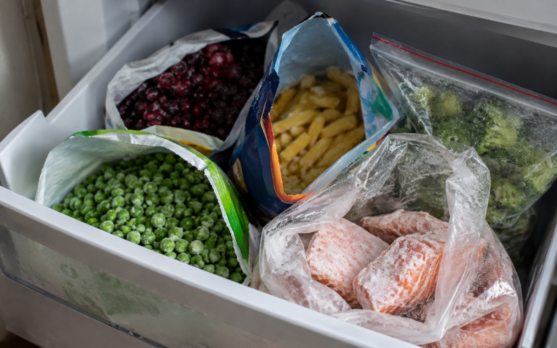
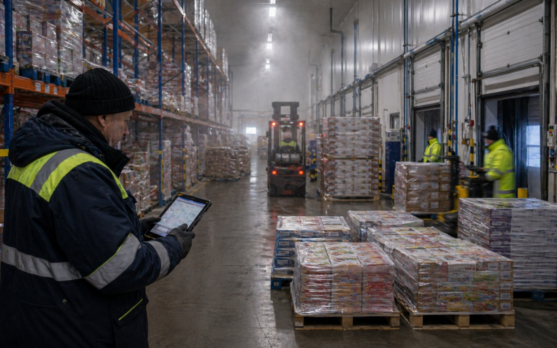
Frozen food is more than the primary pack in the supermarket cabinet. It includes samples, sales trials, foodservice packs, delivery formats, waste handling, cold-chain equipment and the packaging used before a product ever reaches a menu or a shelf. Bio-based materials can enter through those side doors before they touch the main retail pack.
A useful pilot will look ordinary
The best trial for a seaweed-coated burger box is not a launch photograph. It is a lunch service with a messy product.
Test the box with fat, sauce, steam and time. Stack it. Hold it under heat. Put it in a delivery bag. Let staff use it without coaching. Check odour. Check leakage. Check whether the lid softens. Check whether the customer notices anything except the food. Then look at cost per serve and the waste route after use.
Mycelium needs a different trial. Compression. Drop performance. Condensation. Fit. Storage space. Thermal behaviour. Lead time. Weight. Cost. If it is used around chilled or frozen shipments, test the full pack-out, not the material alone: product mass, coolant, carton, lane time, handling, temperature exposure.
Small wins matter here. One foodservice box replacing a plastic-lined format. One mycelium insert replacing foam in a frozen sample shipment. One insulated protective pack that survives a real delivery lane. Packaging often changes this way, quietly, through a route that works twice and then gets specified again.
A better material is not a finished system
The hardest questions come after the food is eaten or the sample is unpacked. Where does the box go? Who sorts it? Will the waste contractor accept it? Does the compostable claim match the local system? Does the protective insert go home with the buyer, back to the supplier, into compost, into residual waste?
These questions are dull, which is why they are often skipped. They decide whether the material has done anything useful beyond the first impression.
Seaweed-coated boxes and mycelium protection both have a stronger end-of-life story than plastic-lined board or foam. That does not remove the need for instructions, certification and operational discipline. Food companies have already learned that green claims can become compliance problems once regulators and customers start asking for proof.
The better suppliers will lead with use conditions, not just origin. How long the coating resists grease. What happens under steam. Whether the box affects recycling or composting. How a mycelium insert behaves when damp. What certification applies. What the real disposal route looks like. What the cost becomes after the trial.
Origin gets attention. Performance earns the second order.