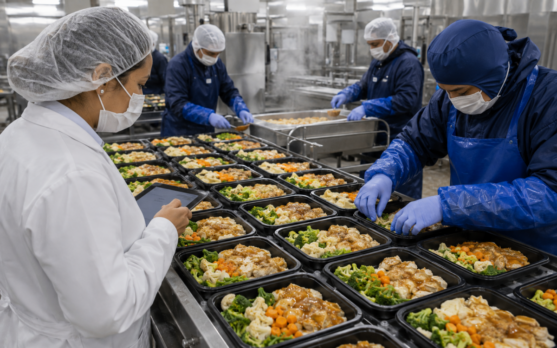
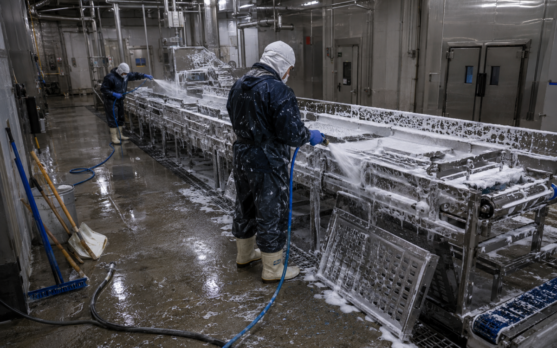
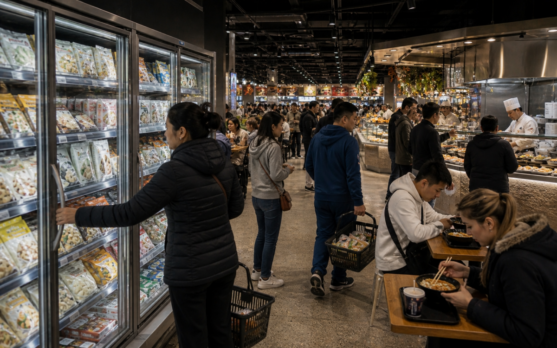
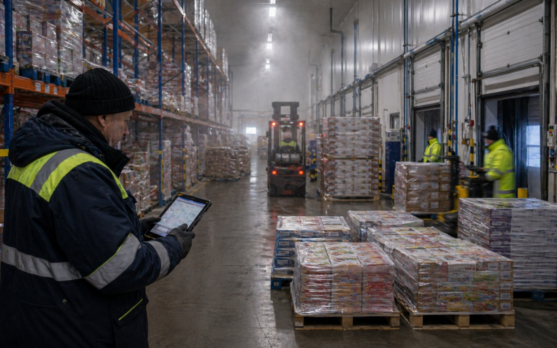
A cleaner ingredient list looks good in a buyer presentation, on a private-label brief and under the thumb of a shopper scanning a pack in the frozen aisle. Then the product goes through the plant, the blast freezer, three months of storage, a half-open retail cabinet, a rushed air-fryer cycle and a family dinner where nobody cares how elegant the label sounded. In frozen food, clean label is only credible if texture, aroma and eating quality still hold when the cold chain has done its worst.
The ingredient list is now a quality document
Clean label used to sit comfortably in brand language. Shorter list. Familiar ingredients. No artificial colours. Fewer words that make shoppers pause. That language still matters, especially as retailers put pressure on suppliers to remove ingredients that attract complaints, poor app scores or nervous questions from consumers.
But in frozen food, the label is never just a label. It is a technical map. Every stabiliser, starch, emulsifier, colour, coating aid or flavour carrier is doing work somewhere in the system. It may be holding water in a sauce. It may be keeping a breadcrumb attached to a vegetable portion. It may be stopping a cream filling from splitting after thawing. It may be protecting aroma through storage rather than creating aroma at the moment of manufacture.
Take one out and the packaging may look cleaner. The product may not.
That is where the conversation has changed. A clean-label project that cannot be validated by QA is not reformulation. It is a commercial risk with nicer wording. Retailers may ask for simpler labels, but they still expect the lasagne sauce to stay glossy, the croquette to bite properly, the pizza topping to avoid weeping, and the frozen dessert to arrive with the same indulgence the specification promised. The buyer does not want a philosophical answer about recognisable ingredients when the complaint rate starts moving.
The freezer exposes weak reformulation
The frozen category is harsh on shortcuts. A chilled product can sometimes hide a marginal formulation for a few days. Frozen food gets tested slowly, mechanically and repeatedly. Water migrates. Ice crystals grow. Starches retrograde. Emulsions become tired. Coatings soften at the wrong moment. Aromas flatten, especially in products with fat, herbs, dairy notes, meat analogues or delicate bakery profiles.
Anyone who has stood in a plant trial knows the trap. The first pilot run looks promising. The sauce is clean, the label is shorter, the tasting panel is polite. Then the same product is pulled after several weeks of frozen storage and reheated in a tired oven, not the perfect kitchen set-up used for launch photography. The sauce breaks at the edge of the tray. The potato component feels slightly drier. The spice note has moved from warm to dull. Nobody calls it a disaster. That is part of the danger. It is just worse enough to lose repeat purchase.
Clean label often removes the quiet ingredients that were protecting the product from exactly these conditions. Modified starch may have been giving freeze-thaw stability. A synthetic colour may have been more stable under processing and storage than the natural alternative. A flavour system may have carried top notes that survived the freezer better than a simpler blend. A coating aid may have been doing unglamorous work that only becomes visible when it disappears.
Frozen food does not reward ingredient innocence. It rewards functional control.
Private label will push harder, and QA will carry the burden
The pressure is no longer theoretical. Major retailers are rewriting their own ingredient expectations, especially in private label. When a retailer removes synthetic dyes or unwanted additives from own-brand portfolios, the instruction travels straight into supplier development rooms and factory QA departments. The public message is trust. The operational message is harder: reformulate without damaging price, quality, supply, sensory performance or complaint levels.
That is a brutal brief in frozen food. Private label has little tolerance for premium excuses. A supplier cannot simply swap in a more expensive clean-label system and expect the category manager to absorb the margin loss. Nor can it deliver a product that looks acceptable at factory release but loses texture after distribution. The specification has to protect both sides: the retailer's promise to the shopper and the manufacturer's ability to make the product repeatably.
The most exposed categories are obvious. Frozen ready meals with sauces. Coated vegetables and snacks. Frozen bakery with fillings, glazes or inclusions. Plant-based meat alternatives. Potato products that depend on crispness and internal moisture. Desserts where stabilisation, aeration and mouthfeel matter more than the label usually admits.
These are not niche technical corners. They are the products shoppers buy on trust, usually with a memory of what the product should feel like. A cleaner label that changes that memory has failed, even if every ingredient can be defended in a marketing deck.
QA has to map the function before approving the claim
A serious clean-label project should start with a simple question that is often skipped: what exactly does the current ingredient do?
Not what it is called. Not how it appears on pack. What it does.
One starch may manage viscosity in a sauce after reheating. Another may protect against water separation after freeze-thaw cycles. An emulsifier may stabilise fat distribution during processing. A phosphate, where permitted and used, may be tied to water binding and texture in a protein system. A colour may be part of visual consistency across batches. A flavour carrier may be masking notes from vegetable proteins or protecting aroma through storage.
If QA does not map those functions before reformulation, the team ends up validating a label rather than a product. That is backwards. The proper sequence is more uncomfortable: identify the technical vacancy, select the replacement, then prove the replacement holds under the abuse the product is likely to meet.
That proof cannot be limited to day-zero tasting. A credible validation plan should include frozen storage, controlled thawing, temperature fluctuation, reheating under realistic consumer instructions and, where the category demands it, abuse conditions that reflect retail and foodservice handling. The product should be judged in the state in which the consumer actually eats it, not in the state in which R&D feels most proud of it.
There is no romance in measuring syneresis, drip loss, coating adhesion, crispness retention, viscosity after reheating, colour drift, off-notes, shear force or sensory difference against the previous formulation. There is also no substitute for it.
Natural ingredients are not automatically more predictable
One of the quieter risks in clean-label reformulation is supplier variability. The word natural can calm a shopper and worry a QA manager at the same time.
Plant fibres, native and functional starches, natural colours, herb extracts, vegetable proteins and fermentation-derived ingredients can all bring variation from crop, season, geography, particle size, extraction method and supplier process. A batch that hydrates slightly differently can move a sauce. A natural colour that performs well in one matrix may fade or brown in another. A protein system that reads beautifully on label may bring bitterness, dryness or aroma issues once frozen and reheated.
The clean-label supply chain therefore needs tighter specifications, not looser ones. Certificates of analysis are useful, but they are rarely enough. The incoming ingredient should be connected to finished-product performance. Does the fibre hydrate at the same rate? Does the starch keep viscosity after a freeze-thaw cycle? Does the natural colour survive the thermal process and the intended shelf life? Does the flavour system still work when the product is cooked from frozen rather than gently thawed?
Some suppliers are already selling clean-label systems with stronger application data, especially for sauces, frozen meals and bakery. That is the right direction. Still, manufacturers should resist treating supplier claims as proof. The product must be tested on the line, with the company's process, packaging, storage time and cooking instructions. Frozen food has a habit of finding the gap between a supplier presentation and a warehouse pallet.
The consumer will not grade the intention
There is a particular kind of failure that appears in reformulated frozen products. The product is not unsafe. It is not visibly defective. It is simply less satisfying. A sauce loses body. A coated snack steams instead of crisping. A plant-based filling becomes dry at the edges. A frozen bakery item smells flat after baking. The pack says the right things, but the fork disagrees.
That matters commercially because clean label is supposed to build trust. If the eating experience drops, trust does not rise. It gets spent.
Digital label scanning makes this more visible. Shoppers can now interrogate ingredient lists in seconds. Retailers can see complaints, repeat rates and review patterns. Foodservice operators can spot inconsistency quickly because they use the same product repeatedly under operational pressure. A clean-label claim that once lived quietly on the back of pack now sits inside a broader system of scrutiny.
The temptation is to overcorrect and make every label as short as possible. That can be a mistake. A shorter list is not always a better product, and a familiar ingredient is not automatically more functional. The more useful ambition is honest simplification: remove what can be removed, replace what can be replaced, and defend what still has a necessary technical role.
In frozen food, that position may be more credible than theatrical purity. Buyers know products have to survive real logistics. QA teams know water, fat, starch and protein do not respond to slogans. Consumers may not know the mechanism, but they know when the texture has gone wrong.
The future of clean label will belong to validated reformulation
Over the next few years, clean label in frozen food will become less about broad promises and more about evidence. Retailer ingredient policies will keep tightening. Natural colours and functional native starches will improve. Enzyme-modified, physically modified and fermentation-based solutions will move further into mainstream product development. But the commercial line will remain the same: can the reformulated product perform at scale?
The best manufacturers will treat clean label as a controlled change programme. R&D will still lead creativity, but QA will define the proof. Procurement will have to understand functional equivalence, not just cost and availability. Marketing will need enough discipline not to promise a purity story the product cannot support. Operations will have to test whether the new system behaves under real shear, freezing rate, filling temperature, hold time and packaging conditions.
That sounds less glamorous than a cleaner pack. It is also where the value is protected.
Clean label in frozen food will not be judged only by what disappeared from the ingredient list. It will be judged by what stayed in the product: bite, aroma, creaminess, crispness, colour, reheating tolerance and the quiet consistency that makes a shopper buy the same pack again.