The most expensive frozen product in the chain is not always the one that ends up in the bin. Sometimes it is the pallet nobody moved soon enough, the short-dated stock still sitting behind newer cases, the carton crushed at the corner and quietly rejected by the buyer, the load that stayed technically frozen but no longer looks clean enough for retail. Waste in frozen food does not usually arrive with drama. It creeps in while people are still calling the product usable.

The pallet that waits too long
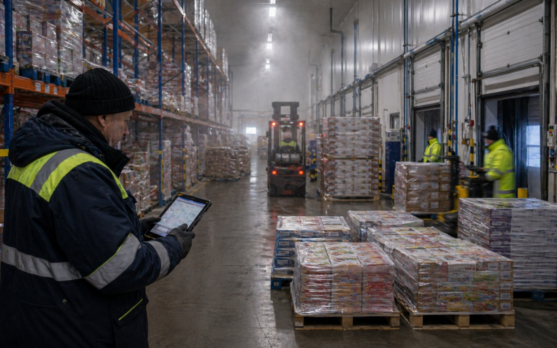
Every frozen warehouse has them. Pallets in the wrong place for just a little too long. A staging lane that was meant to be temporary. A QA hold that should have been reviewed in the morning. A truck that arrived late, then made three other jobs late. Nobody writes "waste" on the pallet. Not yet.
The product is still frozen. That is the comforting part. It is also the trap.
Frozen storage gives the business time, but it does not stop the commercial clock. A retail customer may have an acceptance window. A promotion may already be loaded in the system. A foodservice distributor may have menus planned for a particular week. A batch sitting in limbo can lose its best route to market before it loses its temperature.
This is why dwell time should be treated as a waste metric, not just a warehouse irritation. Product waiting in staging, in QA hold, in returns, in customs clearance, in a congested backroom, or in the wrong freezer zone is not neutral. It is ageing, blocking space and narrowing options.
A cold store manager can often see the problem before the system does. The same pallet appears in the same lane at two shift handovers. Cases get rewrapped. Someone writes a note on a temporary label. The product is still there tomorrow.
That is where waste begins. Quietly, under stretch film.
The freezer door is not a small detail
Door discipline sounds like a training topic nobody wants to hear again. In practice, it is one of the most ordinary ways frozen value leaks out of the chain.
A freezer door stays open while the team searches for a mixed pallet. A store employee pulls too many cases into the aisle during replenishment. A backroom freezer is crowded, so product sits outside while someone clears space. A dock door cycles all afternoon because receiving is behind. None of these moments looks serious enough to trigger a crisis.
Repeat them long enough and the product tells the story.
Frost on packaging. Ice build-up. Softened edges. More broken cases because condensation and handling have made the cartons weaker. A coated product that does not finish properly at home. A frozen vegetable bag that looks tired in the cabinet. A dessert that has lost the clean finish shoppers expect.
The industry talks a lot about -18°C. It talks less about the fifteen small exposures that happen around that number.
Good cold-chain management is not only equipment. It is how people behave around doors. Who opens them. How long they stay open. What waits next to them. Whether the store team treats frozen replenishment as urgent or as another shelf job. Whether a dock supervisor sees a waiting pallet as a problem, not scenery.
Date codes make frozen waste look respectable
Frozen food's long shelf life can make a company lazy. The product feels safe, so the date code becomes tomorrow's problem.
Then tomorrow arrives.
A warehouse discovers older stock behind newer stock. A retailer refuses a delivery because the remaining life is too short for its rules. A sales team asks for a discount programme after the best window has passed. Foodservice could have used the stock, but nobody offered it early enough. Donation is discussed late, under pressure, with fewer options and more paperwork.
That product may not be bad. It may not even be close to bad. But it has become difficult.
Frozen waste often hides in that word: difficult. Difficult to place. Difficult to explain to a buyer. Difficult to rotate. Difficult to sell without discount. Difficult to move because the system did not show the risk soon enough.
FEFO is not a poster for the warehouse wall. It is a commercial discipline. It has to connect stock age, customer acceptance windows, promotions, foodservice routes, secondary channels and donation partners. If those connections are weak, good product slides slowly toward loss while the business still believes it has time.
Damaged packaging is waste with a technical excuse
Plenty of frozen product is lost without being spoiled.
A crushed outer case. A torn bag. Wet board. Broken shrink wrap. A carton that looks as if it has been through a bad dock shift. The product inside may be safe. QA may be able to defend it. The buyer still may not want it.
Retail is unforgiving here. In a freezer aisle, the shopper does not inspect a case history. They see frost, dents, damaged seals, tired graphics, poor presentation. They pick the cleaner pack next to it. In foodservice, the conversation is different but not softer. A damaged case raises questions about handling, thawing, refreezing and trust. The product may pass a specification and still fail the customer's confidence test.
That kind of waste is rarely glamorous enough for a sustainability report. It sits in claims, markdowns, disposal notes, rejected deliveries and awkward credits.
It also points to operational habits. Bad stacking. Poor pallet build. Rough forklift handling. Weak wrap. Overfilled freezer cabinets. Mixed loads built without respecting carton strength. Rework areas where damaged stock waits until someone decides whether it is recoverable.
If a site keeps seeing the same damage pattern, it is not bad luck. It is an operating signature.
Temperature abuse is not always a safety story first
The cold-chain conversation often jumps straight to safety. That is understandable. It is also too narrow.
Frozen product can remain within a safety conversation and still lose eating quality. Texture shifts. Ice crystals grow. Sauces behave differently after reheating. Coatings lose bite. Bakery products bake less cleanly. Ice cream and frozen desserts are even less forgiving. Some products show the damage quickly. Others wait until the customer cooks them.
That makes temperature abuse difficult to price. There may be no dramatic failure. No obvious thaw. No clear incident to investigate. Just a slow increase in complaints, poorer repeat purchase, more retailer pushback, more product downgraded because nobody wants to take the risk.
Energy pressure will make this debate sharper. Warmer setpoints, tighter refrigeration costs and efficiency projects all have a place in the future of frozen logistics. But no serious operator should treat frozen food as one thermal category. A bag of peas, a pizza, a coated snack, a ready meal and an ice cream tub do not respond to the same temperature history in the same way.
Saving energy by pushing quality loss downstream is not waste reduction. It is waste relocation.
The useful waste report comes earlier
Most waste reporting arrives too late to change anything. It tells the business what was written off, not what could have been saved.
A better report would show the product at risk while someone still has choices.
Short-dated stock by customer window. Pallets in staging too long. QA holds without review time. Repeated door exposure. Damaged cases by dock, carrier or shift. Temperature events linked to product outcome. Returns separated into recoverable and unrecoverable stock quickly, not after the value has faded.
Technology can help, but only if it forces action. A dashboard that shows risk and leaves the decision vague is another polite failure. The cold chain already has enough polite failures.
Move the pallet. Change the pick priority. Release or reject the hold. Redirect stock to foodservice. Discount before the date code becomes toxic. Donate while the product is still useful. Train the retail team not to turn frozen replenishment into a slow aisle job. Fix the door. Change the pallet build. Call the carrier before the same damage pattern becomes normal.
Reducing frozen food waste is not a heroic sustainability campaign. It is a series of earlier, less comfortable decisions.